


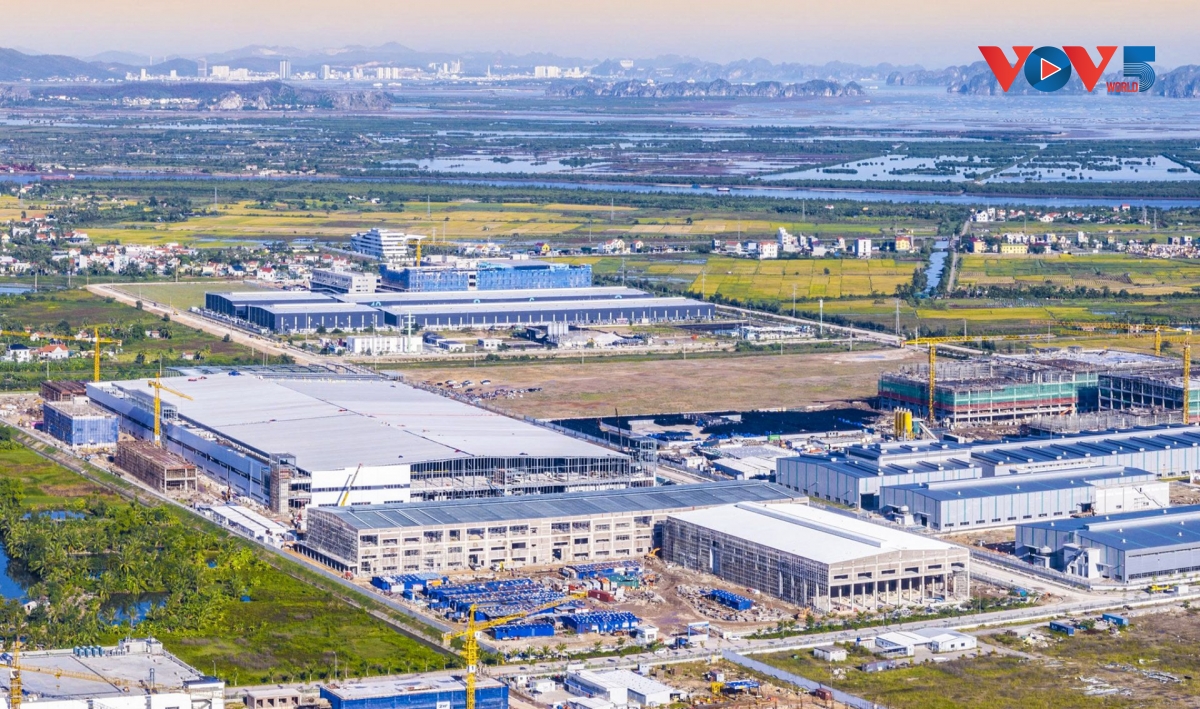
In late August, the Bach Dang II Industrial Park officially broke ground in the Quang Yen Coastal Economic Zone. Covering 420 hectares, the project has a total investment of 185 million USD.
Nguyen Thi Hoa, Director General of Bach Dang II Industrial Park Joint Stock Company, said, "We are determined to develop it into a model industrial park within the Quang Yen Coastal Economic Zone—one that embraces sustainable development, integrates smart solutions, and creates new growth momentum for new Quang Ninh City."
Quang Ninh held a groundbreaking ceremony for an infrastructure development and business project at VB Quang Yen Industrial Park, also in the Quang Yen Coastal Economic Zone.
53% of its area is allocated to development and warehousing and 21% is designated for port operations, port services, and logistics. This allocation is rare among industrial parks and will allow the facility to accommodate vessels of up to 30,000 DWT. It will also support an integrated supply chain linking factories, warehouses, ports, and international markets.
Do Van Binh, CEO of VB Holdings Joint Stock Company, the project investor, said, "This is our first time investing in Quang Ninh. Given the strong inflow of investment into Vietnam, particularly Quang Ninh, we want to accelerate implementation and complete the project as quickly as possible. Our target timeline is 48 months."
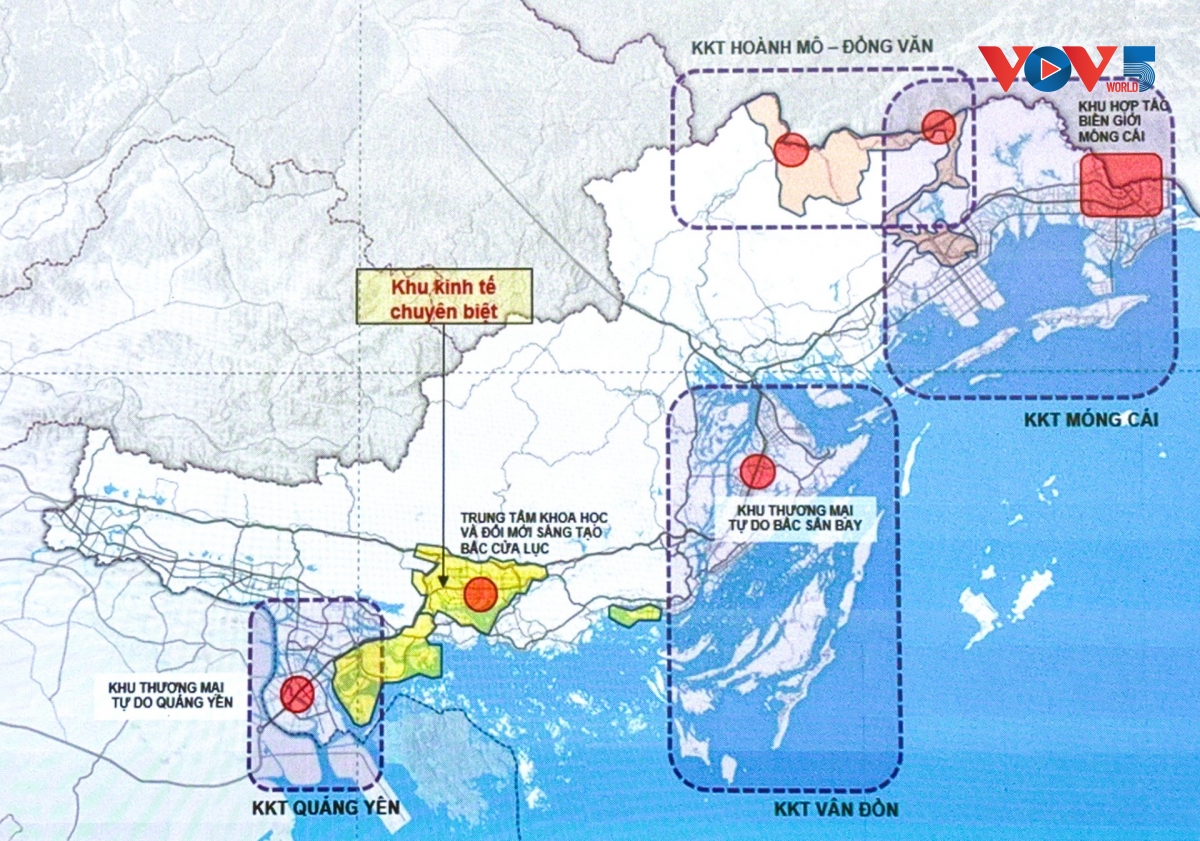
The groundbreaking of these industrial park and cluster projects aligns with the adjusted master plan for Quang Ninh city through 2030, with a vision to 2050. As planned, the industrial sector will be restructured to prioritize foundational and emerging industries, environment-friendly processing and manufacturing, and high-tech production. Quang Ninh aims to raise the contribution of processing and manufacturing to 18% of its gross regional domestic product (GRDP) by 2030.
Under this direction, industrial parks are evolving beyond clusters of factories into integrated ecosystems combining production infrastructure, energy, logistics, data, services, and human resources. This approach is expected to strengthen links between businesses and help local industries integrate more deeply into global value chains.
In the southwest, bordering Hai Phong, an industrial ecosystem specializing in automotive components, electric vehicles, and renewable energy equipment is taking shape. The Viet Hung Supporting Industrial Cluster has broken ground, focusing on precision engineering and auto parts to support Thanh Cong Group's automobile plant operating in Viet Hung Industrial Park.
To the northeast, the inauguration of the Ngan Quang Cotton Spinning Factory and the Hoa Mau Textile Factory is expanding the existing textile ecosystem at Texhong Hai Ha Industrial Park. Grouping projects within designated functional zones helps connect different stages of established production chains instead of letting industrial parks operate in isolation.
With its transition to city status, Quang Ninh has entered a new phase of development, requiring more sophisticated spatial economic planning and stronger interregional connectivity. Its strategy is shifting from development based on administrative boundaries toward functional zoning, with each area specializing in key industries and contributing to interconnected production, logistics, trade, and service networks built around regional strengths.
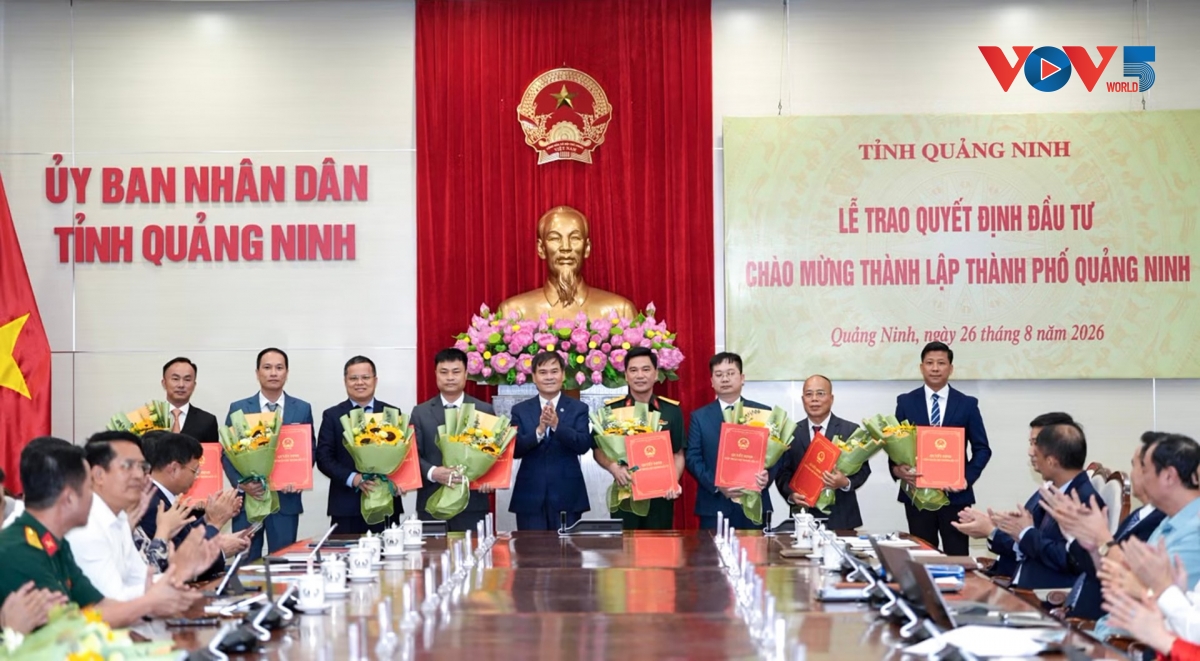
Since Quang Ninh issued Resolution 01 on developing processing and manufacturing industries in 2020, the sector has recorded average annual growth of 22.6% and attracted more than 13.3 billion USD in investment. In the first eight months of this year, processing and manufacturing remained a key growth driver, growing 32%. In addition to expanding industrial capacity, Quang Ninh is imposing stricter requirements on new projects.
Truong Manh Hung, Deputy Head of the Quang Ninh City Economic Zone Management Board, said, "All industrial parks attracting investment in Quang Ninh must be digital, green, and eco-friendly. They must meet strict environmental standards, practice circular resource use, and comply with mandatory thresholds for renewable energy use."
These standards are being incorporated into new industrial parks, from infrastructure planning and tenant selection to production arrangements. In the Quang Yen Coastal Economic Zone, seaport and logistics advantages are built directly into industrial park plans. In Viet Hung, supporting industry projects are linked to automotive manufacturing. In Hai Ha, new facilities are adding further stages to the textile value chain.
This new wave of projects will do more than expand industrial land. By filling critical gaps in manufacturing, logistics, and supply chains, it will help Quang Ninh move beyond extensive industrial expansion toward a modern industrial model built on green development, high tech, and stronger competitiveness.