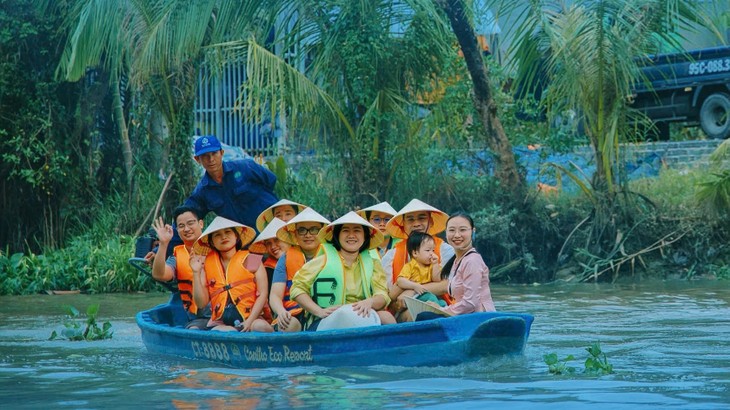
 Tourists take a boat trip to fruit orchards. (Photo: Nguyen Dac Hong Phuong/ VOV-Mekong Delta) Tourists take a boat trip to fruit orchards. (Photo: Nguyen Dac Hong Phuong/ VOV-Mekong Delta) |
Healing journeys through Can Tho’s ecotourism landscapes
Having traveled many times to the Mekong Delta region and Can Tho city, Tang Thi Bich Thuy from Hanoi says she has always loved the fresh air that carries the scent of flowing river water, fruit orchards, and soil wet after the rain. She has recently visited an orchard in Con Son, Binh Thuy ward, where she enjoyed the star apples she picked herself.
“The star apple trees are laden with fruit and look very appealing. The fruit tastes even more delicious when picked fresh from the tree. It is exceptionally sweet,” Thuy said.
This is the second year that Nguyen Thi Xuyen’s star apple orchard has welcomed visitors. Her one-hectare orchard, half of which is planted with mica star apple trees renowned for their pleasant sweetness, is now in peak harvest season. Ms. Xuyen said that the star apple harvest lasts three to four months, creating favorable conditions for local gardens and eco-tourism operators to attract visitors to Con Son.
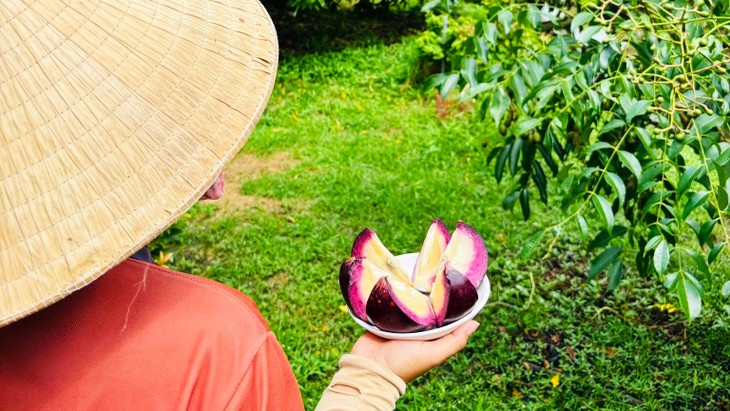 Purple star apple is a specialty of Can Tho. (Photo: Nguyen Dac Hong Phuong/ VOV-Mekong Delta) Purple star apple is a specialty of Can Tho. (Photo: Nguyen Dac Hong Phuong/ VOV-Mekong Delta) |
Tuan Tuong Ecotourism Garden in Phong Dien commune draws crowds of visitors looking to unwind and enjoy authentic rural experiences. Here, visitors can pick fruit in season, row boats along quiet canals, go fishing, cycle through lush orchards, and take part in other outdoor activities. Visitors can even catch their own fish and have it freshly prepared by the hosts in classic Mekong Delta style.
These experiences excite many visitors.
“I come here on my friends’ recommendations. It’s quite interesting. In the garden, some corners are decorated with Tet themes, creating a joyful Tet atmosphere.”
“Since the morning, I’ve walked around the garden to harvest fruit and rowed a boat on a nearby canal. For lunch, we enjoyed deep-fried giant gourami, salads, shrimp, and traditional garden cakes.”
The Nhon My commune tourism boasts a network of river islets, where the alluvial landscape remains largely untouched. My Phuoc islet stands out as the local agricultural-ecological center, covering over 1,000 hectares with nearly 200 hectares of fruit orchards. Visitors can roll up their sleeves to prepare rustic local dishes and enjoy them right in the orchards, or cycle along paved paths around the islet to watch everyday farming and production activities unfold—an experience that feels far more genuine than commercial tourist spots.
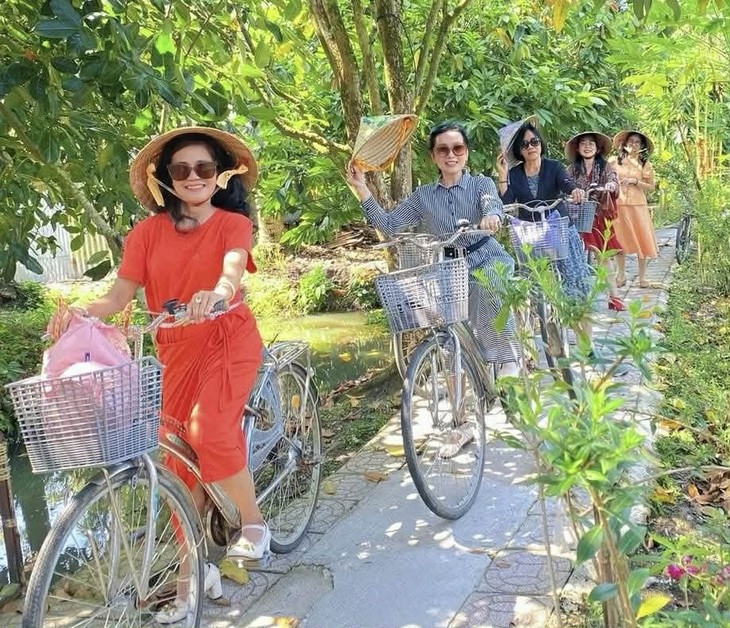 Tourists cycle around the village to experience the local life. (Photo: Nguyen Dac Hong Phuong/ VOV-Mekong Delta) Tourists cycle around the village to experience the local life. (Photo: Nguyen Dac Hong Phuong/ VOV-Mekong Delta) |
Not far from My Phuoc islet, Ly Quyen islet, spanning 37 hectares, feels like a quiet refuge, far removed from the rush of modern life. With scattered homes nestled amid lush greenery, the islet offers an ideal setting for small-scale ecological homestays. Visitors can drift leisurely across calm lakes by paddle boat, take part in folk games once pushed aside by digital entertainment, or learn basic farming skills. These simple, hands-on experiences capture the essence of “healing tourism,” where slowing down becomes the greatest luxury
Ngo Quang Phuc, a visitor from Ho Chi Minh City, says everyone in his family enthusiastically engaged in this rustic setting. “This program is very meaningful. In addition to visiting local orchards, tourists can play folk games such as crossing monkey bridges, blindfolded duck-catching, and other games that I we don’t see in city life. You can really feel the pleasant countryside atmosphere. I will definitely recommend it to my relatives and friends.”
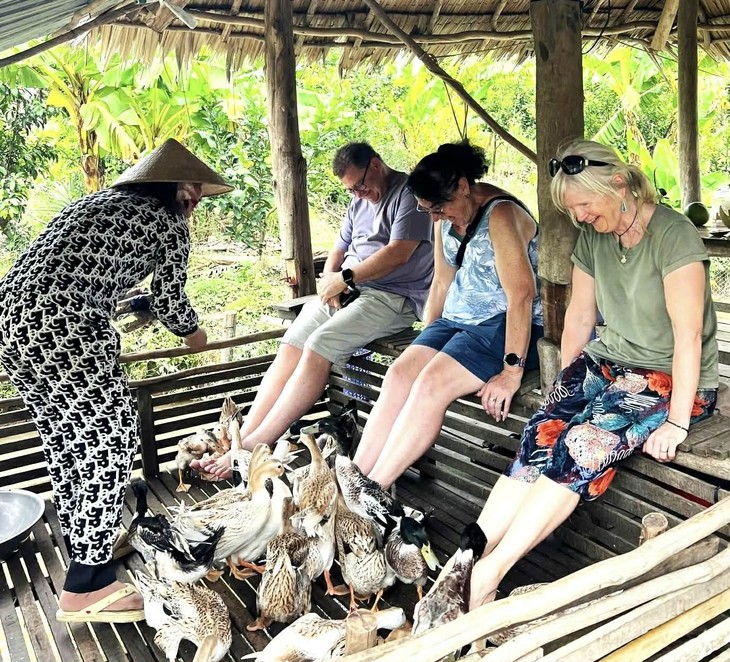 Tourists relax with duck massage. (Photo: Nguyen Dac Hong Phuong/ VOV-Mekong Delta) Tourists relax with duck massage. (Photo: Nguyen Dac Hong Phuong/ VOV-Mekong Delta) |
That sense of joy and rediscovery is exactly what draws visitors to the Nhon My tourism cluster. Away from traffic and tight schedules, people slow down, laugh together, and reconnect with nature and with one another. In a landscape shaped by rivers and orchards, simple moments, balancing on a monkey bridge or sharing a home-cooked meal, become lasting memories of a countryside that still feels wonderfully alive.
Healing tourism is gradually becoming a prominent trend, as more people seek to restore balance between body, mind, and spirit after the pressures of daily life. With its network of rivers and orchards, abundant greenery, and unhurried rhythm, Can Tho is well placed to develop wellness tourism.
Beyond ecotourism sites that offer a “slow-living” escape, a number of accommodation providers are now designing spaces where guests can truly pause. Victoria Can Tho Resort in Ninh Kieu ward has partnered with collaborators to organize yoga sessions in a natural setting.
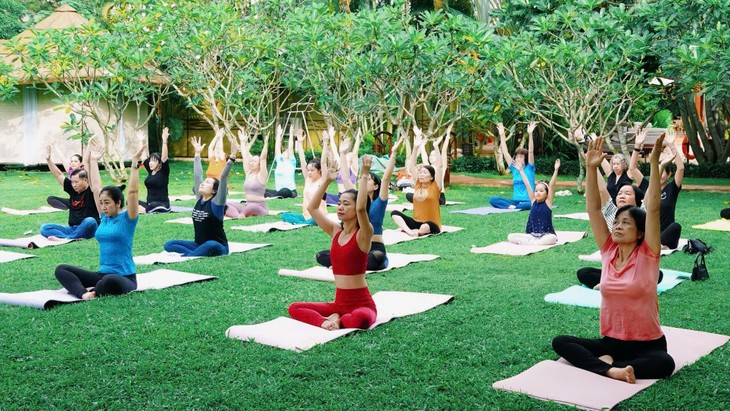 Practicing yoga at Victoria Can Tho Resort in Ninh Kieu. (Photo: Nguyen Dac Hong Phuong/ VOV-Mekong Delta) Practicing yoga at Victoria Can Tho Resort in Ninh Kieu. (Photo: Nguyen Dac Hong Phuong/ VOV-Mekong Delta) |
For visitors like Hoang Thi Nhu Y and Thach Thi Da Sa from Ca Mau Province, the experience brings a rare sense of calm.
"Practicing yoga outdoors like this is very comfortable. I can hear birds singing, which makes the yoga session wonderful and full of energy.”
“When practicing outdoors, I focus more on myself and feel the surrounding atmosphere more clearly. It makes my mind clearer and more relaxed.”
Moments like these highlight how wellness tourism in Can Tho goes beyond sightseeing. On the New Year holiday, many visitors choose ecotourism as a way to refresh and temporarily step away from the hurried pace of normal life. These “slow but chill” experiences help them release stress, recharge their spirit, and regain balance for a New Year.
A 200-year-old craft sustaining livelihoods and Tet traditions
Thuan Hung rice paper village is about one hour’s travel from downtown Can Tho city. Upon arriving, the aroma of rice batter and coconut fills the air, tempting everyone to stop and taste. Thuận Hưng rice paper has a variety of tastes, such as savory rice papers, plain rice papers, spring roll wrappers, and coconut rice papers.
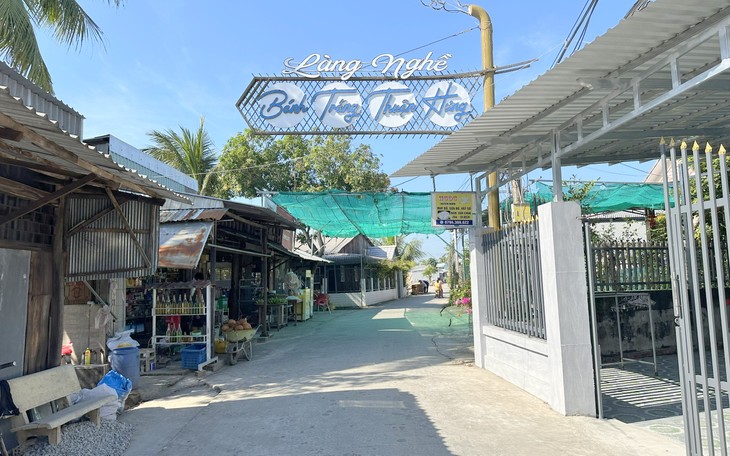 Thuan Hung rice paper craft village (Photo: Pham Hai/ VOV-Mekong Delta) Thuan Hung rice paper craft village (Photo: Pham Hai/ VOV-Mekong Delta) |
These days, Thuan Hung rice paper village is busier than normal. From early dawn until late afternoon, household workshops are hustling to meet delivery deadlines. People work quickly but carefully, preparing the batter, washing racks, grating coconuts, and drying the rice paper sheets.
Carefully tending a pot of palm sugar syrup, Van Thi Tho, owner of the family-run grilled rice paper workshop called Ut Tho, said that good batter is the “soul” of rice paper.
“The good batter should be chewy so it spreads well, otherwise the sheet will tear easily. There are many types of rice paper here, but my family only makes coconut and sweet rice paper. If we make too many kinds, we can’t keep up. Thin sweet rice paper dries quickly, so we can make around 6,000 a day, but we can only make about 2,000 coconut rice papers a day.”
Selected rice is ground into flour, then mixed with coconut and palm sugar to create a soft, chewy, fragrant flavor. Evenly spread and perfectly grilled, the grilled rice papers retain a gentle sweetness that has become Thuan Hung’s signature.
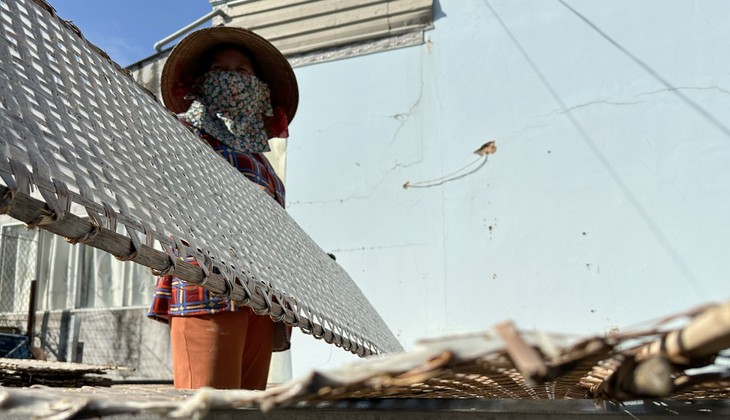 Producers are much busier to fulfill orders for Tet. (Photo: Pham Hai/ VOV-Mekong Delta) Producers are much busier to fulfill orders for Tet. (Photo: Pham Hai/ VOV-Mekong Delta) |
As demand surges sharply during the Lunar New Year, Tho’s workshop focuses on the most popular flavors, coconut rice paper and sweet rice paper, which have been certified under the One Commune, One Product (OCOP) program. Ms. Thơ and her husband continue the family craft from her husband’s grandmother. Her two children can also help with a few tasks after school.
With more than 20 years in the trade, Bien Van Con, a hired worker at a rice paper workshop, said that they often work from 4 a.m to 5 p.m with no days off during peak season to meet delivery schedules. “I’m washing the racks to keep them clean so the rice paper doesn’t get dirty or stain. From now until Tết, we make rice paper every day without any day off.”
Nearly every household in Thuan Hung has kept the rice paper craft alive for generations. Tran Thanh Tam of Tan Phu Commune is a third-generation artisan. In the past, all stages were done by hand, limiting output. Today, many families use rice paper machines, which help increase production and ensure more consistent quality.
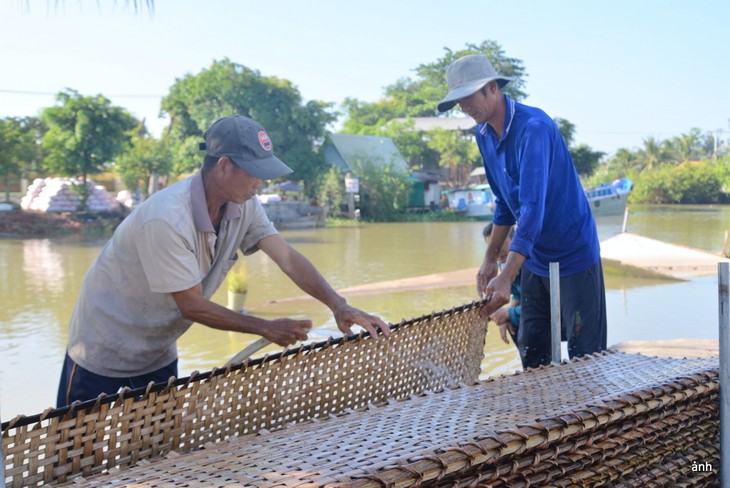 Rice paper sheets are dried in the open air. (Photo: Pham Hai/ VOV-Mekong Delta) Rice paper sheets are dried in the open air. (Photo: Pham Hai/ VOV-Mekong Delta) |
Even with modern equipment, the most crucial step remains batter preparation. Rice flour, coconut milk, and sugar must be measured with absolute precision—one small mistake can spoil the entire batch. Tam said: “During this Lunar New Year, rice paper always sells well. Dipping rice paper for rolling meat or fish is in high demand. Sweet rice paper and coconut rice paper sell all year round. This Tet, we have increased capacity, yet still unable to meet customer demand.”
Thuan Hung rice paper village normally has 58 active households, but the number rises to around 200 during the Tet season, but still not enough to meet market demand. According to Nguyen Thi Thanh Canh, Deputy Secretary of the Party Cell of Tn PhU area, each workshop creates jobs for four to six workers, including family members and hired labor. Production depends heavily on favorable weather and therefore takes place mainly during the dry season.
While a number of workshops have earned OCOP three-star certification, most producers continue to operate on a small scale, relying largely on manual methods. Despite these limitations, the village remains a vital source of seasonal income for local families and a living symbol of a traditional craft closely tied to the flavors and memories of Tet in the Mekong Delta
"During Tết, every household has increased production. When market demand is high, we produce more. Rice paper tastes best when it’s fresh, so so quick turnover is essential,” said Canh.
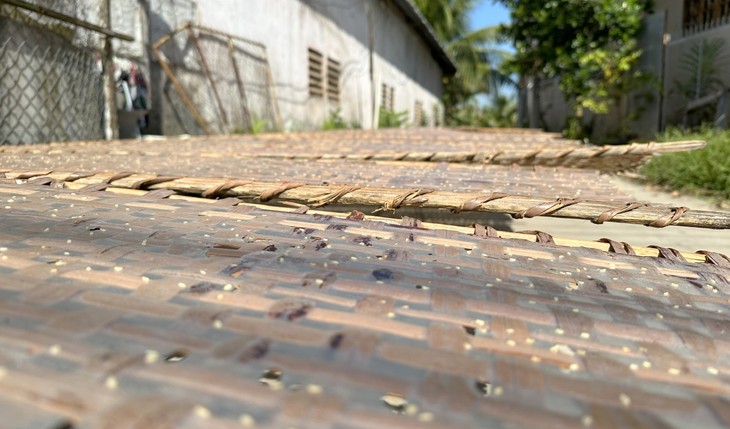 Racks of rice paper sheets are spread throughout the village. (Photo: Pham Hai/ VOV-Mekong Delta) Racks of rice paper sheets are spread throughout the village. (Photo: Pham Hai/ VOV-Mekong Delta) |
Le Duc Toan, Secretary of Thuan Hung Ward’s Party Committee, said that the authorities will continue to support households and businesses by strengthening market links, expanding purchasing and distribution partnerships, and promoting trade, aimed at building a stronger and more recognizable Thuận Hưng rice paper brand.
Toan said: “We help households and production facilities access loans from the Social Policy Bank to expand production sustainably. We’ve also coordinated with vocational training centers to help improve their skills and product quality.”
Busy workshops, the aroma of rice and coconut, and the steady rhythm of production define Thuận Hưng rice paper village in the days leading up to Tết. Recognized as a national heritage in 2023, the 200-year-old rice paper craft remains closely tied to local livelihoods and cultural identity, affirming Thuan Hung’s role as both an economic contributor and a custodian of traditional values in the Mekong Delta.