



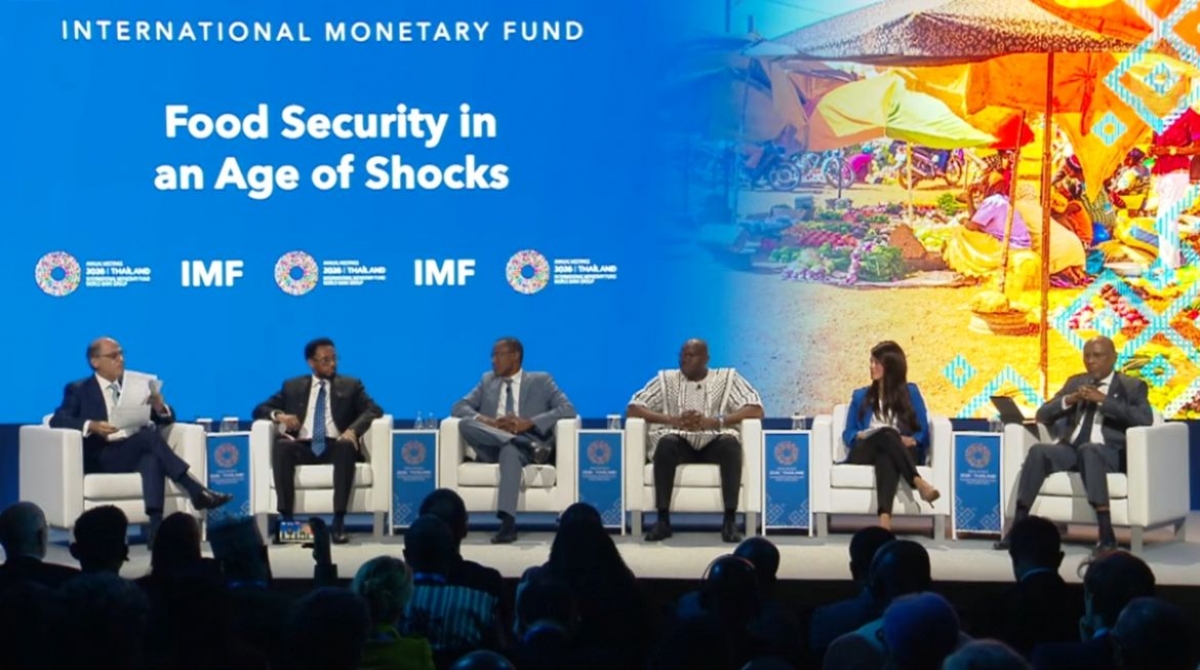
IMF Deputy Managing Director Nigel Clarke warned that food insecurity is increasingly becoming a “persistent macroeconomic and fiscal risk on a global scale”.
Assessments presented at the meeting showed that the world had experienced five major shocks over the past six years, each affecting food security to varying degrees.
Rodrigo Valdés, Director of the IMF’s Fiscal Affairs Department, said, "Food prices rose again in August to their highest level since late 2022, since the Middle East war. Rice prices have risen by 50%, wheat by 37%, and soybean by 21%. The ongoing El Niño event is already having severe effects and is expected to strengthen further. Food insecurity still affects some 260 million people worldwide."
On the sidelines of Thursday’s meetings, finance ministers and central bank governors of G20 and G7 countries discussed risks to the global economy, including inflation, high interest rates, market volatility, and geopolitical tensions. But trade disputes and geopolitical differences made it difficult to reach a consensus.