



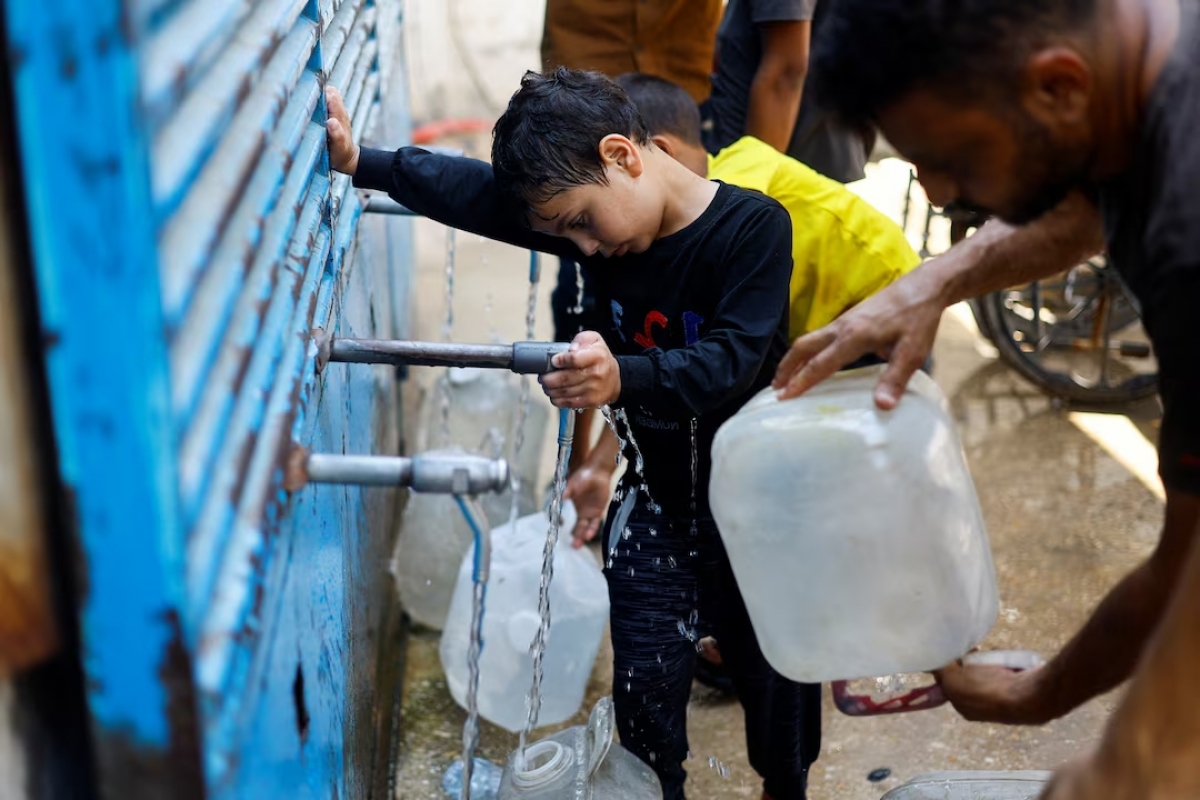
Ibtisam Al-Helou, a 40-year-old mother of three, said: "I live by the sea, and water is very scarce. I suffer from it every day. My children can only bathe once a week because of the lack of clean water. When my children swim in the sea, I need 17 USD worth of treatment for each one of them. They get itching, scabies and allergies."
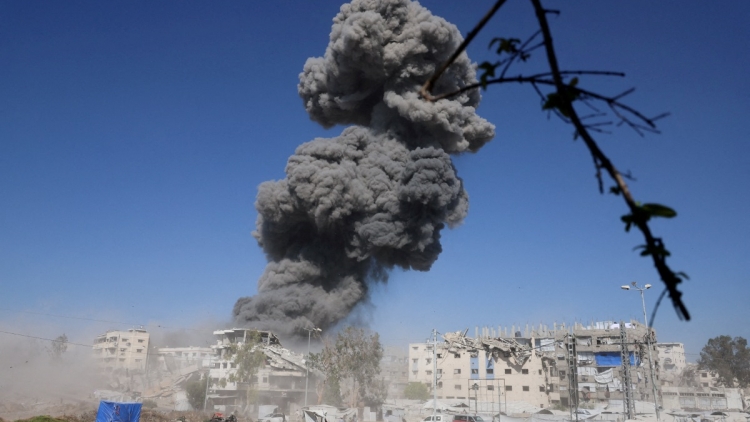
Aid agencies, UN officials, and Palestinian health authorities warn that Gaza is facing an unprecedented collapse of its water and sanitation systems, leaving much of the population trapped between immediate thirst and a longer-term environmental crisis whose consequences could last decades.
Said El-Aklouk, a sanitation and wastewater monitoring official at Gaza's Health Ministry, said: “About 80% of the water distribution network, including hundreds of water wells were damaged or destroyed. Most desalination capacity have been destroyed, with just one plant still in operation. This condition has affected the quantity and quality of the water supplied to residents".
More than half of Gaza's population, around 1.3 million people, have access to less than six liters of drinking water a day, according to UN assessments.