


The plan covers Hanoi’s administrative area of more than 3,300 square kilometers and projects a population of 14-15 million by 2035 and 17-19 million by 2065.
It takes the Red River as the city’s principal ecological and cultural axis, around which 9 development poles, 9 major centers, and 9 strategic corridors will be formed.
By 2035, Hanoi aims to achieve an average annual GRDP growth rate of 11% or more, and an economy of 200 billion USD by 2035 and 640 billion USD by 2045. In its century-long vision, Hanoi expects to become a “cultural, civilized, modern, and happy” city and join those world capitals with the highest quality of life and level of happiness.
The Hanoi master plan establishes a multi-centered and multi-polar development model, oriented towards high-capacity public transportation, said Chairman of the Hanoi People’s Committee Vu Dai Thang.
“It seeks to effectively utilize above-ground, underground, and digital spaces while creating centers for innovation, finance, trade, logistics, and high-tech industries. Hanoi prioritizes investment in high-value-added sectors, including strategic transport infrastructure; transit-oriented urban development; high technology, semiconductors, AI and data centers; next-generation industrial parks; smart logistics; clean energy; the circular economy; cultural industries; tourism; and high-quality healthcare and education,” he noted.
Hanoi also plans to develop an urban railway network spanning more than 1,100 kilometers and establish special development mechanisms at key growth poles, including a free trade zone linked to the Northern Airport urban area and the Hoa Lac Science and Technology urban area.
The plan features the Red River Landscape Boulevard, envisioned as a new symbol of the capital’s development, and a second airport for the Capital Region in the south. These initiatives will be accompanied by measures to build a smart, green, and sustainable city and advance the goal of achieving net-zero emissions.
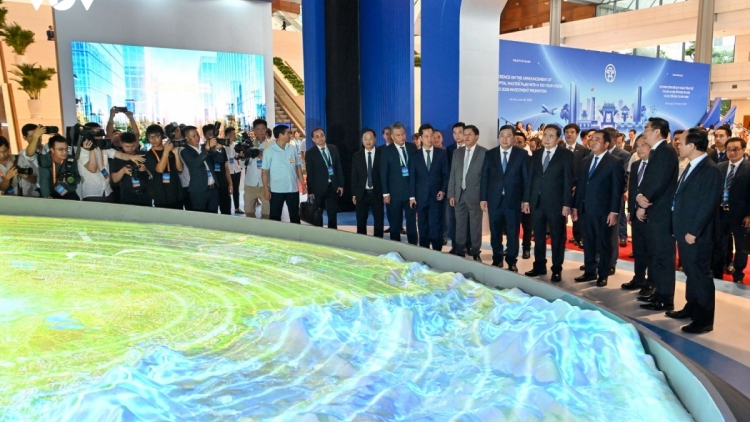
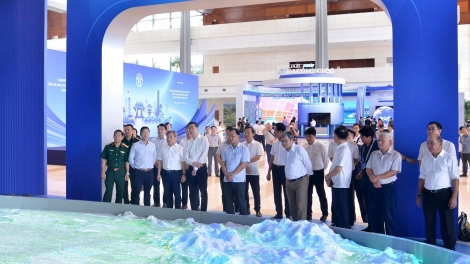
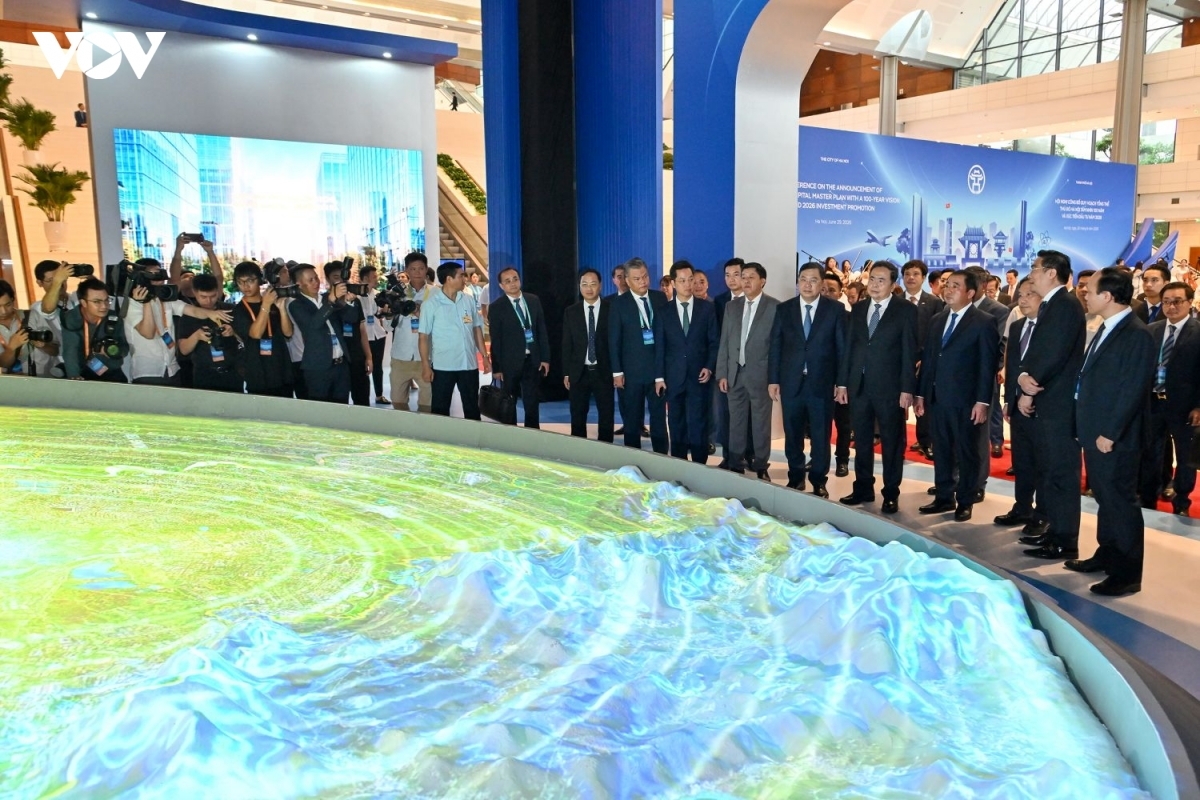
Conference delegates were introduced to a planning model updated with the new boundaries of the capital’s 100-year master plan and given an opportunity to experience the city’s pilot planning information lookup system.