



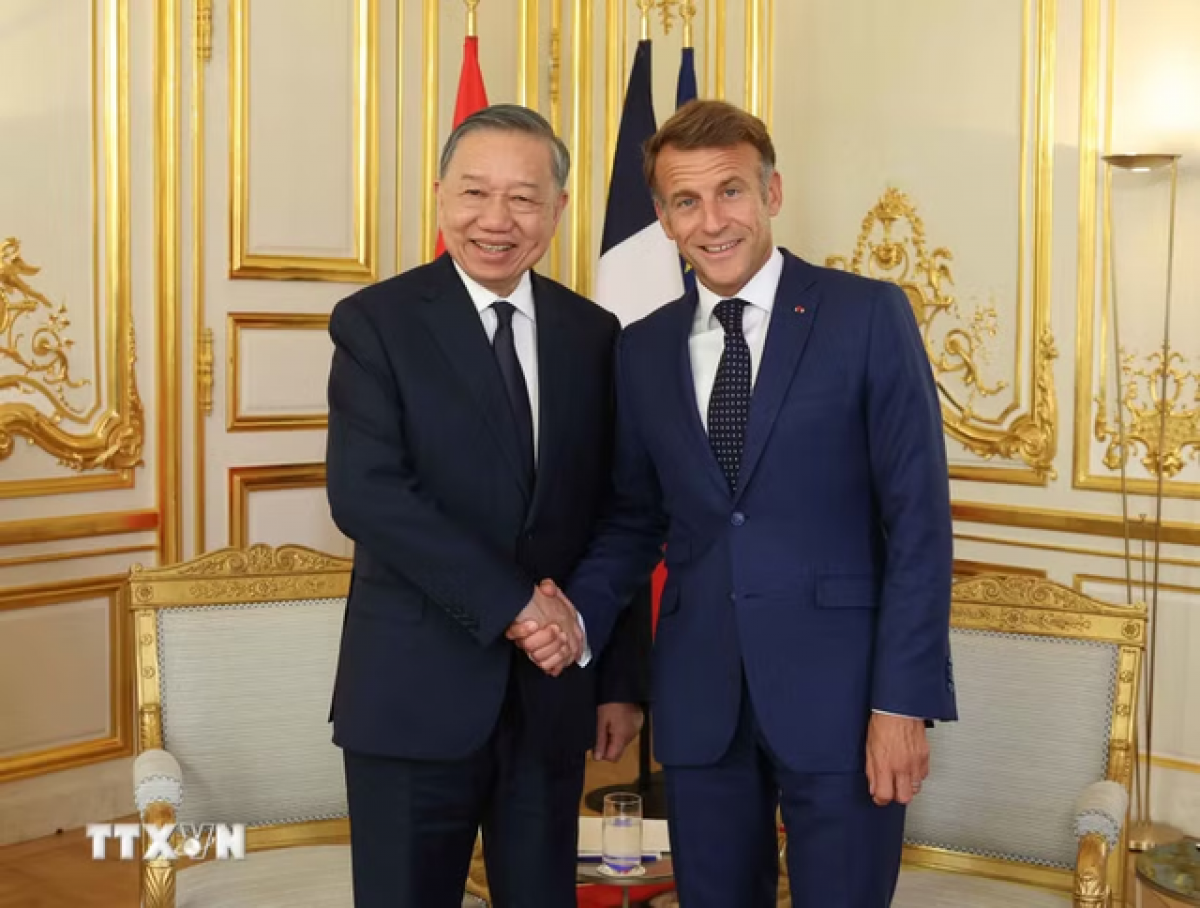
The two sides reaffirmed their commitment to joint action aimed at restoring a stable and prosperous world order that fully respects international law and the UN Charter. They emphasized the essential role of the United Nations in the international architecture while acknowledging the need for institutional reform within the organisation.
The two sides were committed to enhancing consultation and coordination in regional forums and supported strengthened cooperation between ASEAN and the EU. They pledged to enhance consultation and coordination in regional forums and supported strengthened cooperation between ASEAN and the EU.
Vietnam and France reaffirmed the importance of maintaining peace, security, and stability in the East Sea and of full respect for the 1982 United Nations Convention on the Law of the Sea (UNCLOS). They reiterated their readiness to participate in international efforts and coordinate closely with relevant parties to promote dialogue, seek peaceful solutions to end the current conflict, and rebuild Ukraine.
The two sides called on the parties to immediately cease actions that escalate tensions, strictly implement agreed-upon ceasefires, and establish lasting ceasefires to facilitate diplomatic solutions in Gaza, Lebanon, and other Middle East hotspots.
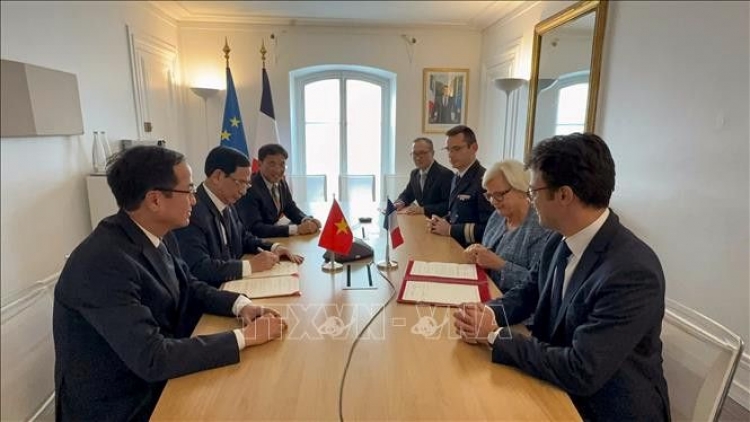
Vietnam and France will strengthen cooperation in the defense sector, prioritizing defense industry and defense technology collaboration aligned with the needs and interests of each side. They supported the promotion of security and cooperation, including training, in combating organized and transnational crime.
Both sides committed to the continued full implementation of the EU-Vietnam Free Trade Agreement (EVFTA). Vietnam welcomed France's progress in the ratification process of the EU-Vietnam Investment Protection Agreement (EVIPA), which is expected to be completed this year. France will continue to provide technical assistance to Vietnam in combating illegal, unreported, and unregulated (IUU) fishing and in developing sustainable fisheries.
Cooperation in science and technology - a key pillar of the bilateral relationship - will be further intensified within the framework of the comprehensive strategic partnership action plan. This will be achieved particularly through training, the development of joint research programmes, investment in research infrastructure, and the encouragement of private-sector collaboration in areas of mutual interest identified in the action plan, starting with artificial intelligence, semiconductors, quantum technology, digital technology, biotechnology, energy and marine technologies, and smart transport.