



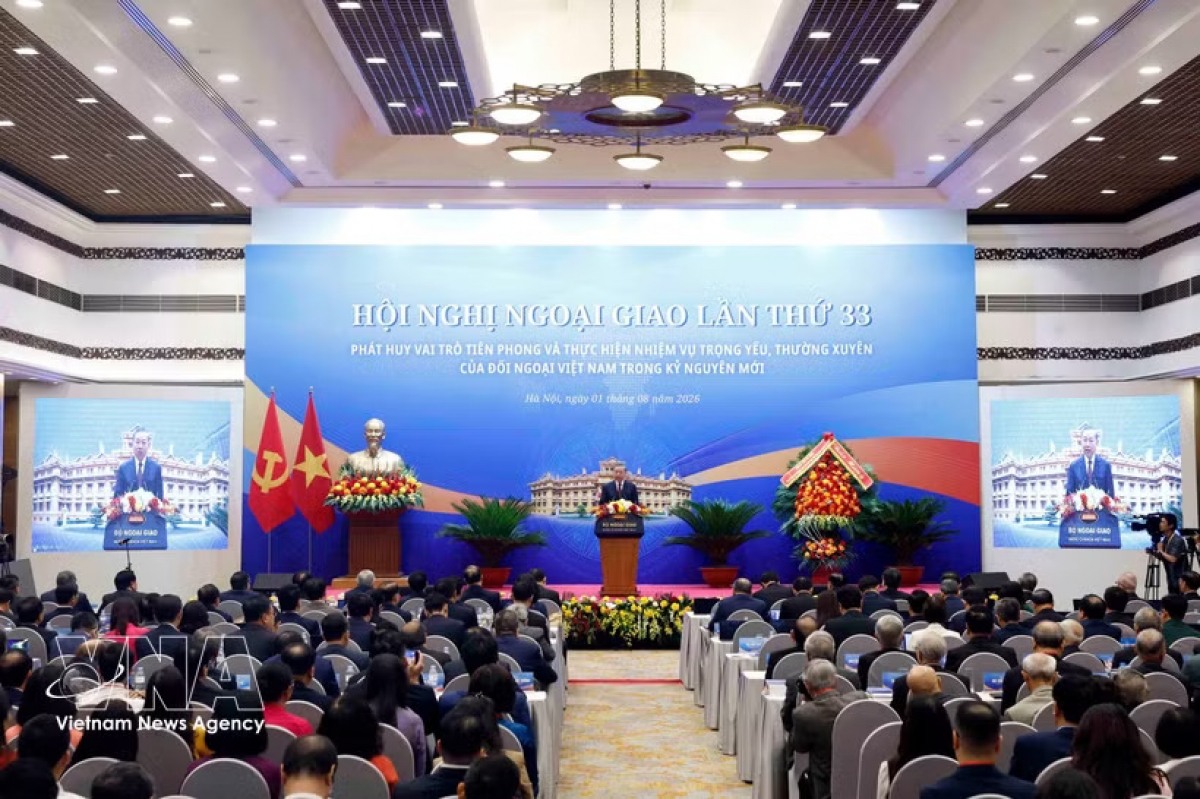
Speaking at the opening of the 33rd Diplomatic Conference in Hanoi, General Secretary and State President To Lam said diplomacy had been elevated for the first time to a "key and regular task" in the political documents of the 14th National Party Congress, underscoring its central role in strengthening Vietnam's national capacity. It has become the cause of the entire Party, the people, the army and the whole political system, said Mr. Lam.
Reviewing progress since the previous diplomatic conference, Mr. Lam said Vietnam's foreign affairs had helped preserve peace and stability, safeguard national sovereignty and interests, and expand the country's international partnerships.
He also highlighted advances in multilateral diplomacy, economic diplomacy, science and technology cooperation, cultural exchanges, overseas Vietnamese affairs and citizen protection.
The Vietnamese top leader said the country's foreign policy framework is now firmly in place, citing resolutions adopted by the Politburo and the establishment of the Central Steering Committee for Foreign Affairs and International Integration. The priority, he stressed, is effective implementation.
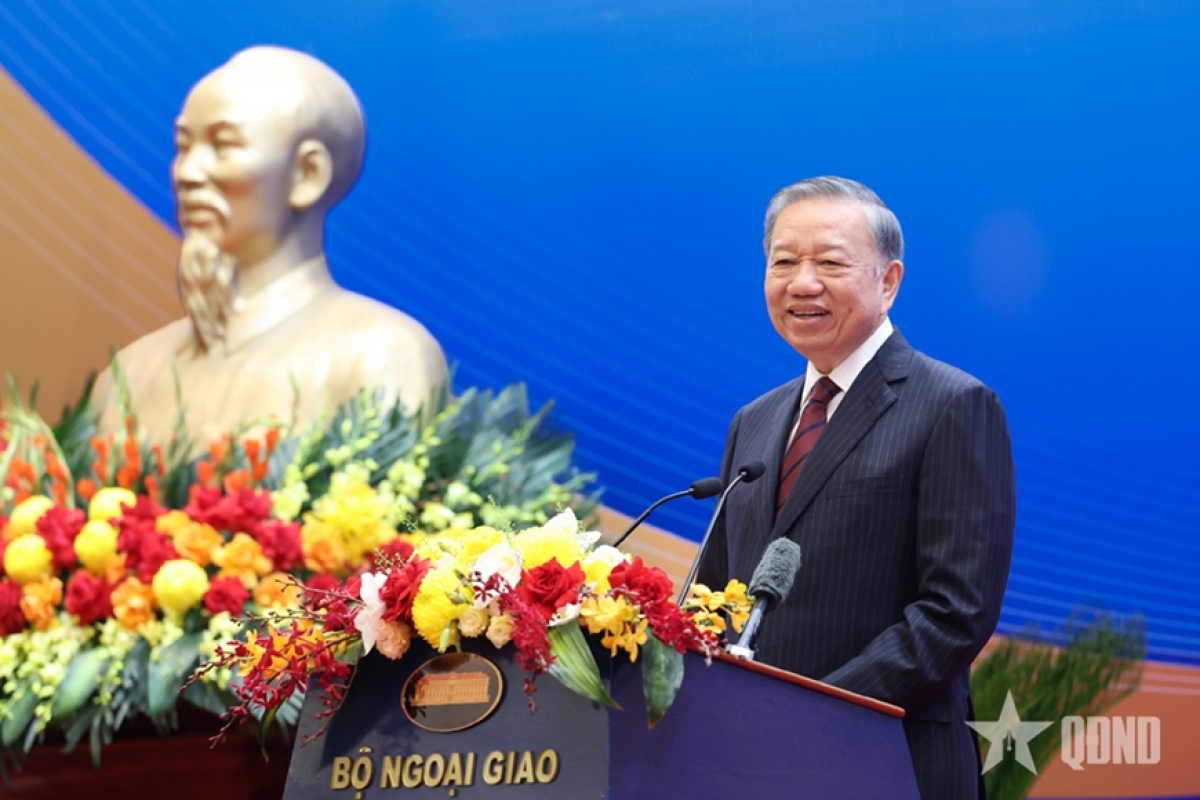
"Our policy direction is clear, and the leadership mechanism is being strengthened. The urgent task now is to implement it correctly, swiftly and with concrete results. The 33rd Diplomatic Conference must help the entire foreign affairs system clearly identify what has been achieved, what remains behind schedule, agree on priority tasks, methods of coordination, and the results that must be delivered immediately after this conference," said the top leader.
Mr. Lam urged diplomats to strengthen strategic forecasting, identify emerging opportunities early and transform them into practical gains while preserving Vietnam's strategic autonomy amid growing global uncertainty. He also called for deeper research into major global trends, including great-power competition, artificial intelligence, semiconductors, the digital economy, green transition, cybersecurity and data governance.
Emphasizing an increasingly results-oriented approach, the Vietnamese top leader said diplomatic frameworks should translate into specific programs and investment projects that contribute directly to Vietnam's modernization.
He said: "Priority should be given to mobilizing resources for science and technology, innovation, digital transformation, private-sector development and improving the quality of foreign investment. We must selectively attract high-tech projects in semiconductors, artificial intelligence, digital infrastructure, clean energy, biotechnology and modern agriculture, while linking investment with technology transfer, workforce training and the participation of Vietnamese enterprises in global supply chains."
"Every overseas mission must understand the country's needs, the strengths of its host country, identify the right partners and closely follow through on implementation. Ministries, sectors and localities must prepare projects, mechanisms, land, human resources and the conditions needed to receive these investments. External opportunities only become national resources when domestic readiness is in place," said Mr. Lam.
Mr. Lam also called for stronger multilateral diplomacy, deeper international integration and the development of a highly skilled diplomatic workforce with expertise in international law and an unwavering commitment to Vietnam's national interests.
The conference, themed "Promoting the pioneering role and fulfilling the key, regular mission of Vietnam's diplomacy in the new era," brought together 103 ambassadors and heads of Vietnamese missions representing 90 countries and territories, alongside officials attending both in person and online.
It will run through August 7, featuring 18 working sessions focused on implementing Vietnam's foreign policy priorities in the years ahead.