



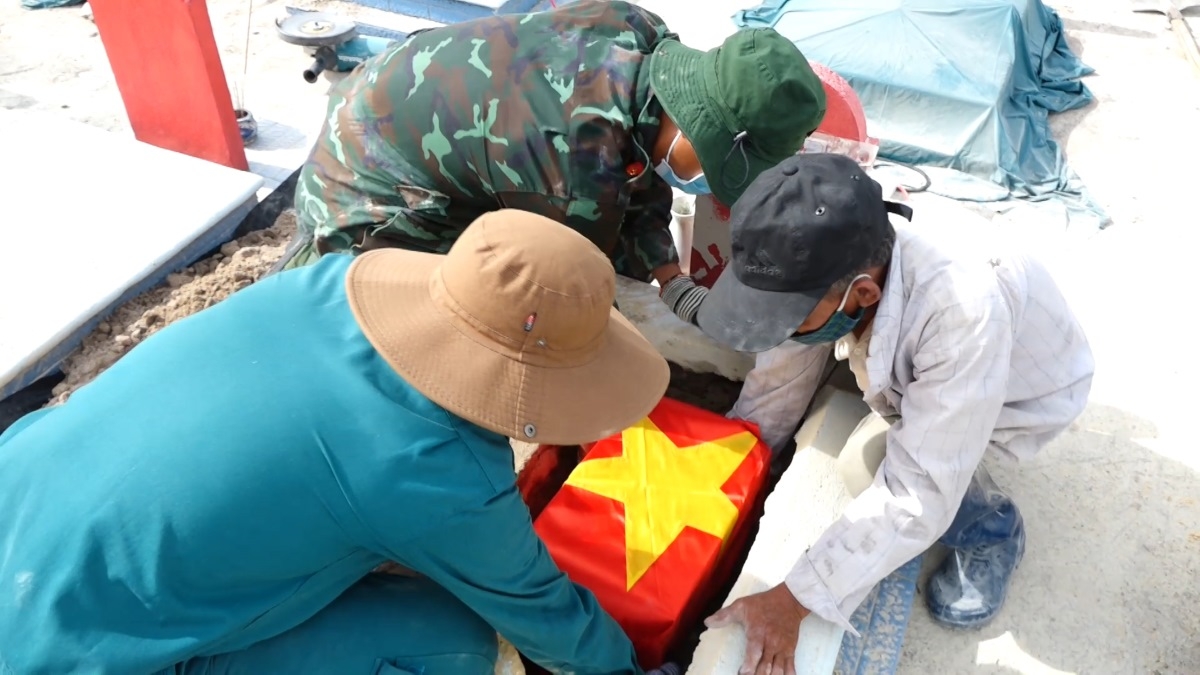
"Everyone in our team are eager and determined to fulfill our responsibilities to honor those who sacrificed. My grandfather too, was missing during the war, and I hope to find him in this campaign," said Lieutenant Colonel Le Nam Ninh of the Dak Lak Military Command.
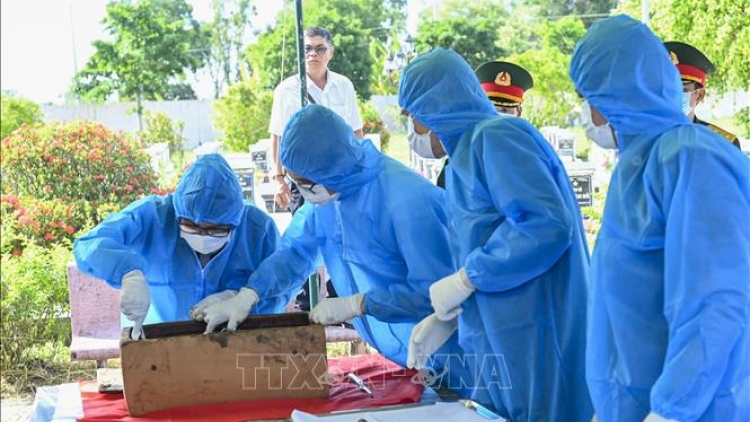
Under the blazing summer sun, Lt. Col. Ninh, his comrades, local militia, and forensic scientists are looking for even the smallest traces that can help them identify the unknown graves at Xuan Quang 2 Martyrs' Cemetery.
Layers after layers of soil are removed with great care. For Lt. Col. Ninh, this painstaking work is a task and an opportunity to find his grandfather, who laid down his life during the war. It's also his mother's last wish.
Ninh said each day, as he works among hundreds of unnamed graves, he holds onto the hope that one day his own family, like countless others, will finally be reunited with the resting place of their loved one after decades of waiting.
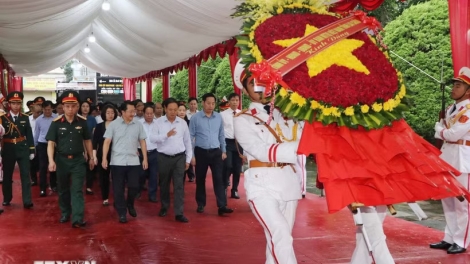
The same is true for so many other families in Vietnam. There are still more than 4,100 unidentified martyrs' graves in Dak Lak. These missing martyrs and their grieving families are the reason why the "500-day campaign" was launched.
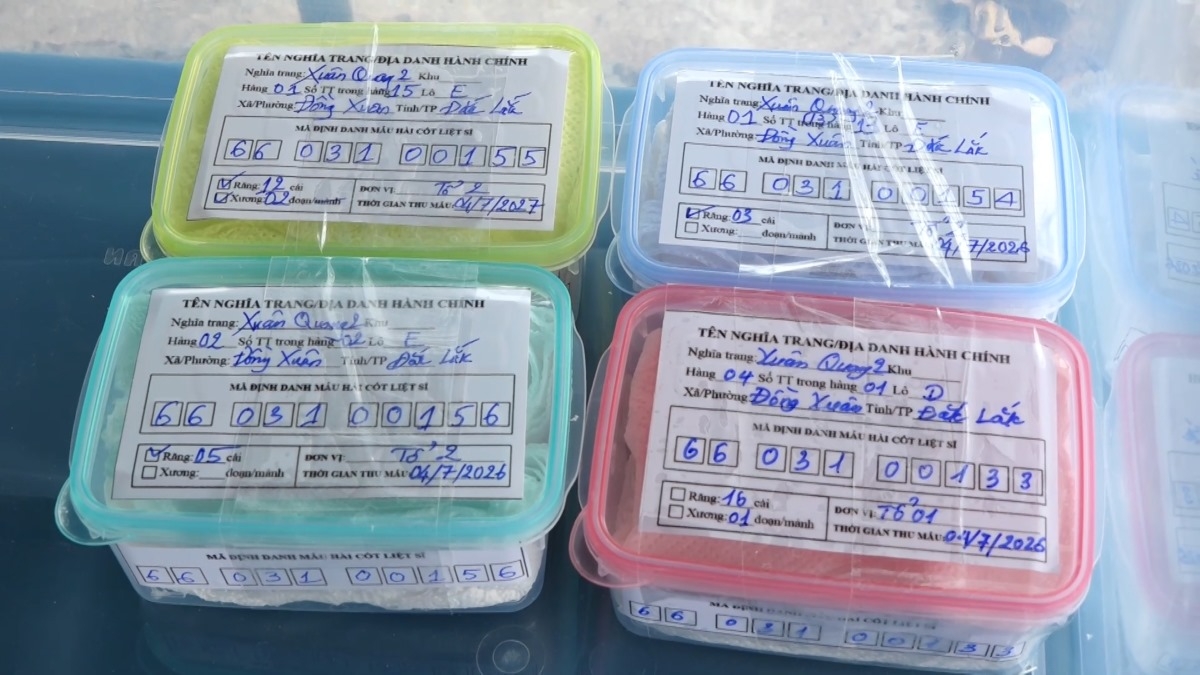
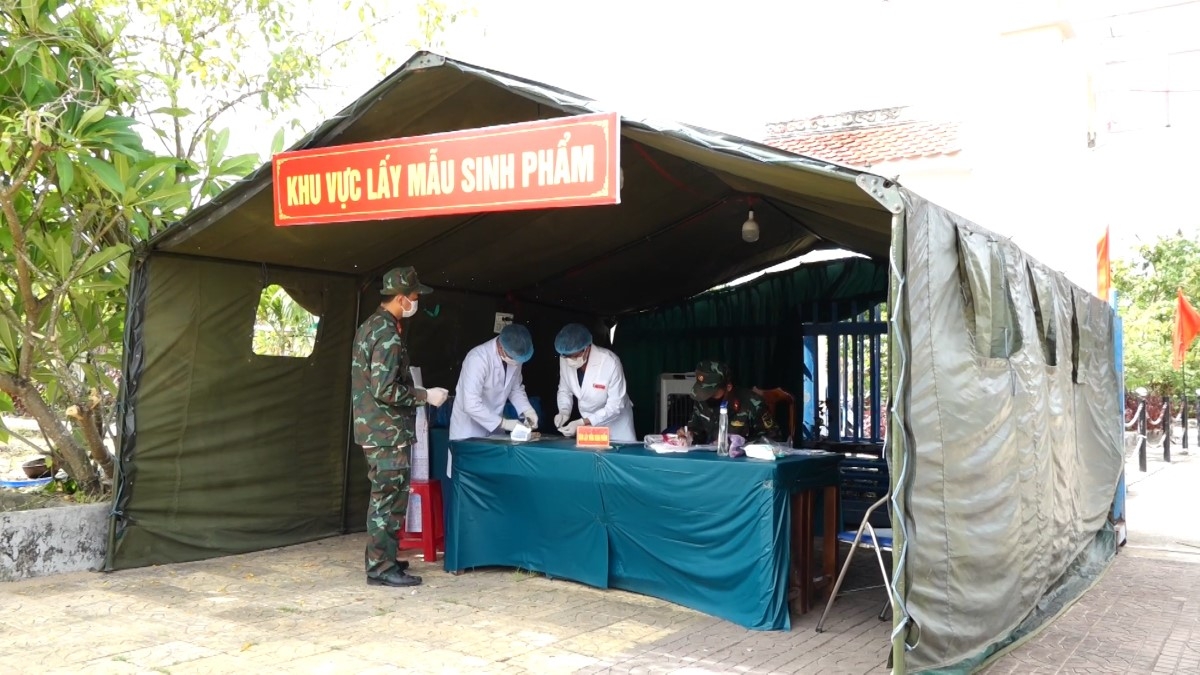
Some martyrs' graves now only contain tiny fragments of teeth and bones. After more than 50 years, many traces from the war have deteriorated so much that they no longer qualify for DNA analysis. As a result, each biological sample collected must undergo rigorous processing.
Dr. Ho Kim Thi of the Dak Lak Forensic Center said: "We process the samples with great care to prevent cross-contamination. Cross-contamination may come from the person handling the samples or between the samples themselves. It was extremely difficult to obtain these samples. We hope to identify the martyrs who gave up their lives for the nation."
During the 500-day campaign, any information collected on the martyrs' graves are digitized on-site. The graves' location, condition, and DNA samples collected are uploaded to a digital database for preservation. Later, these data will be cross-examined with data provided by martyrs' relatives. This combination of DNA analysis and digital archiving will shorten the time needed to identify martyrs and minimize risks of data loss.
After completing their work at Xuan Quang 2 Martyrs' Cemetery, the team will move on to other cemeteries throughout the province and at the same time continuing their search for martyrs' remains in other parts of Vietnam and in Cambodia.
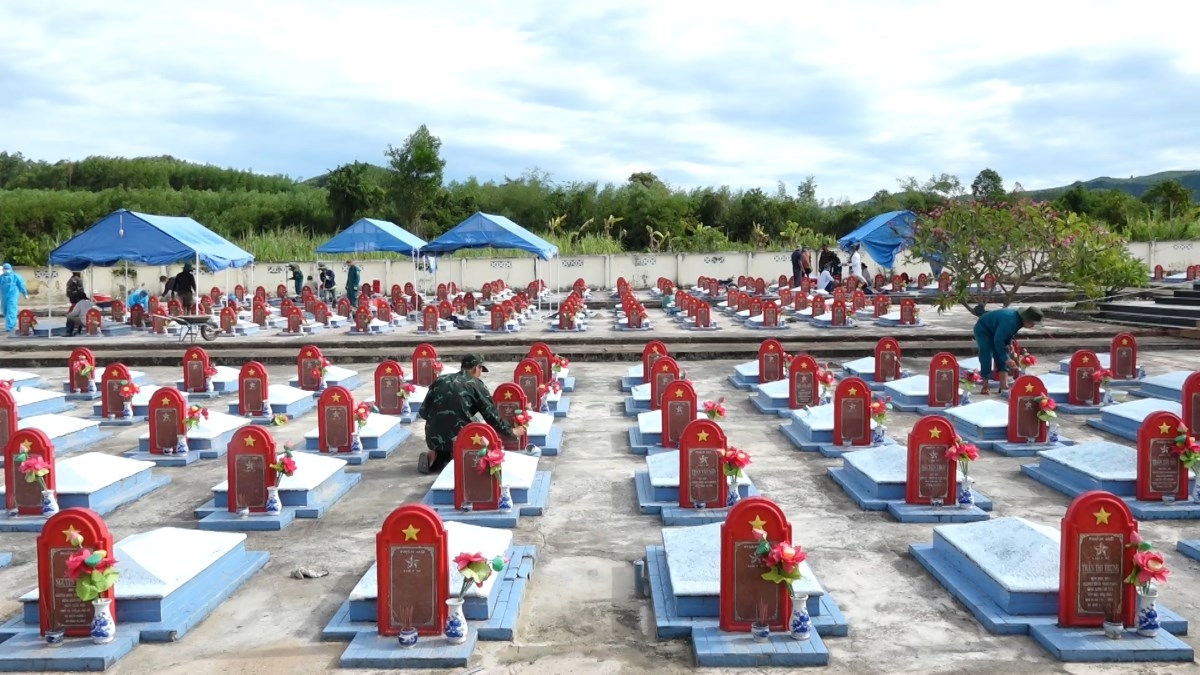
Mr. Dao My, Vice Chairman of the Dak Lak provincial People's Committee, said: "We are speeding up the search and identification of fallen soldiers. We are reviewing our plans, building schedules, and assigning tasks, aiming to finish DNA sampling by October 31. We are expanding our search for martyrs' remains to other parts of the country and plan to search in Cambodia".
The samples collected must undergo analysis and cross-examined with DNA data provided by martyrs' relatives before a fallen soldier can be identified. The work to return these heroes their names is far from over. The team at Xuan Quang 2 Martyrs' Cemetery is doing everything they can to look through all the clues. With each DNA sample collected and digitized, they're inching closer to identifying fallen soldiers and will one day end many families' decades-long wait for the return of their loved ones.