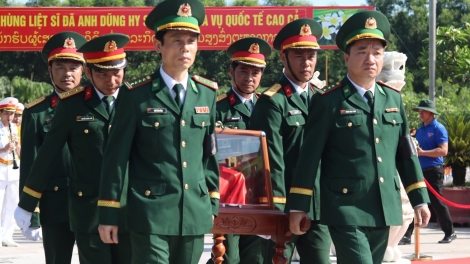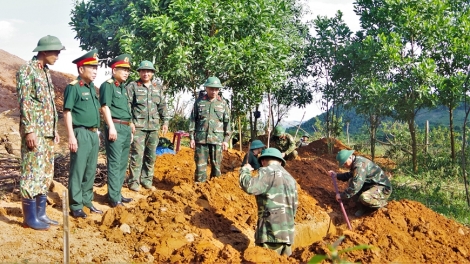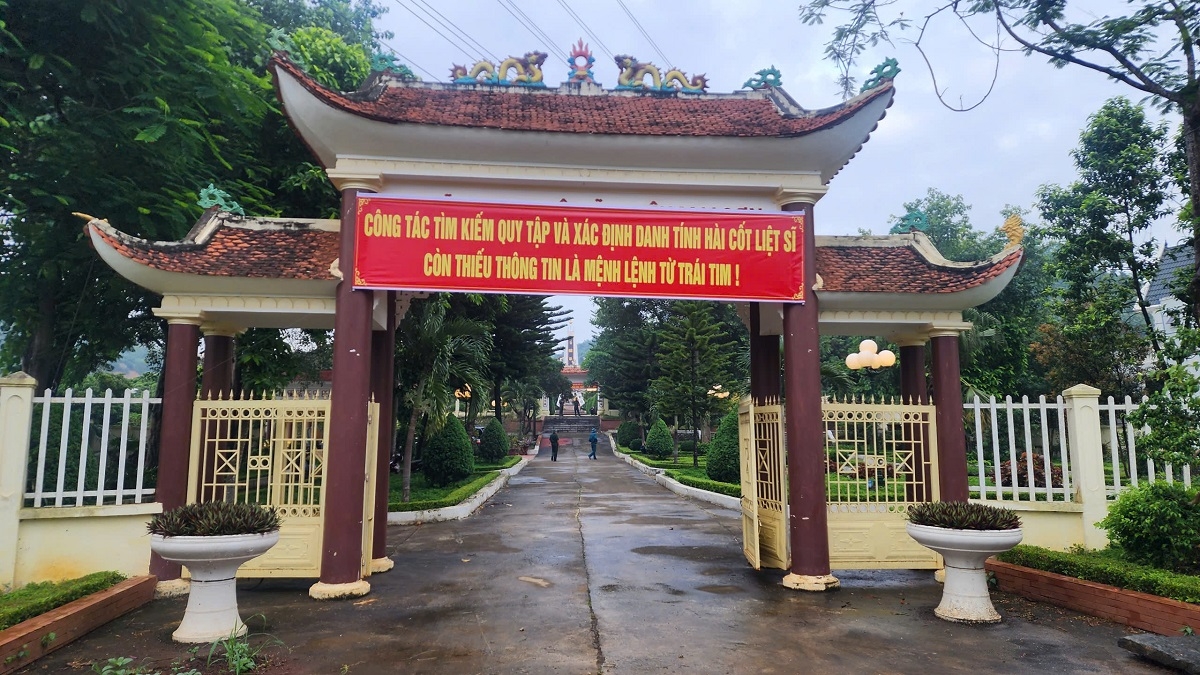
At the martyrs' cemetery in Mai Son commune, 168 gravestones bear only the inscription, "Unknown Martyr". Military personnel and support teams have been examining records, verifying grave locations, opening each grave, and collecting biological samples. Every step of the process is carried out with care and respect.
Working side by side with the soldiers are militia members and local residents. After completing work at the martyrs' cemetery in Thuan Chau commune, Vi Van Lan and a group of residents from Quynh Nhai commune continue at the martyrs' cemetery in Mai Son commune. They believe that every task they complete today brings families one step closer to finding their loved ones.
"The alternating rain and sunshine make the work more difficult. We keep encouraging one another to finish the job as soon as possible. We’re deeply moved to be able to work alongside the other forces on this mission," said Vi Van Lan.
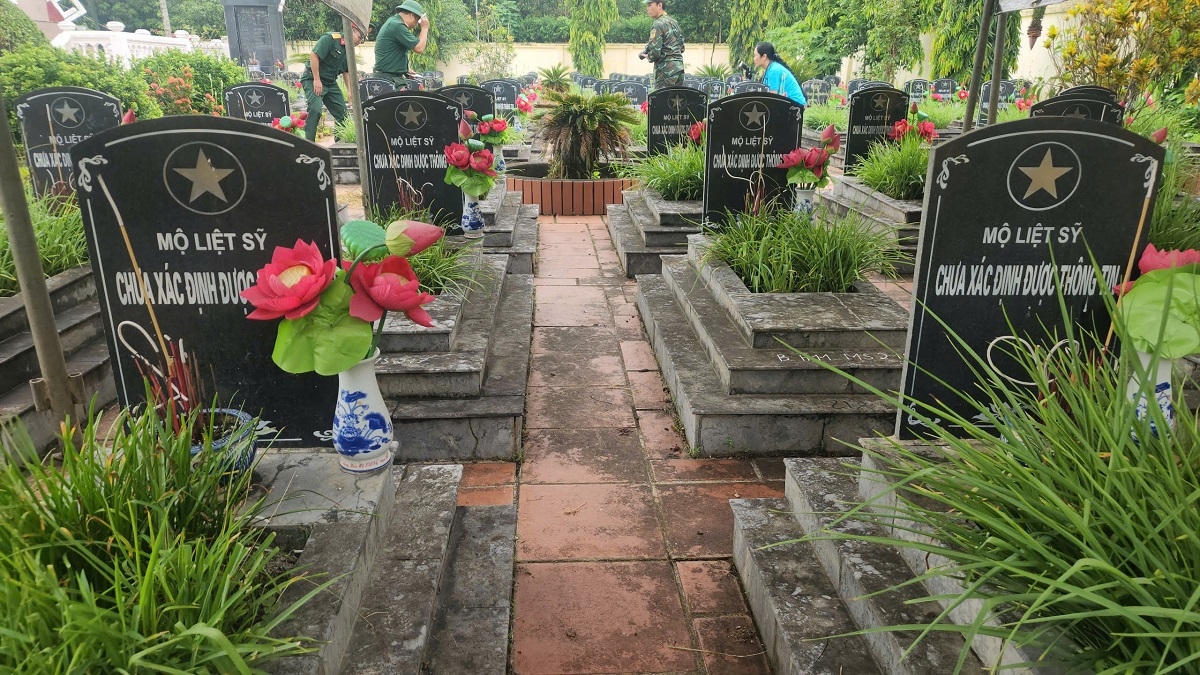
Every person regards this as a sacred duty to pay gratitude to those who sacrificed their lives for the nation. Lo Van Lan, a militia member from Mai Son commune, said: "Through media I've learned that many localities and military units across the country are working hard to locate and identify the remains of fallen soldiers. I wanted to contribute to the job, identifying the fallen soldiers and informing their families."
Many officers, soldiers, and other personnel involved feel they have a responsibility to history. After collecting samples from a grave, they observe a moment of silence before moving on to the next one. These little rituals express their deep gratitude to those who laid down for the nation.
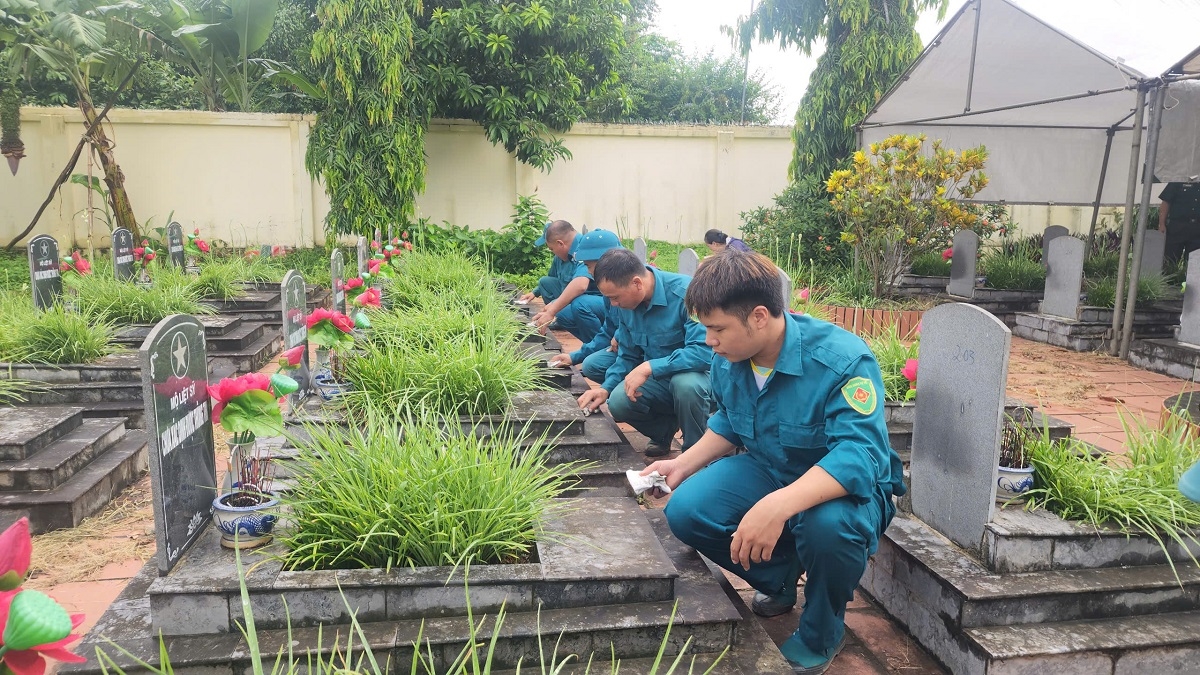
The mission has also received great support of local residents. To ensure that the collected samples provide reliable information when they reach the laboratory, every stage, from field preparation to documentation, must be carried out with great accuracy. Equally important is the reference information provided by the martyrs' relatives.
Lieutenant Colonel Dang Dinh Hung, Commander of the Mai Son commune Military Command, said: "The commune Military Command is coordinating with the Steering Committee to develop digital records and review all unidentified graves. We’ve made thorough preparations for the sample collection process, including gathering the necessary equipment and materials. We’ve been working with the General Services Center to raise public awareness and encourage people to provide information for our work so we can complete the identification of the martyrs as soon as possible."
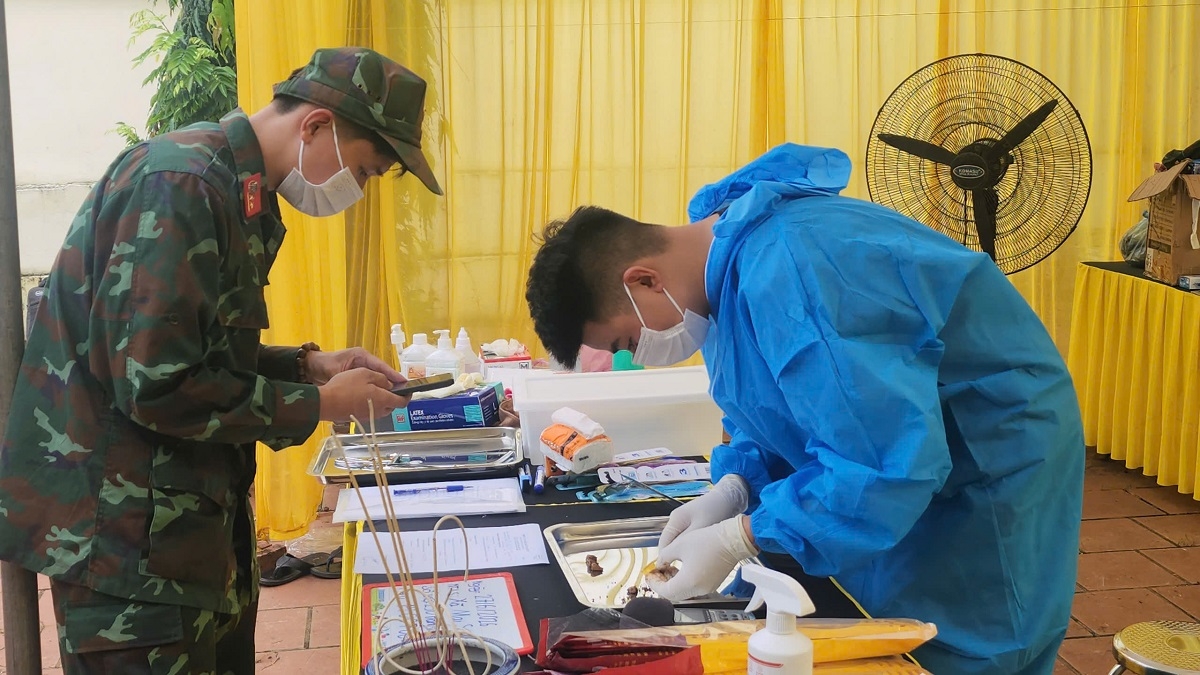
In Son La province, some 600 graves remain unidentified, and 400 others require additional information. By the end of June, 340 graves had been exhumed.
Lieutenant Colonel Lo Van Hung, Policy Officer of the Political Department of the Son La provincial Military Command, said: "We’re very encouraged by the strong support from local authorities, who have provided us with personnel, vehicles, and equipment. Our top priority is to ensure the accuracy of every sample and to avoid any mix-up between graves."
Son La province hopes to complete its DNA sampling campaign by mid-July. With time running short, participating forces are working hard every day. Identifying the martyrs is a task and a duty of gratitude in honor of those who gave their lives for the Fatherland.