



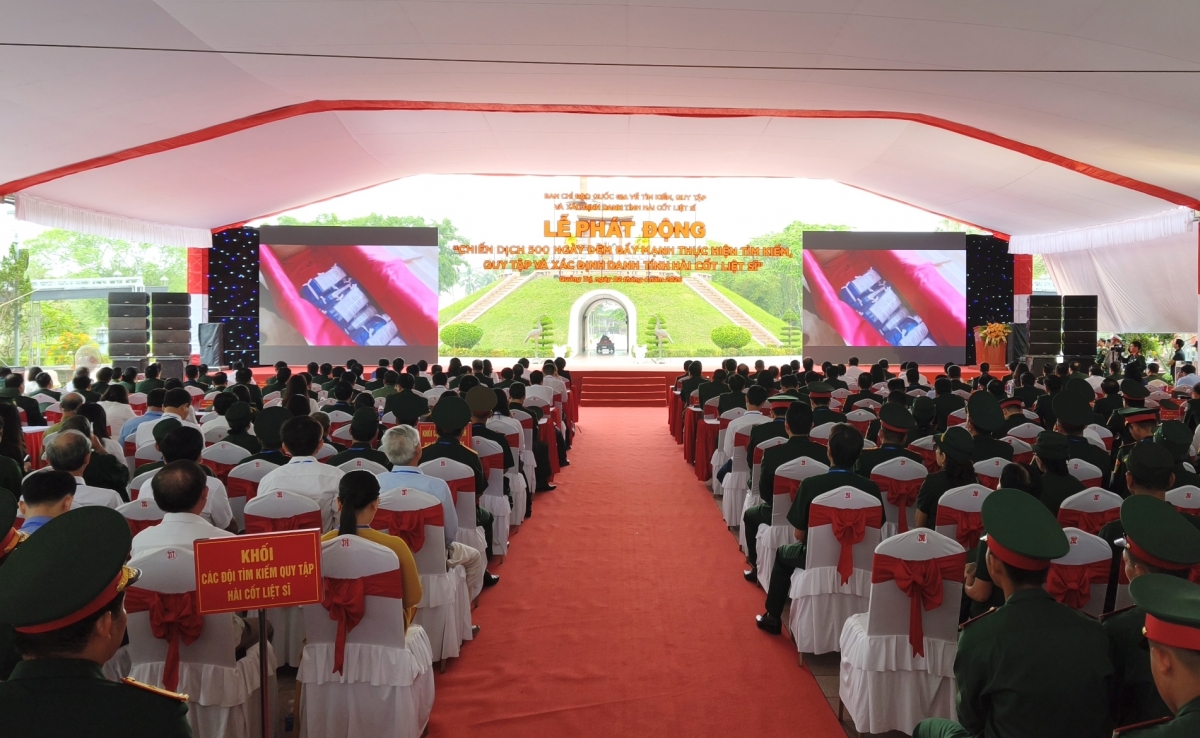
Vietnam launched a 500-day campaign on March 15 to intensify the search, recovery, and identification of fallen soldiers' remains, aiming to address major backlogs by searching for and repatriating about 7,000 sets of remains, collecting samples from roughly 230,000 unidentified graves nationwide, conducting DNA analysis on approximately 18,000 samples, and establishing a genetic database of martyrs’ relatives. Combining historical research, witness testimony, and modern technology, authorities, experts, and volunteers are working to uncover long-buried traces of the war, bringing hope to the families and comrades of those who never returned.
According to the National Steering Committee for the Search, Recovery, and Identification of Martyrs’ Remains, over the past three months, 1,109 sets of martyrs’ remains have been collected, including 242 sets found in Vietnam, 173 in Laos and 694 in Cambodia, and two mass graves were discovered in the northern province of Tuyen Quang.
The Ministry of National Defense continues to deploy 24 search teams across Vietnam, Laos, and Cambodia, working alongside local teams and providing funding, equipment, and transportation to support their missions.
In addition, a nationwide campaign to collect approximately 250,000 DNA samples from relatives of unidentified martyrs is scheduled to run from June 20, 2026, to July 20, 2027.
Behind every discovery is a story of perseverance. Teams often work in harsh terrain in extreme weather conditions, relying on historical records, veterans’ testimonies, and information provided by local communities. In many cases, a single clue has led searchers to sites that had remained unknown for decades.
Recently, two scientific workshops were held to verify information regarding suspected mass graves of fallen soldiers in Kon Tum ward, Quang Ngai province and the Le Thi Rieng Park area of Ho Chi Minh City.
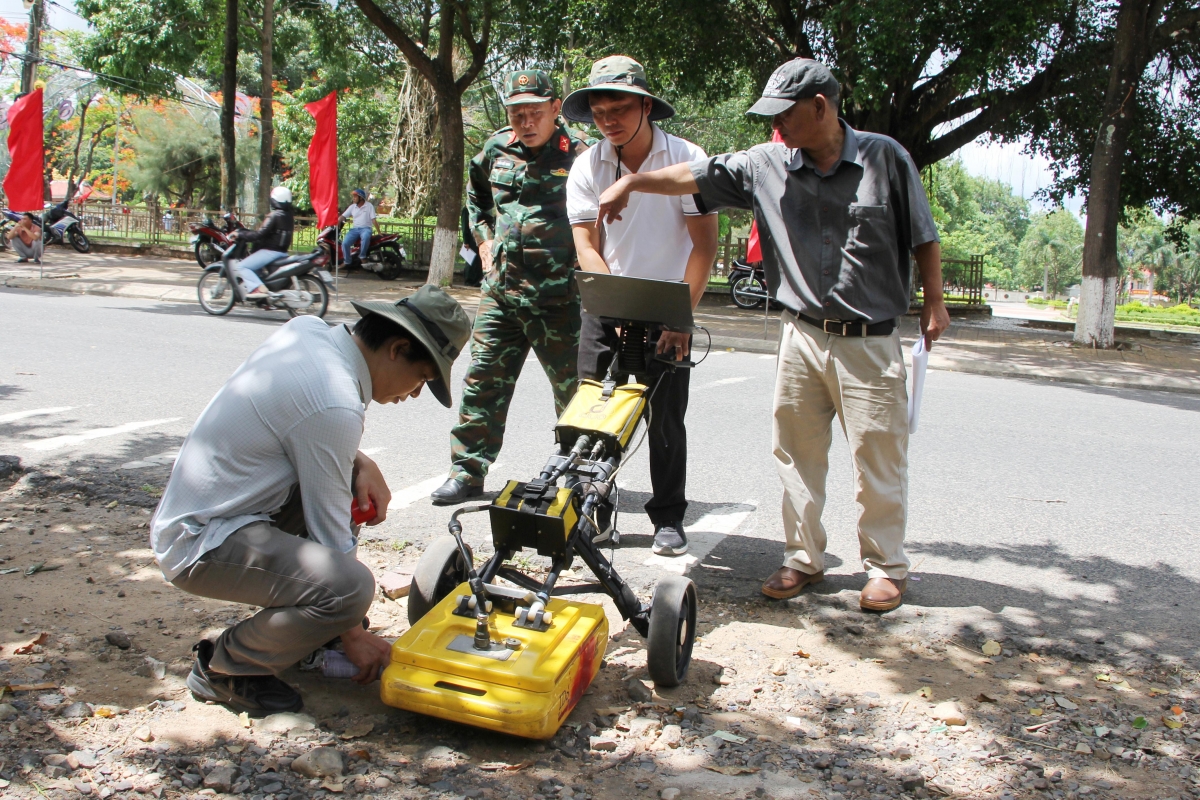
The search for martyrs’ remains in Dak Cam ward, Quang Ngai province
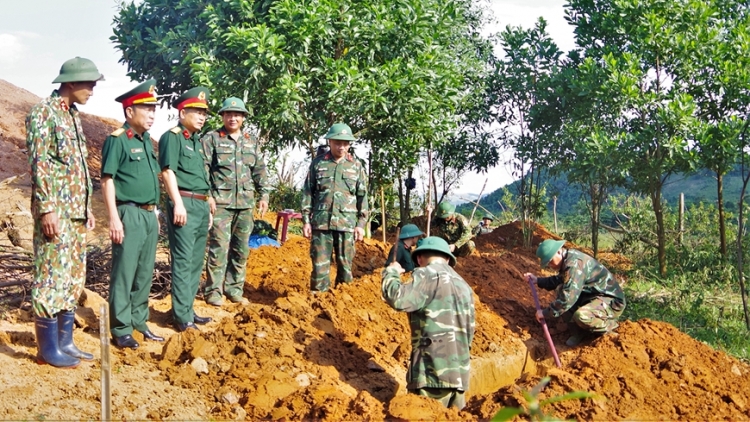
Immediately following the May 29 workshop that verified and assessed information about a suspected mass grave of fallen soldiers in Dak Cam ward, Quang Ngai province, local authorities launched a search and excavation operation at the identified sites.
In the morning of June 4, the Quang Ngai Provincial Military Command, in coordination with the University of Natural Science of the Vietnam National University–Ho Chi Minh City, deployed ground-penetrating radar equipment to survey an area along Truong Chinh street in Dak Cam ward, which was suspected to have burial trenches, based on historical records, research findings, and witness accounts.
Le Van Anh Cuong, Head of the Department of Geophysics at the University of Natural Science of the Vietnam National University, Ho Chi Minh City, said: “This radar system transmits electromagnetic waves through the ground and receives the reflected signals. From these signals, we can produce electromagnetic cross-sections. By interpreting these images, we can identify structures beneath the surface. Information related to burial trends may be reflected in the radar images that we obtain.”
Nguyen Xuan Thang, a member of the Vietnam–United States Joint Research Group, said: “When unusual signals are detected, we evaluate them and determine their exact locations. If we identify drainage trenches or other suspicious features, we concentrate our search efforts there while excluding areas with uniform signals. This approach significantly reduces the time and cost of the search”
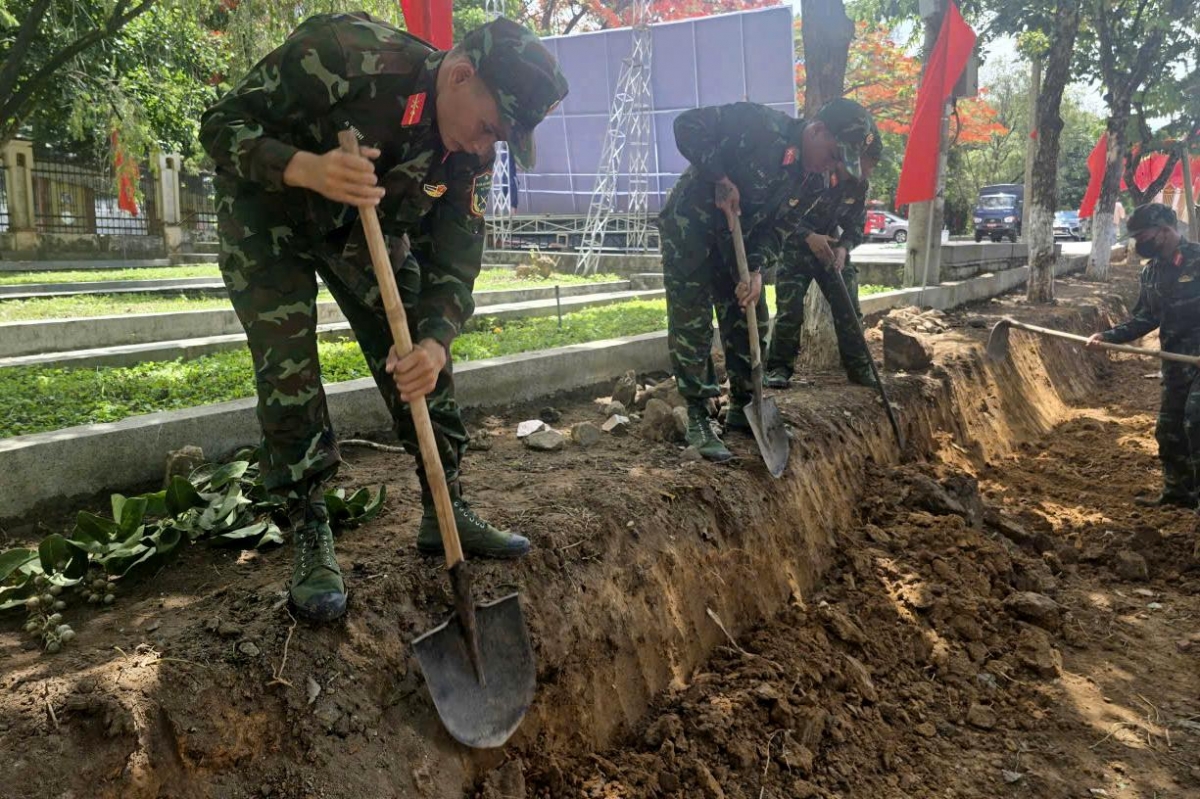
During the workshop, authorities, experts, and researchers analyzed information and two photographs provided by a former US serviceman through the Vietnam–United States Joint Research Group. They agreed on the existence of a mass grave possibly containing between 70 and 90 liberation soldiers, believed to belonged to Regiment 24A/Front 3B, Special Forces Battalion 406 and Infantry Battalion 304, all of whom were killed during the 1968 General Offensive and Uprising.
After surveys using specialized equipment, suspected locations will be excavated layer by layer using excavators or manual tools to ensure that no evidence is overlooked.
The search operation will be carried out in two phases. The first phase focuses on an open area of approximately 900 square meters at the northeastern corner of the Dak Cam ward Martyrs’ Cemetery, where the terrain is relatively accessible and there are few underground structures. The second phase will survey other suspected locations in urban areas with numerous residential and public utility facilities. The National Steering Committee for Search, Recovery, and Identification of Martyrs’ Remains, or Steering Committee 515, has stressed the importance of proceeding cautiously and methodically, beginning with the more accessible sites before moving on to the more challenging locations.
Major General Tran Minh Trong, Deputy Political Commissar of Military Region 5 and Head of the Steering Committee 515 of Military Region 5, said: “The search must balance verifying historical information and recovering the remains of fallen soldiers with preserving the urban landscape and respecting residents’ daily life. All units must strictly protect the site, fully document the process through photographs and records, and properly seal, preserve, and archive all artefacts, samples, and historical evidence in accordance with regulations.”
Nearly 60 years after the 1968 General Offensive and Uprising, these surveys will uncover historical traces that still lie beneath the ground, answering the long-cherished hopes of families and surviving comrades of the fallen soldiers.
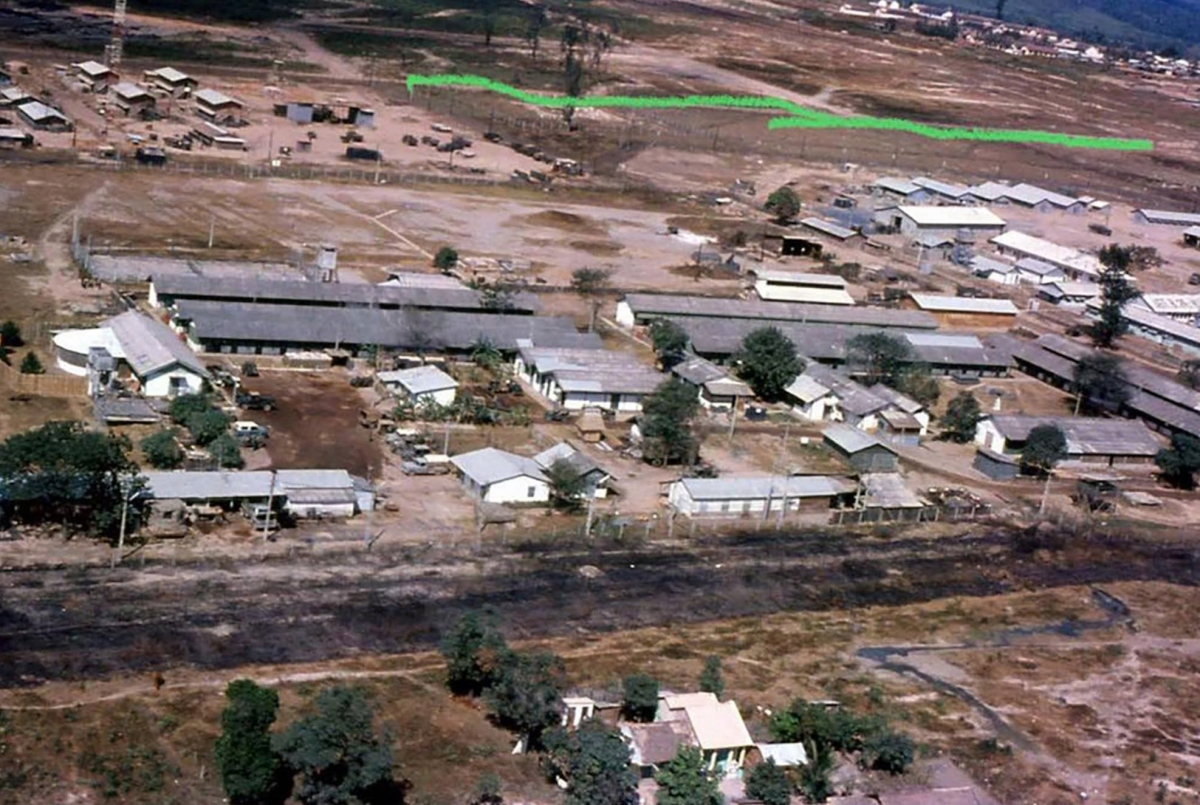
Evidence of possible mass graves in Le Thi Rieng Part, Ho Chi Minh City
Preliminary conclusions suggest the possible existence of a mass grave containing soldiers and civilians who died during the 1968 General Offensive and Uprising in the area of Le Thi Rieng Park in Ho Chi Minh City. Before a workshop on June 8 shed light on the events of 58 years ago, few people were aware of the painstaking efforts by researchers and search teams over nearly eight years to decode historical records. The search began with an unidentified wartime photograph posted online.
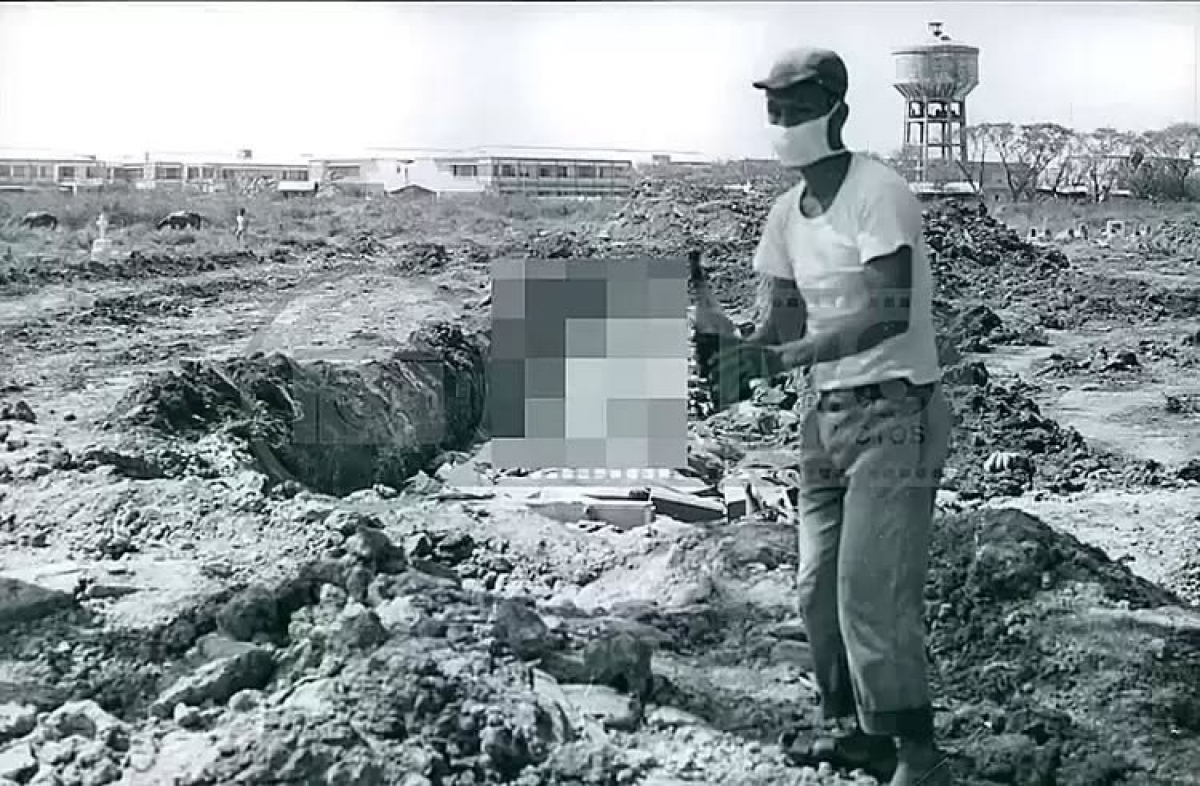
Architect Nguyen Xuan Thang, a member of the Vietnam Association for Supporting Families of Fallen Soldiers, says that in late 2018 he came across a black-and-white photograph on the internet. The image showed a young boy standing beside a long trench filled with bodies awaiting burial. There was no information indicating where or when it was taken or who took it. But the haunting image made an impression on him and sparked a years-long quest to uncover its story. Years later, Thang’s research team discovered a second photograph, which showed a man standing in a cemetery holding a bottle of disinfectant. Behind him was a mass grave trench covered with lime powder. Rows of terraced houses and a water tower could be seen in the background.
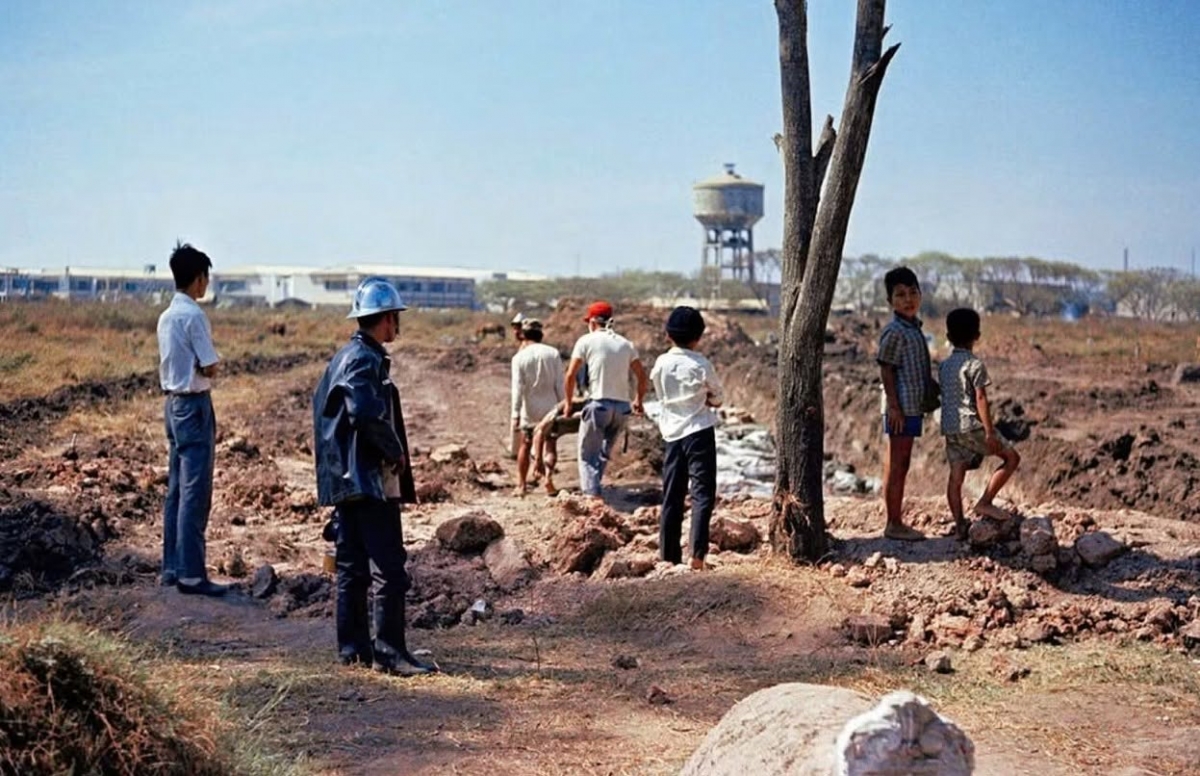
From what initially appeared to be disconnected clues, researchers, historical witnesses, and government agencies tried to piece together fragments of evidence in an effort to locate a mass burial site believed to contain the remains of hundreds of fallen soldiers and civilians. Thang said: “Fortunately, the second photograph captured part of a residential area in the background, including rows of houses and a water tower. A major breakthrough came when we obtained a color photograph from the Associated Press. According to a caption, the image was taken on February 12, 1968, as workers in Saigon were burying fallen soldiers and civilians in a third mass grave trench. The caption explicitly identified it as the third trench.”
After determining the location and timeframe, Thang’s search team began to pinpoint the positions of the mass graves. They studied satellite images taken in 1968, 1969, and 1972 and archived by the United States Geological Survey, aerial photographs captured between August and December 1951 by the French military's Overseas Aerial Survey Battalion, and satellite images taken by Maxar and Airbus in 2002 and 2024.
The experts also reviewed countless historical documents such as maps of Saigon before 1975, maps of Ho Chi Minh City after 1975, current maps, and historical records sourced from archives in the United States and France. The team also gathered documents related to the burial of fallen soldiers during the Mau Than Offensive in the Saigon–Cho Lon area, the clearance of Chi Hoa–Cho Quan Cemetery, and the construction and expansion of Le Thi Rieng Park, and collected information from local communities and historical witnesses.
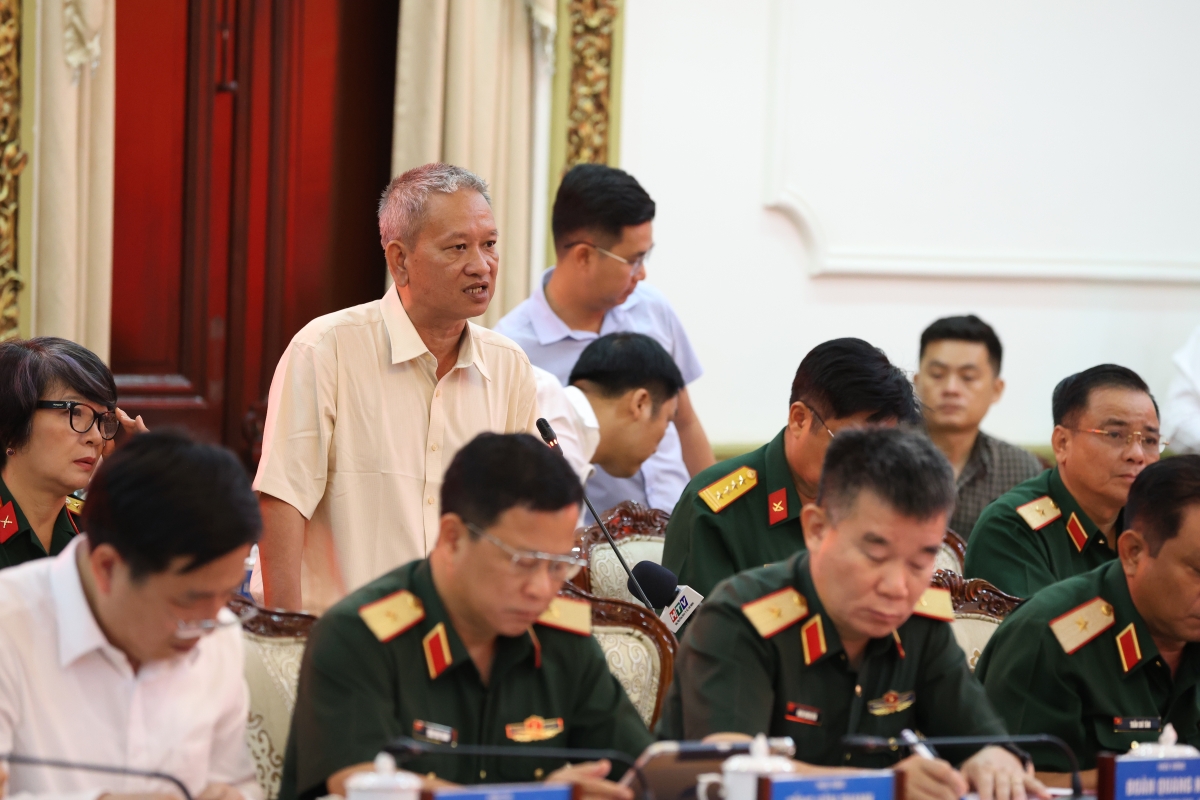
Finally, all the evidence pointed to the same location, the Le Thi Rieng Park in the former District 10 of Ho Chi Minh City. Colonel Bui Yen Tinh, Deputy Director of the Operations Department of the General Staff of the Vietnam People’s Army, told the seminar: “The team’s dossier is exceptionally comprehensive in its collection of historical materials, information processing, and technical analysis. The research lasted nearly eight years, from November 2018 to May 2026. It took almost 4 years to determine that the 3 photographs were taken at what is now Le Thi Rieng Park. They analyzed and cross-referenced the materials, applying image-matching algorithms, and multilayer overlay techniques to identify traces of the burial trenches.”
While experts sought evidence in photographs and maps, historical witnesses contributed additional pieces of the puzzle.
“During Tet 1968, around 9 or 10 a.m, one day after the fighting broke out, I went to the cemetery with a group of friends and witnessed a mass burial. The smell was overwhelming, and we covered our noses with our shirts.”
“The fighting around the Ong Ta-Bay Hien area was extremely fierce that day. I saw many helicopters firing rockets. Out of curiosity, I went to see what was happening. As I passed the cemetery, I noticed a crowd gathered there. I went inside and saw dozens of bodies that had been collected beside the mortuary.”
“I remember clearly the construction of Le Thi Rieng Park in 1987 when I was a security guard there. While bulldozers were excavating the ground, numerous human remains were uncovered along with personal belongings.”
According to findings presented by Military Region 7, at least five mass grave trenches, containing the remains of 900 to 1,000 fallen soldiers, may exist within Le Thi Rieng Park.
Major General Tran Chi Tam, Deputy Political Commissar of Military Region 7 and Head of Steering Committee 515 of Military Region 7, said: “Two very important landmarks visible in the original photographs – the tamarind tree and the water tower – still exist today. These landmarks provide a solid basis for the next steps. We’ve confirmed the positions of 2 mass graves, and the remaining 3 will require further assessment. Some participants have suggested that additional graves may exist outside the currently studied area. This possibility will require further investigation and verification.”
Nearly 60 years after the 1968 Tet Offensive, researchers have helped uncover evidence of a mass grave hidden beneath the heart of Ho Chi Minh City. Although further verification is needed, bringing the fallen back to their families and comrades is now closer to becoming a reality.
For the families of martyrs, the return of a loved one’s remains marks the end of a painful journey. Each set of remains repatriated is a promise fulfilled, a promise that Vietnam will never forget its heroes. The campaign is an expression of the nation’s gratitude to those who sacrificed their lives for our independence and peace.