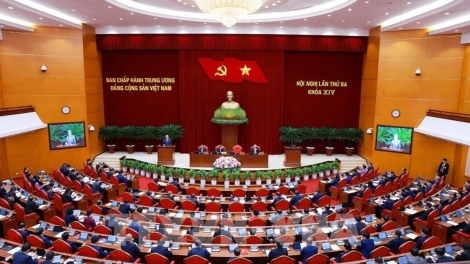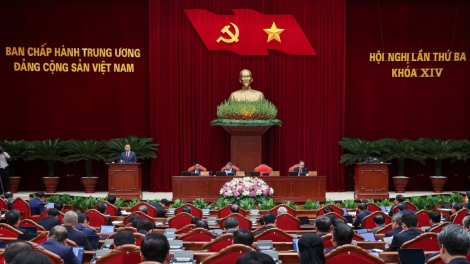
Party General Secretary and State President To Lam, Prime Minister Le Minh Hung, and National Assembly Chairman Tran Thanh Man attended the event.
The conference was connected online with Party committees in provinces, cities, agencies under the Party Central Committee, and grassroots-level organizations. It was also broadcast live on the Voice of Vietnam and Vietnam Television.
Participants studied 9 thematic reports, highlighting the core contents, new points, and requirements to implement the resolutions adopted at 3rd plenum of the 14th Party Central Committee, held from July 20 to 24.
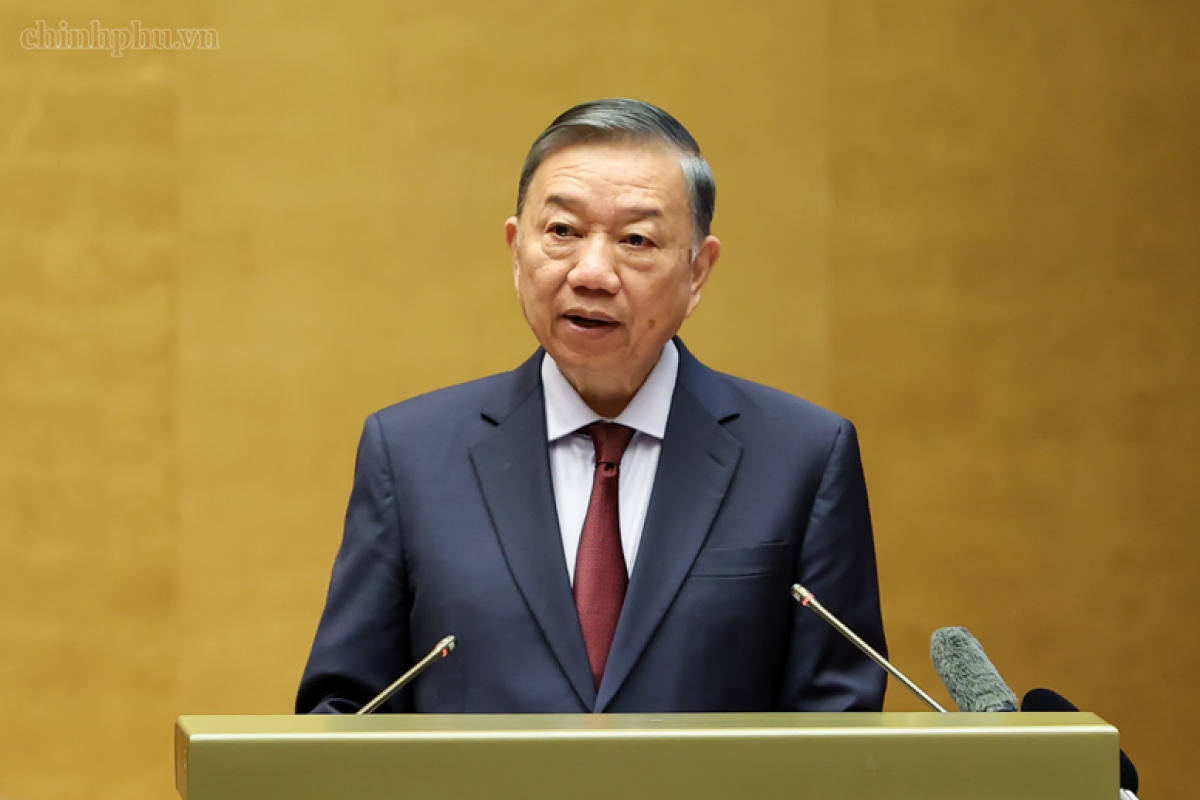
Addressing the conference, Party General Secretary and State President To Lam said the 3rd plenum reached a high consensus on major policies related to Party building, the political system, national development, and defense.
He emphasized that the entire Party and political system must share a common understanding that implementation must clearly define tasks, responsible individuals, deadlines, effectiveness, and accountability. The quality of implementation, he said, is the measure of leadership capacity, governance effectiveness, and the performance of the political system. He stressed that awareness must be translated into action, and determination into concrete results.
Mr. Lam said: “The key point is to deeply understand that the decisions of the Party Central Committee form an interconnected system, aiming to comprehensively renew the methods of leadership, governance, development, and national protection. Party building, organizational restructuring, and personnel development must enhance leadership capacity and improve the operation of the political system. National resources and development space must be managed effectively, while the development model should be based on productivity, knowledge, technology, innovation, and human resources, in line with Vietnam’s practical conditions. Defense, security, foreign affairs, and environmental protection must proactively prevent risks, strengthen resilience, and safeguard national interests. These tasks are closely linked, and weaknesses or delays in any area would affect overall progress.
He called for urgent and comprehensive efforts to translate the Party Central Committee decisions into practical action programs and plans with clear priorities and coordination among different tasks.
Regarding the two-tier local government system, Mr. Lam said the Party Central Committee does not plan to reorganize or adjust commune-level administrative boundaries, as the current system is generally operating stably and effectively. However, provinces and cities that consider adjustments necessary may submit proposals based on Party guidelines, State laws, development plans, governance requirements, and legitimate aspirations of local residents.
He stressed that any proposed adjustment must be scientific, cautious, feasible, and capable of creating consensus, while serving local socio-economic development and improving services for the people.
The top leader called for stronger implementation capacity to ensure the political system operates smoothly and effectively. He urged continued efforts to build a contingent of officials with strong political qualities, competence, and credibility; promote the exemplary role and responsibility of leaders; strengthen implementation discipline; and enhance inspection, supervision, communication, and public engagement.
“People must be placed at the center, as the subject, goal, and driving force, in every action program. Economic efficiency must go hand in hand with social progress and justice, culture, environmental protection, national defense, and security. Long-term interests must not be sacrificed for short-term achievements, and vulnerable groups must not bear unreasonable costs. The value of the resolutions must be reflected in improvements in people’s quality of life, development opportunities, safety, trust, and happiness,” said Mr. Lam.
The Party General Secretary and State President concluded that all decisions made by the Central Committee must be immediately transformed into concrete programs, tasks, and measurable outcomes, with results verified through real changes, service effectiveness, and public satisfaction.