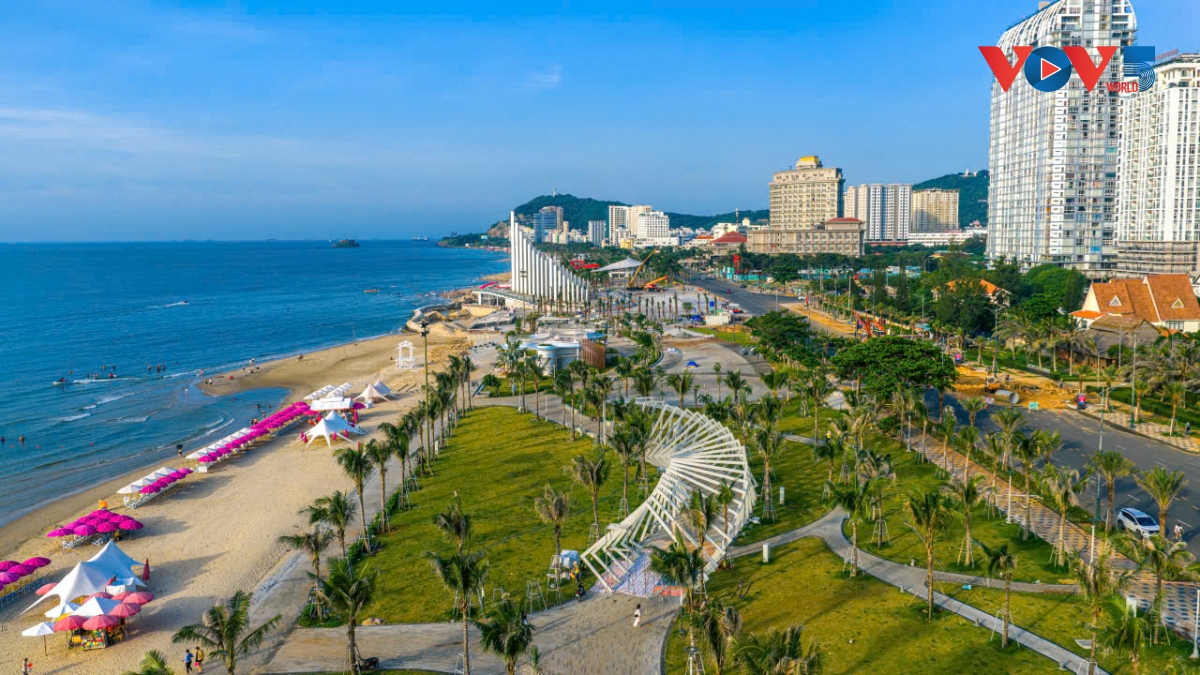
For years, a development model centered on the urban core powered HCM City's remarkable economic rise. But that model is increasingly showing its limits.
Rapid population growth, overstretched infrastructure, chronic traffic congestion, environmental degradation, and a dwindling land bank in the city center have left little room for further expansion under the old framework.
To maintain its position as Vietnam’s economic engine, the city must open up new spaces for development. Its greatest advantage lies in its dense river network, extensive port system, and vast maritime territory following recent administrative expansion.
Covering more than 6,700 square kilometers, home to over 14 million people, and boasting some 300 kilometers of coastline, HCM City possesses the fundamental conditions to become a leading marine megacity in the region.
More importantly, the city’s development mindset has shifted. Its administration now regards rivers and the sea as strategic resources for restructuring its economic landscape.
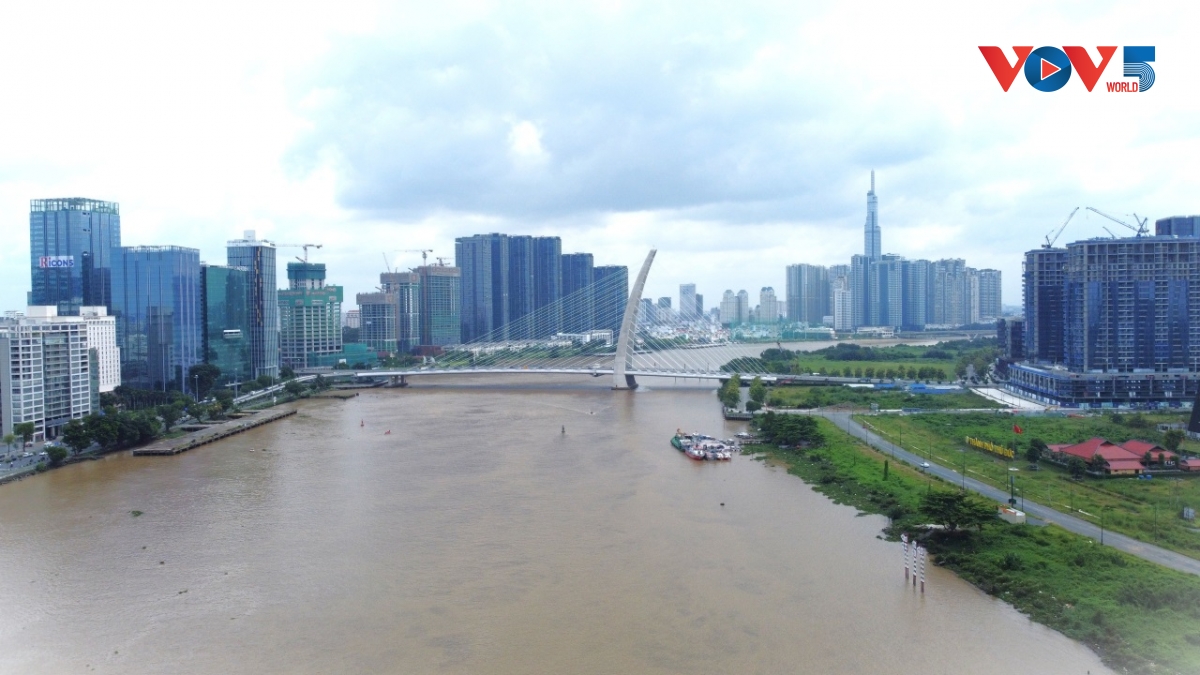
“Ho Chi Minh City is known as a maritime city. This is an urban area with an intricate network of rivers and canals, so we must leverage that. Planning must be integrated within a holistic framework of transport, shipping, logistics, and the entire system of river ports and deep-sea ports,” said architect Tran Ngoc Chinh, Chairman of the Vietnam Urban Development Planning Association.
Chính’s words underscore that sea-oriented development is not just about expanding urban space, it’s about increasing the city’s competitiveness in global logistics and supply chains.
The Cai Mep-Thi Vai port complex, the Saigon port system, and the proposed Can Gio superport will form a modern maritime network linked to international shipping routes. This network plus free trade zones, logistics centers, financial services, high-tech industries, and marine-based economic sectors will create new growth engines for HCM City and the entire southern key economic region.
If looking to the sea opens the gateway to global integration, development along the city’s river corridors offers a pathway to sustainability. For many years, HCM City’s rivers were seen primarily as natural boundaries and drainage channels.
But under the new master plan, the Saigon and Dong Nai rivers are considered strategic spatial axes—the ecological backbone of the entire metropolis. Developing waterway transportation, revitalizing riverbanks, expanding public spaces, and creating green corridors and riverside urban areas will improve quality of life, ease pressure on road infrastructure, increase climate resilience, and shape a distinctive identity for this waterfront city.
According to Dr. Duong Duc Minh, deputy head of the municipal Institute for Economic and Tourism Development Research, under the eco-tourism luxury program, each resort will sponsor a village supplying OCOP items, embedding agricultural products into an agri-service ecosystem.
“Ho Chi Minh City possesses solid foundations to build these products. Reallocating economic value is not about the supply chain, but about shifting from a value chain to a value cluster, enabling all stakeholders to participate and amplify value,” said Minh.
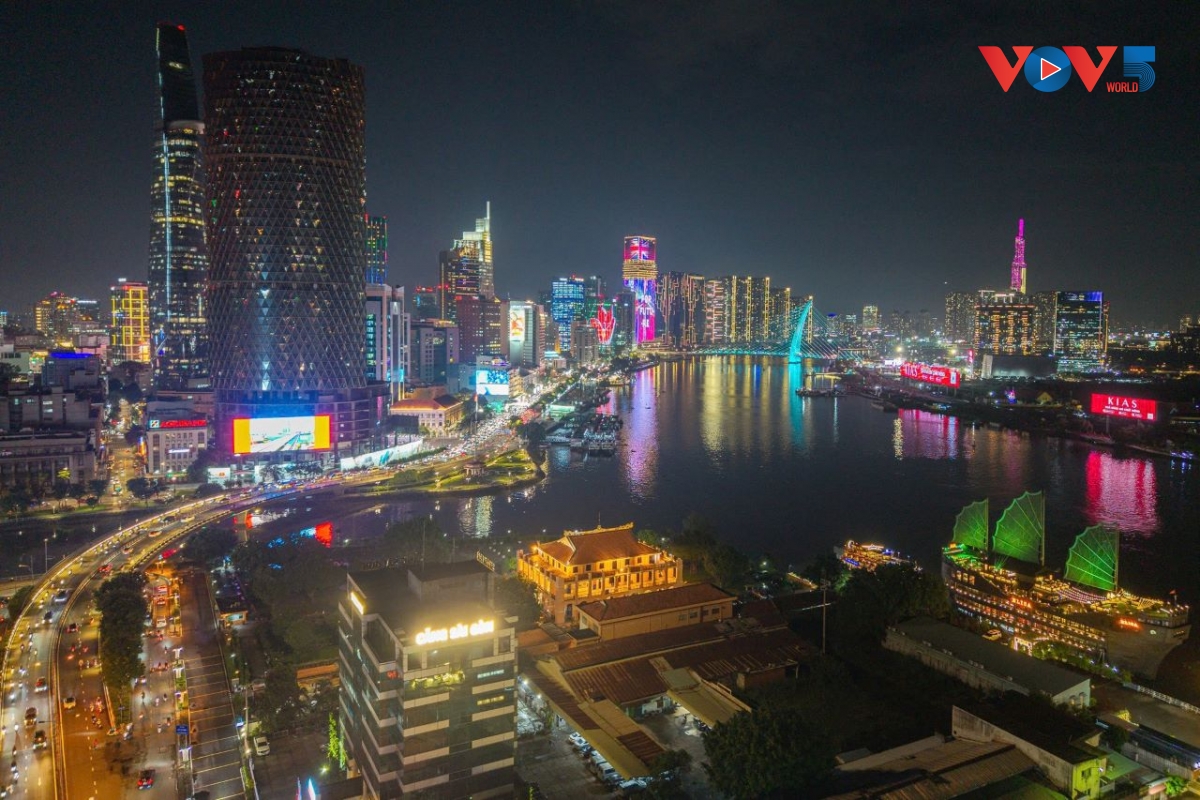
Expanding along rivers and toward the sea does not mean exploiting resources indiscriminately. The foremost challenge for HCM City is balancing economic growth with ecosystem conservation. This is especially critical with climate change, sea-level rise, and saltwater intrusion becoming more severe. A coastal megacity can thrive sustainably only if disaster resilience and preparedness are given equal weight with development objectives.
Dr. Tran Du Lich said, “We must have a comprehensive plan and solutions to combat climate change, protect the environment, and build a green waterfront. I want to underscore the necessity of protecting the Can Gio Biosphere Reserve—the lungs of the region. That’s something that needs to be articulated more clearly in the master plan.”
HCM City’s vision of reaching toward its rivers and the sea is timely and inevitable. Politburo Resolution No. 09 has set the goal of making the city a regional center for economics, finance, science, technology, and innovation.
Achieving that ambition will require large-scale infrastructure projects and a modern development model that balances economic, social, and environmental priorities. Only by harmonizing growth and sustainability can HCM City truly become a maritime gateway, a regional logistics hub, and a megacity of international standing.