




Overall, the nine-month growth picture shows that local economies are gaining stronger momentum.
Localities drive growth
The 5 provinces and cities with the highest GRDP growth rates in the first nine months were all among the top 10 performers in the first half of the year. Leading the ranking was Quang Ninh, with nine-month GRDP growth of 12.5%. In the third quarter, the province recorded an impressive growth rate of 15%. The province’s strong performance was driven by faster public investment disbursement, robust industrial production, and a recovery in tourism, which in turn boosted accommodations, food services, travel, and transport.
Nguyen Thuy Yen, Deputy Director of Quang Ninh’s Department of Culture, Sports and Tourism, said: “We have proposed multiple solutions – information and promotional campaigns as well as mechanisms and policies – to develop tourism products and infrastructure and make tourism in Quang Ninh more modern and high-end.”
During the review period, a number of large-scale investment projects – high-rise buildings, commercial and service complexes, and infrastructure projects got underway in Quang Ninh. Industrial production was a bright spot in the city’s growth picture, with both production capacity and output expanding. From January to September, the local manufacturing and processing industry’s production index rose 33.6% year on year.
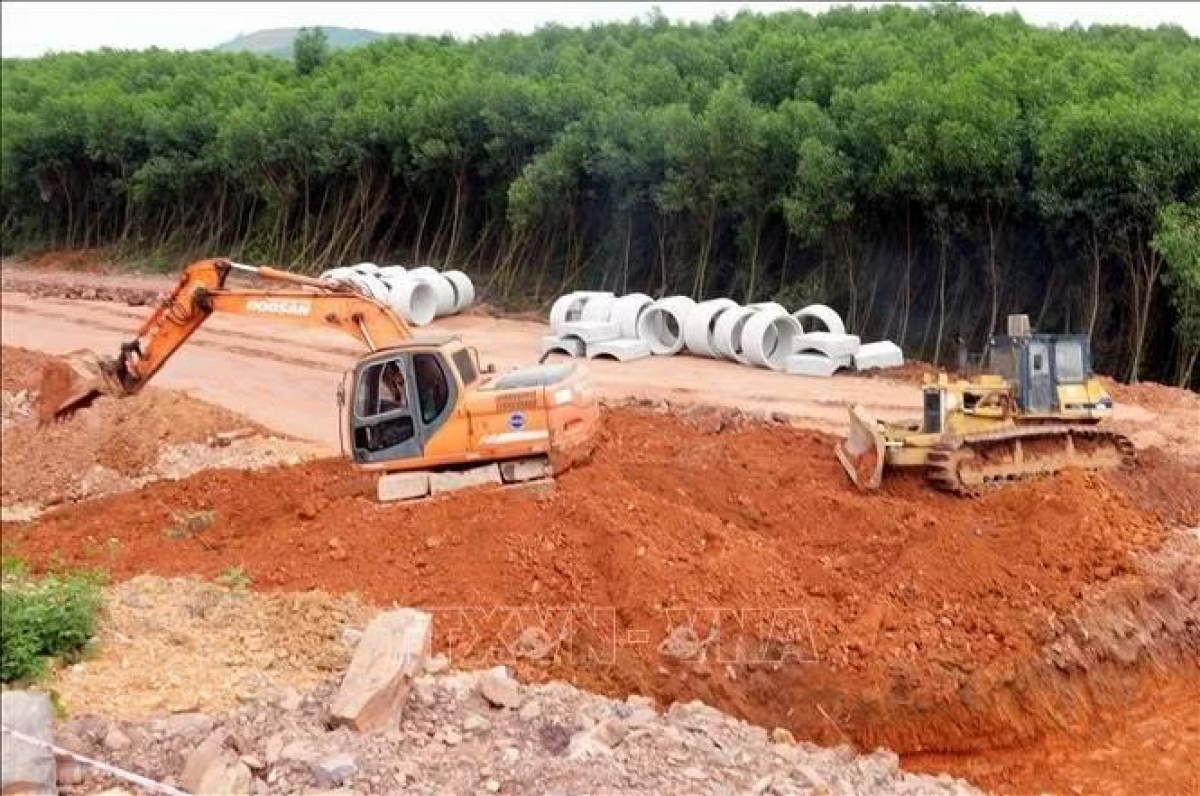
Quang Ninh was followed by Ha Tinh, Hai Phong, Bac Ninh and Ninh Binh. All five localities posted GRDP growth of more than 11% in the first nine months, a significant acceleration from the first half of the year.
New pillars of growth
The faster growth has come with the emergence of some new pillars of growth. Production capacity is expanding, major projects are beginning to deliver results, services are recovering, public investment is accelerating, and some long-standing bottlenecks are gradually being resolved.
When more localities can generate their own growth momentum, the foundation for national economic growth becomes stronger and more resilient. Vietnam has set a GDP growth rate of at least 10% this year, a target which the largest economic centers cannot reach by themselves. Each province and city must contribute, according to its own potential, advantages, and available resources.
This year, a growth target has been assigned to each locality. The Government’s Resolution 169 assigns 32 socio-economic and environmental indicators, for 2026 and until 2030, to every province and city. With targets quantified, each locality must develop its own growth scenario, closely monitor progress, identify shortcomings, and promptly address bottlenecks. Decentralization comes with greater local accountability. Local authorities have more room for initiative, but they must demonstrate the effectiveness of their decisions.
The Urban Development Law, which takes effect on October 1, 2026, creates a legal framework to unlock resources and generate new development momentum.

Vice Chairman of the National Assembly Nguyen Khac Dinh, said: “The draft law adopts a model of stronger and more comprehensive decentralization, based on the principle that local authorities take action and bear responsibility. But it must ensure the consistency of the national administrative system and adhere to the principles governing the exercise of state power as stipulated by the Constitution. Provisions on mechanisms and policies to boost urban development have been revised to ensure they are truly distinctive and provide exceptional incentives.”
The Urban Development Law allows local governments to plan and implement projects in order to reduce costs for businesses and optimize investment flows. The law also provides a legal framework for new urban development models, including smart cities, green cities, and transit-oriented development (TOD). These models allow local authorities to capture increased land values around transportation hubs and reinvest the money in infrastructure.
The nine-month growth picture shows that local economies are gaining momentum. In the final months of the year localities should build on existing gains, capitalize on new growth pillars, accelerate investment, expand production, and unlock untapped potential in sectors that still have room to grow.