



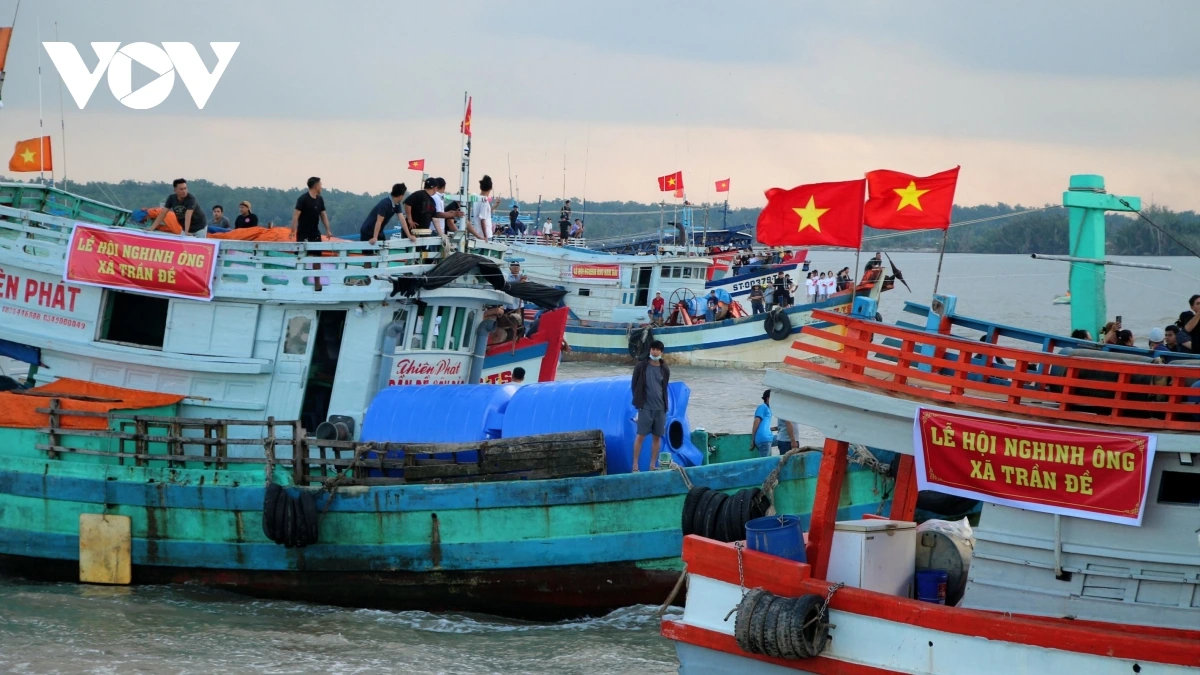
The festival originated in 1955 in Gia beach, where residents found a large whale washed ashore. Viewing the whale as a sacred guardian of fishermen, they built a bamboo shrine to bury and worship it. Fishermen later constructed a Whale Mausoleum in Cảng hamlet, Tran De commune, and moved the whale’s skeletons there. After six restorations, the mausoleum has become a permanent worship site housing more than 10 whale skeletons.
Ho Quang Dai, Chairman of the People’s Committee of Tran De commune, said the festival has become a major cultural and social event attracting large numbers of residents and visitors. Besides solemn rituals, there are many cultural, artistic, and sports activities, creating a joyful atmosphere and strengthening community bonds.
“The Nghinh Ong Festival is not limited to its folk religious value but also is an opportunity for cultural and spiritual tourism development. With its unique rituals, solemn ceremonies, and diverse festive activities, Tran De has the potential to become an attractive destination for visitors to explore coastal culture. This is also an opportunity to develop tourism and marine economy, generating additional resources for the community,” said Mr. Dai.
In 2019, the Ministry of Culture, Sports and Tourism of Vietnam recognized the Nghinh Ong Festival of Tran De commune as a National Intangible Cultural Heritage.