




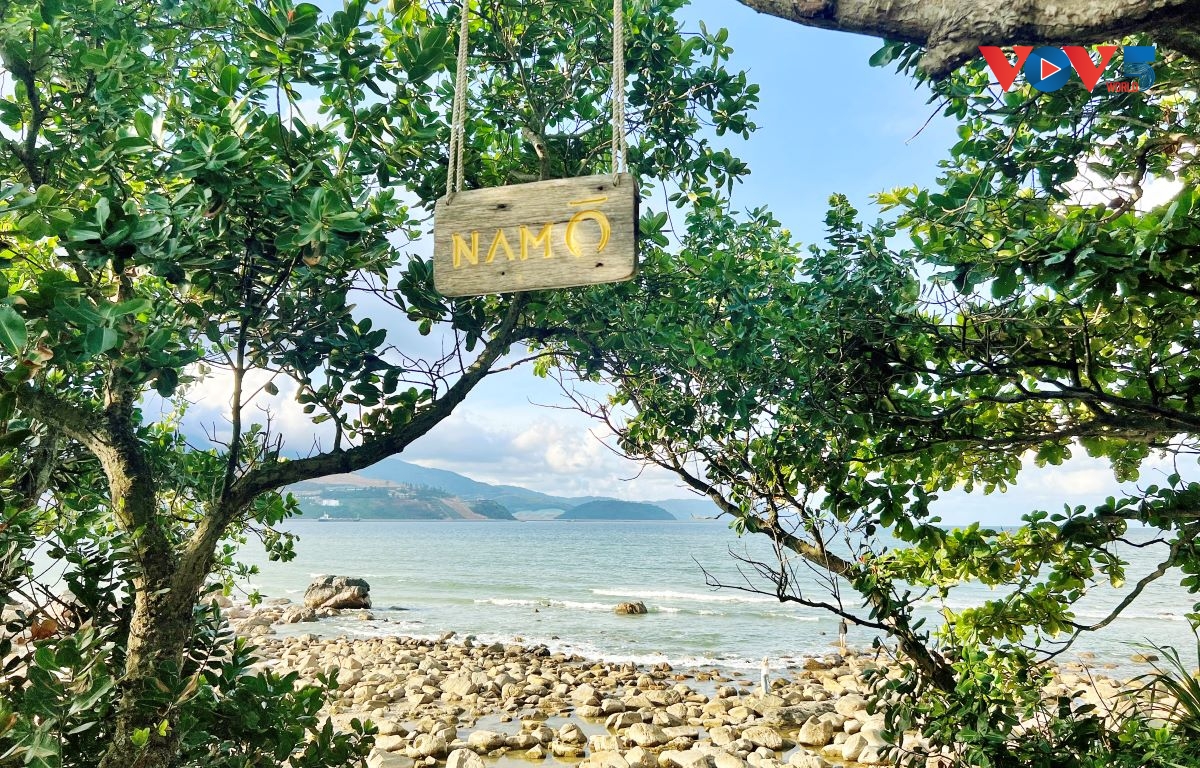
The coastal road running through Nam O village in Hai Van ward, Da Nang city, has become a modern resort area. But behind the new development, the slow rhythm of life remains largely unchanged in Nam O. Every afternoon, the shore comes alive with fishermen preparing to set sail. Some check their nets, others repair boats, while groups of fishermen sit chatting about the sea, their fishing trips, and the shrimp and fish they bring home from each outing.
Fisherman Nguyen Van Hai told VOV, “Sometimes we head out to fish at 3 or 4 a.m., or even at midnight. We go 3 to 5 kilometers offshore. Black anchovy catches have been poor in recent years. There are still some, but not many. There are enough for villagers to make fish sauce, but much less than in the past.”
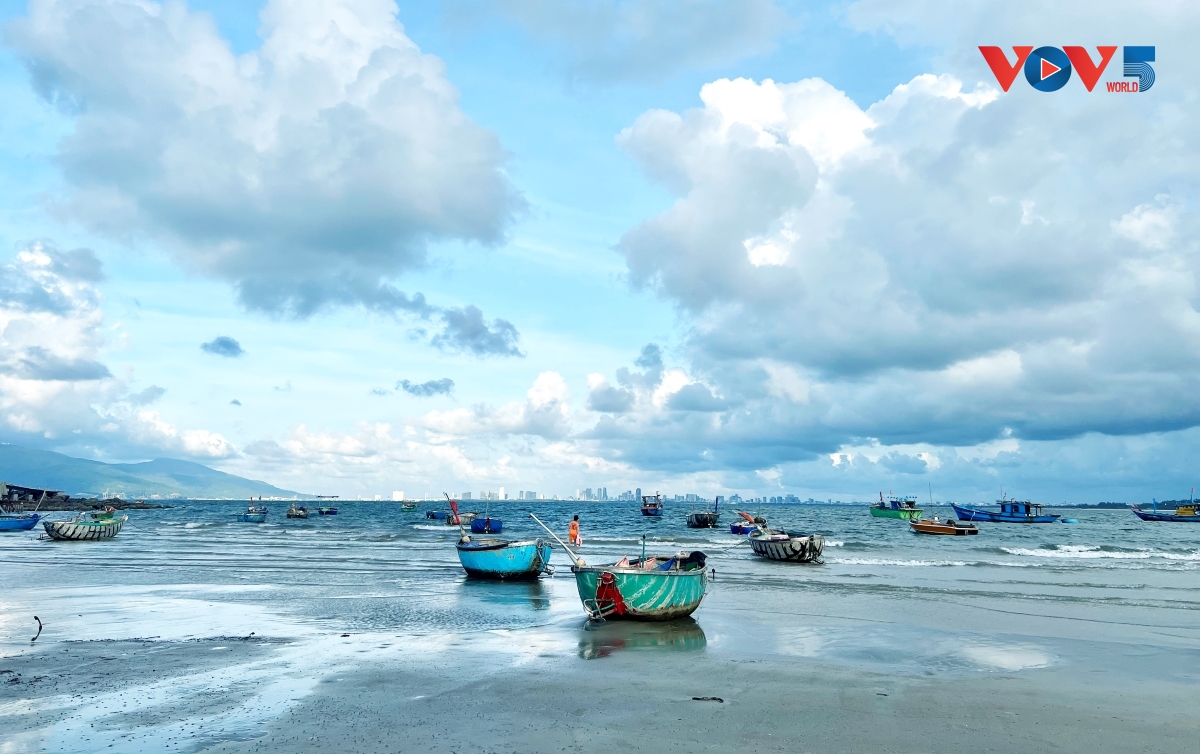
Every morning during the black anchovy season, in the third and fourth, and eighth and ninth lunar months as fishing boats return to shore, villagers call out to one another to buy the fresh catch to make first-draw fish sauce. According to Nam O locals, fish sauce-making dates back to the 19th century and has been passed down through generations. The taste of Nam O fish sauce comes from just two ingredients – fish and salt.
Fresh black anchovies of the right size, particularly those caught during the third and fourth lunar month, produce a richer flavor. They are combined with salt from Sa Huynh in Quang Ngai province and fermented for 12 to 18 months in ceramic jars made in Lai Thieu, now a ward of Ho Chi Minh City.
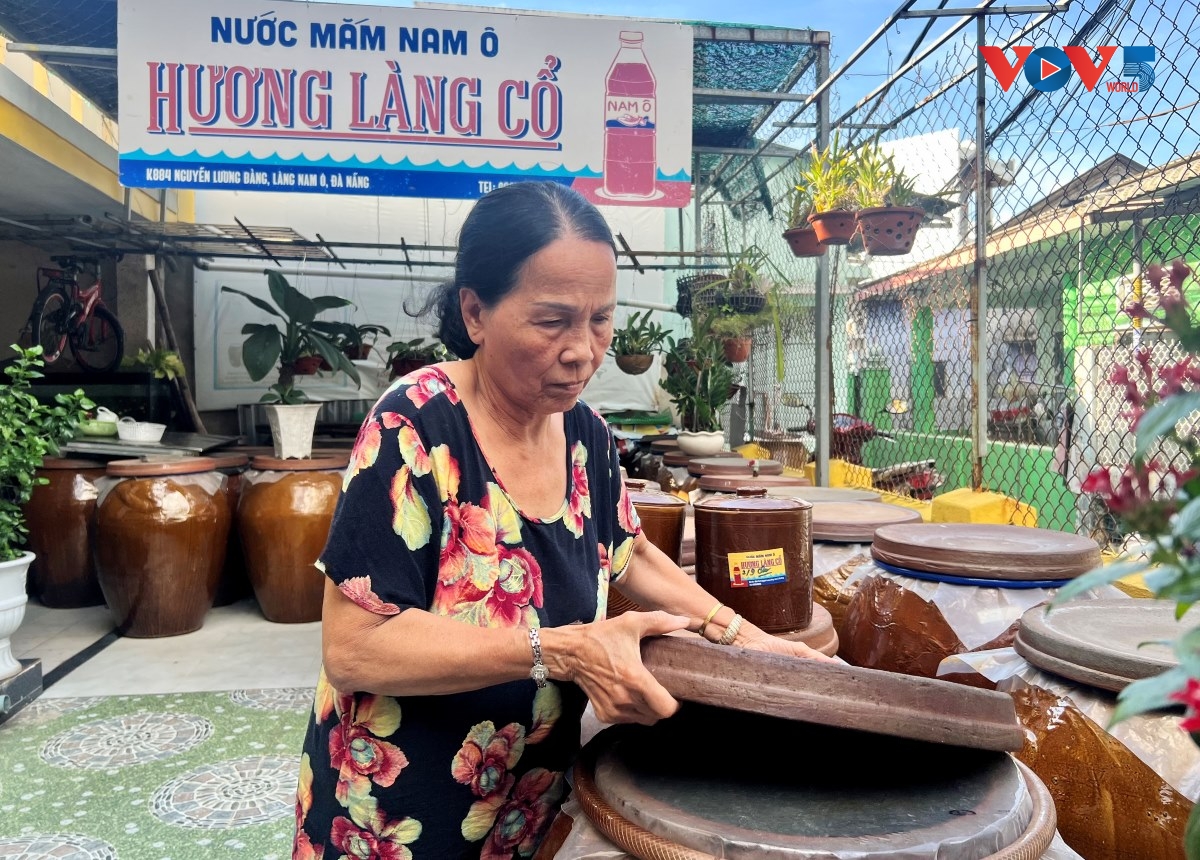
Phan Thi Ngoc Bich, whose family has made fish sauce for four generations, says that both the salt and the fish are important. The fresher the fish, the clearer and more beautiful the sauce.
“In the past, during the sunny season, our grandparents fermented fish in jars so they would have fish sauce to sell during the rainy season and earn money to raise their children. We continue to follow their tradition. Back then, the entire village made fish sauce. Today, only about 100 households still practice the craft. If we give it up, the craft passed down from our ancestors will disappear. As long as we still have the vats, jars, and tools, we must keep going. When the fish season comes, it would be such a waste not to make fish sauce,” Bich recalled.
Although the black anchovies are caught only during two brief seasons, making the sauce requires a year of painstaking care—protecting the jars from rain and sunlight and stirring the mixture daily until every glistening amber drop is carefully filtered. Each step reflects the dedication of Nam O villagers to their craft.
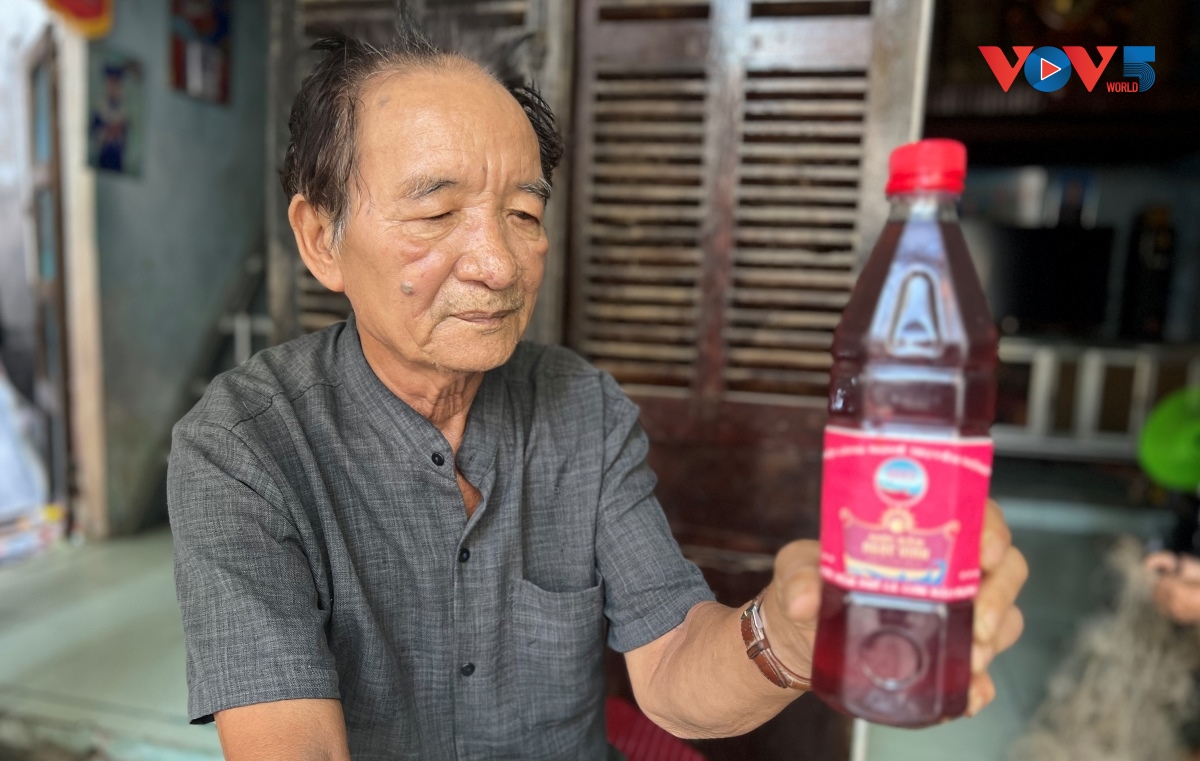
Tran Ngoc Vinh, Chairman of the Nam O Traditional Fish Sauce Craft Village, told VOV, “We have five members with OCOP certification and three cooperatives, who produce an average of 300,000 liters of fish sauce annually.”
“I want to showcase the traditional Nam O fish sauce-making process to domestic and foreign tourists so they can see our production capacity, quality, and methods. We have received support from World Vision, and delegations from Singapore and Thailand have visited to share experience and learn from our model,” Vinh noted.
As the afternoon sun softens, cool sea breezes sweep into the village, carrying the briny aroma of the sea. Huynh Thi He’s house echoes with laughter and talk. Her 84-year-old mother, who taught her how to make fish sauce, sits beside a large bamboo tray piled with fish and her tanned, slender hands sort and pack dried fish for customers.
Meanwhile, Ms. He tends to fermenting the sauce. During the 12 months it takes for the sauce to mature, Nam O residents make several kinds of fermented fish paste and take on various other jobs. She said, “Only black anchovies produce that beautiful fish sauce color. As our ancestors taught us, ten bowls of fish require four bowls of salt. Good salt makes good fish sauce. We also make fermented shrimp paste, all kinds of fish products. I’ve been practicing this craft for more than 30 years and have fallen in love with it. I make fish sauce and sell it all year round.”
When the black anchovies have yet to reach the waters off Nam O, the ancient reef is covered in lush green moss. This is when Nam O fishermen head out to collect the seaweed called purple laver that grows among the moss, and the village welcomes visitors from near and far. When the moss season ends and the fishing boats start returning to shore laden with black anchovies, Nam O enters another busy season of fermenting and distilling.