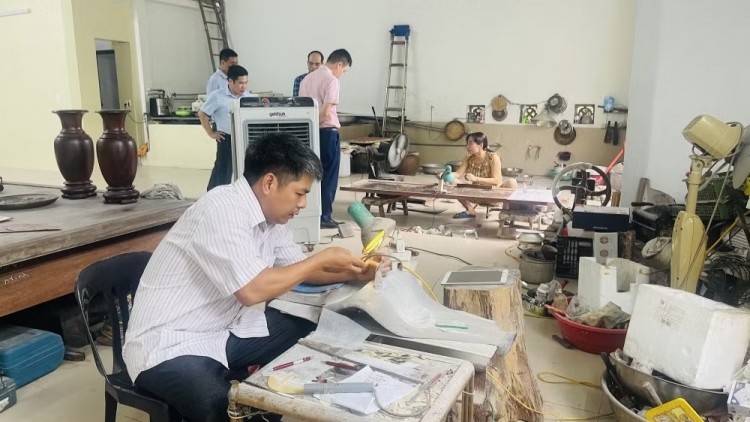




On summer days in June, rows of bamboo products line both sides of the road leading into the village, drying under the sun. From early morning, the sounds of grinding, sanding, and bamboo-processing machines are heard in the village’s narrow lanes.
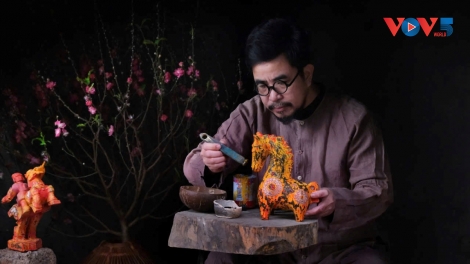
With a history spanning more than 600 years, Cat Dang boasts its lacquerware, particularly gold-gilded items such as statues, altars, shrines, ceremonial canopies, lacquered horizontal boards, and parallel scrolls that adorn communal houses, temples, pagodas, and places of worship.
While lacquerware was traditionally made from wood, Cat Dang artisans have expanded their repertoire by using bamboo and neohouzeaua to create souvenirs, home décor items, and office accessories suited to modern lifestyles. The use of eco-friendly materials like bamboo has become a trend in interior décor. The advantages of being lightweight, durable, affordable, and easy to transport give this material a central role in Cat Dang’s production.
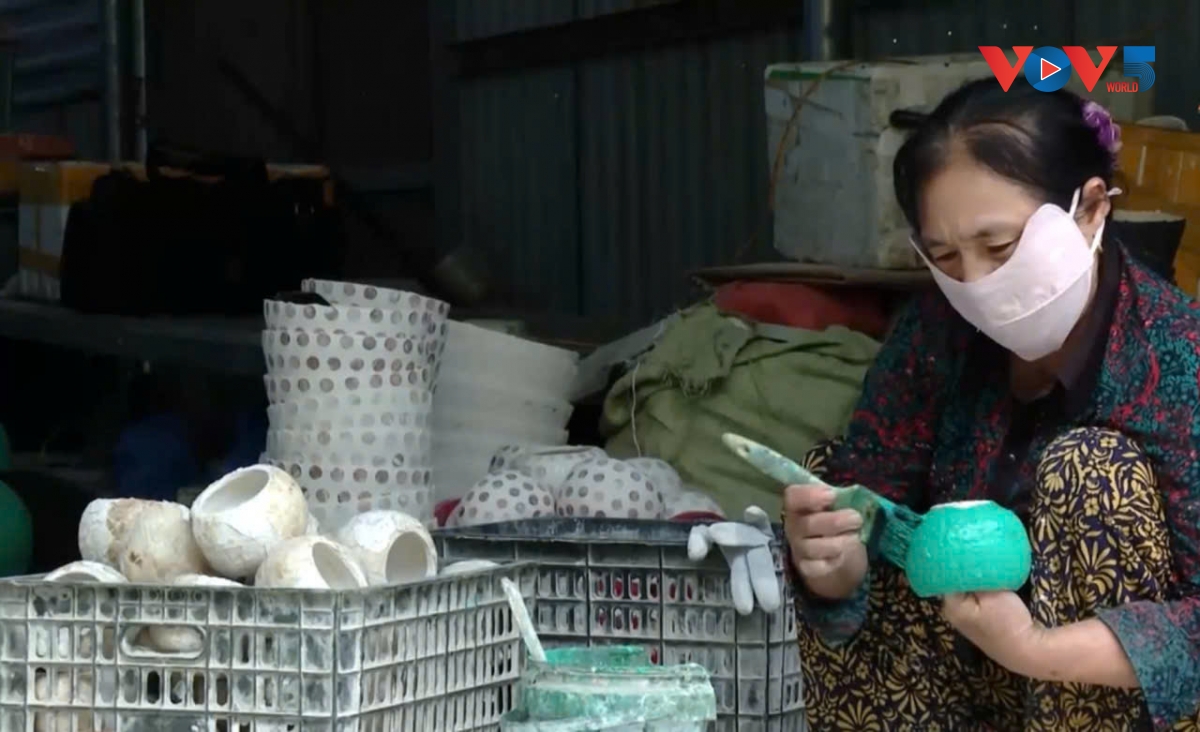
Dang Thanh Cong, the owner of a lacquerware workshop in Van Thang commune, told VOV that in the past, everything was made entirely by hand. Over the past few years, they have incorporated machinery to increase productivity.
“Recently, production of lacquerware made from coiled bamboo has expanded significantly. At the same time, our craftsmen have continuously improved their skills to meet increasingly demanding customer requirements. Our export output now ranges from hundreds of items to millions of products,” Cong noted.
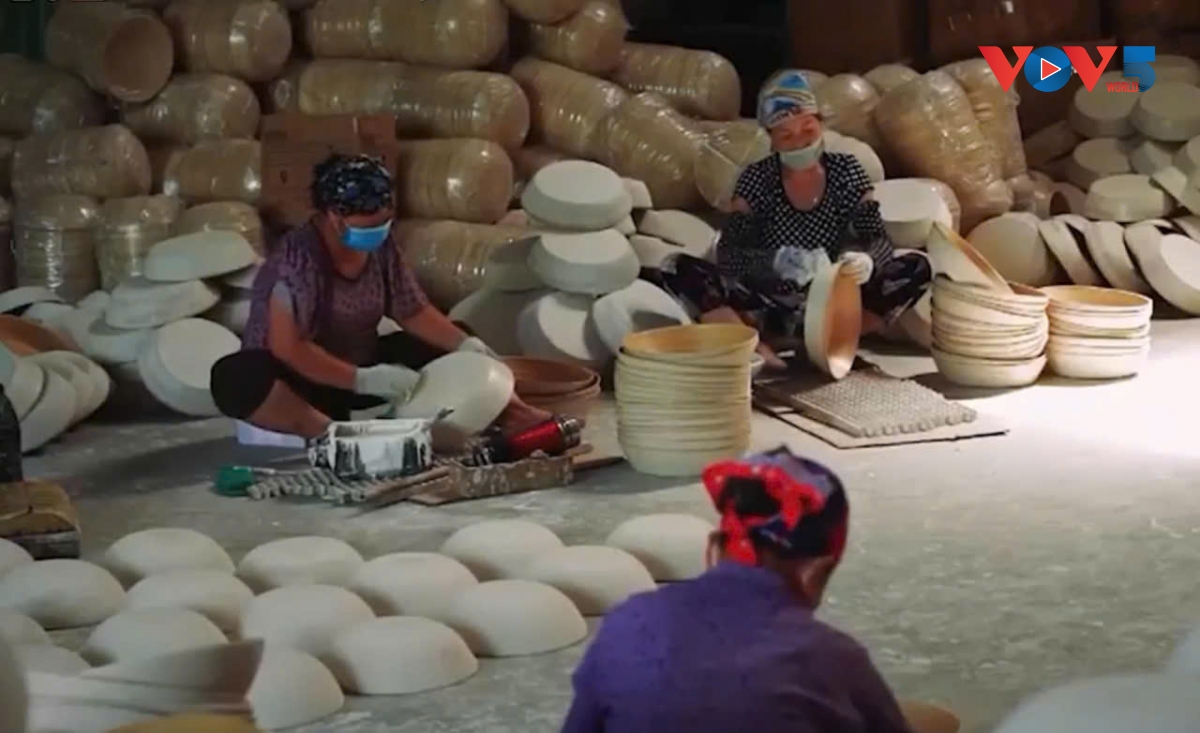
After being soaked for several months, bamboo and neohouzeaua are dried for about a week before processing begins. Once they are split, trimmed, and coiled, the unfinished products are dried again before being sent to enterprises for lacquer finishing. Bui Thi Thu, who has 20 years of experience producing coiled-bamboo lacquerware, explained the process starts with selecting the right bamboo—neither too young nor too old.
“The bamboo must then be submerged in water for at least six months to ensure the finished product is resistant to termites and remains durable over time. After that, the bamboo is split, shaved, and polished and then they are carefully bent and tightly placed in the molds. A specially formulated composite adhesive is applied to seal the gaps between the bamboo rings. Finally, the product is polished until it becomes smooth and glossy and reaches the desired thinness,” said Thu.
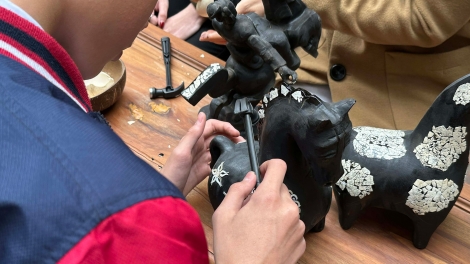
After the initial shaping stage, each lacquer item undergoes a series of processes, including priming, coating, polishing, mother-of-pearl inlay, eggshell decoration, and gold gilding. Artisans then embellish the pieces with a variety of decorative motifs. According to Trinh Ngoc Thuy, Deputy Director of the Nam Hải Company in Van Thang commune, for handcrafted lacquerware, every stage is crucial because these are environmentally friendly products.
“As many of them are used as household goods, kitchenware, and food containers, every production step must be carefully monitored to meet export standards and food safety requirements. All inspection procedures required by our clients are fully certified and recognized internationally.”
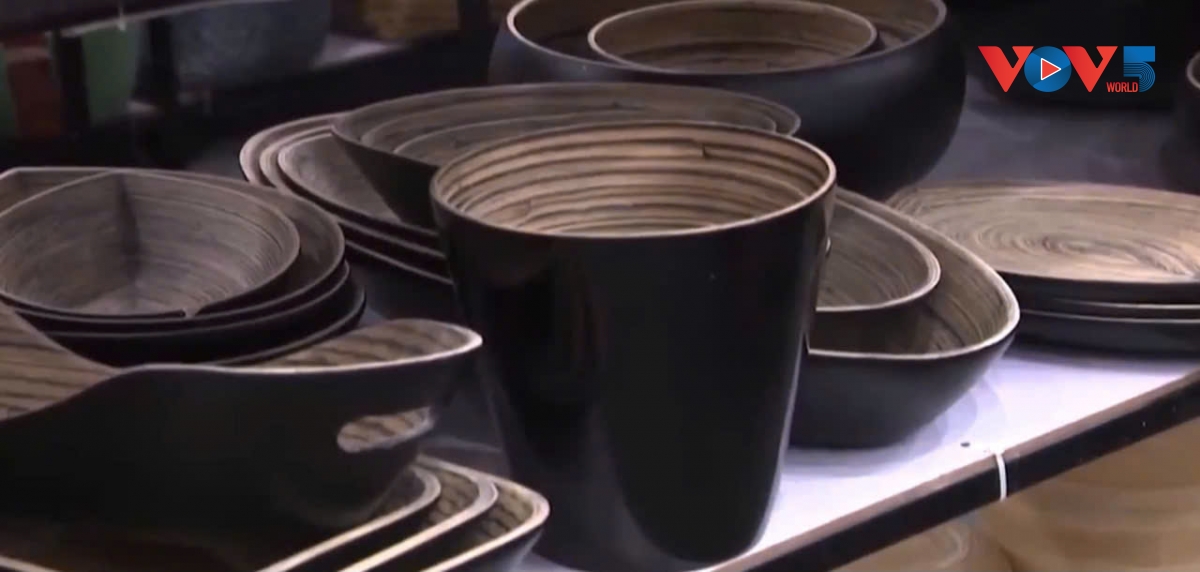
Cat Dang’s lacquerware portfolio is diverse, but primarily household items and interior decorations – vases, pots, paintings, and relief artworks. Thanks to the adoption of modern technologies, local producers have successfully met domestic demand while expanding exports to the US, the EU, Japan, and Russia.
Pham Tien Dien, Vice Chairman of the Van Thang commune People’s Committee, said, in the past, lacquer items were produced by individual households, supplying neighboring areas and domestic markets. “Today, our products are exported to Europe, the US, and many other markets. Local businesses have expanded production and established strict manufacturing processes that comply with international standards,” said Dien, adding, “In line with our economic development strategy, the commune will continue to prioritize the preservation and promotion of traditional crafts while creating favorable conditions for businesses to grow and thrive.”
More than 3,000 people in Van Thang are engaged in the lacquerware industry. To ensure the craft’s sustainable development, local authorities are helping businesses modernize equipment, participate in trade promotion events, and strengthen the Cat Dang bamboo lacquerware brand. At the same time, tourism planners are developing Cat Dang into a cultural tourism destination, integrating the craft village into Ninh Binh province’s cultural and eco-tourism routes.