



Kim Lan pottery village, 20 kilometers from central Hanoi in Bat Trang commune, is famous as a historic ceramics producer for Thang Long, the ancient capital of Vietnam. The village’s pottery craft emerged in the 8th century, flourished for ten centuries, and gradually declined toward the end of the 18th century. But by the late 1970s, villagers had rekindled the fires, revived the old kilns, and restored Kim Lan as a prosperous craft village.
Kim Lan retains its character as a peaceful village deeply rooted in the ceramics tradition. On both sides of the road leading to the village gate visitors will see pots, ceramic jars, bonsai planters, roof tiles, incense burners, cups, and bowls.
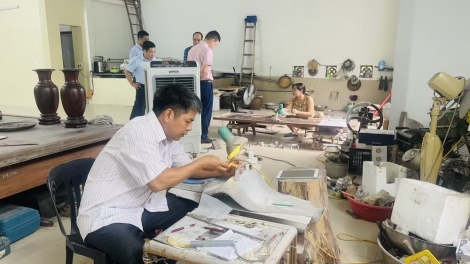
What sets Kim Lan ceramics apart is their simple, harmonious design, with an emphasis on functionality but featuring a refined elegance. Artisan Dao Viet Binh, Chairman of the Kim Lan Ceramics Association, said that Kim Lan pottery village has 425 households engaged in the production of architectural ceramics, household wares, feng shui items, and worship-related products.
“We have large-scale production workshops and have established the Kim Lan Ceramics Association, where local artisans can meet, exchange ideas, and pass down their production techniques," said Binh.
According to local craftsmen, Kim Lan ceramics are distinctive in the way they glow when exposed to light. Their translucent quality is achieved through carefully selected raw materials and precise firing techniques.
The clay must be thoroughly refined to remove impurities before being fired at temperatures almost 1,300 degrees Celsius. At the optimal temperature, the ceramic becomes translucent. If the temperature is even slightly lower, the light may take on a yellowish hue or fail to pass through the ceramic altogether.
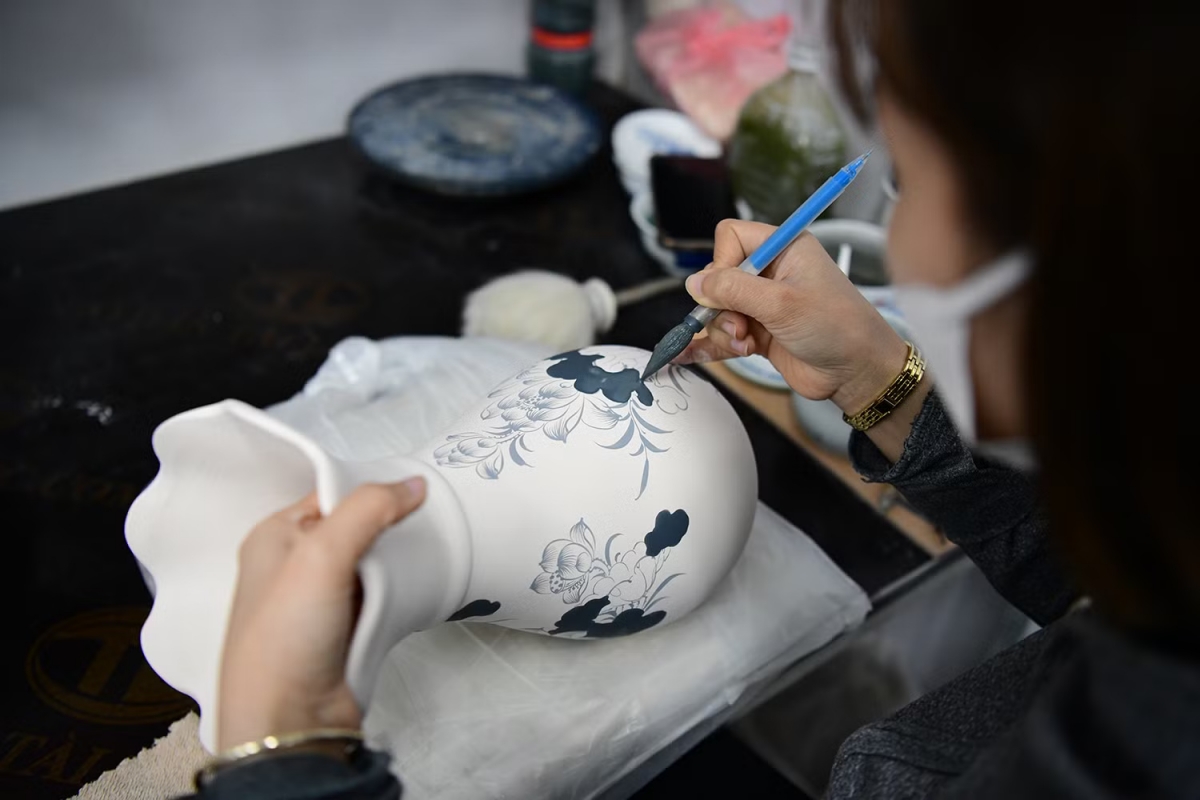
Having practiced the craft for nearly 40 years, artisan Pham Van Nguyen remains committed to hand-crafted pottery. Each form and layer of glaze is meticulously created from kaolin, a prized clay associated with Kim Lan's soil.
"I make hand-thrown pottery, a craft passed down from our ancestors. I focus on the blue-and-white glaze series, which produces high-value items. I chose my own path to preserve the craft. Through these pieces, more people are getting to know Kim Lan ceramics," Nguyen recalled.
The perseverance and resilience of previous generations laid the foundation. Kim Lan’s new generation is bringing fresh ideas to revitalize the village’s heritage. A young artisan named Tran Tat Quan has a background in fine arts. Using 3D relief modeling techniques and balancing aesthetics with functionality, Quan is creating visually striking but practical designs. His works have gained recognition both domestically and internationally.
"I create decorative pieces using sculpting, hand-painting, and other techniques rather than relying on molds. My approach is in line with modern pottery styles. My designs are never repeated. Production runs small, and once the pieces are finished, customers come directly to purchase them," said Quan
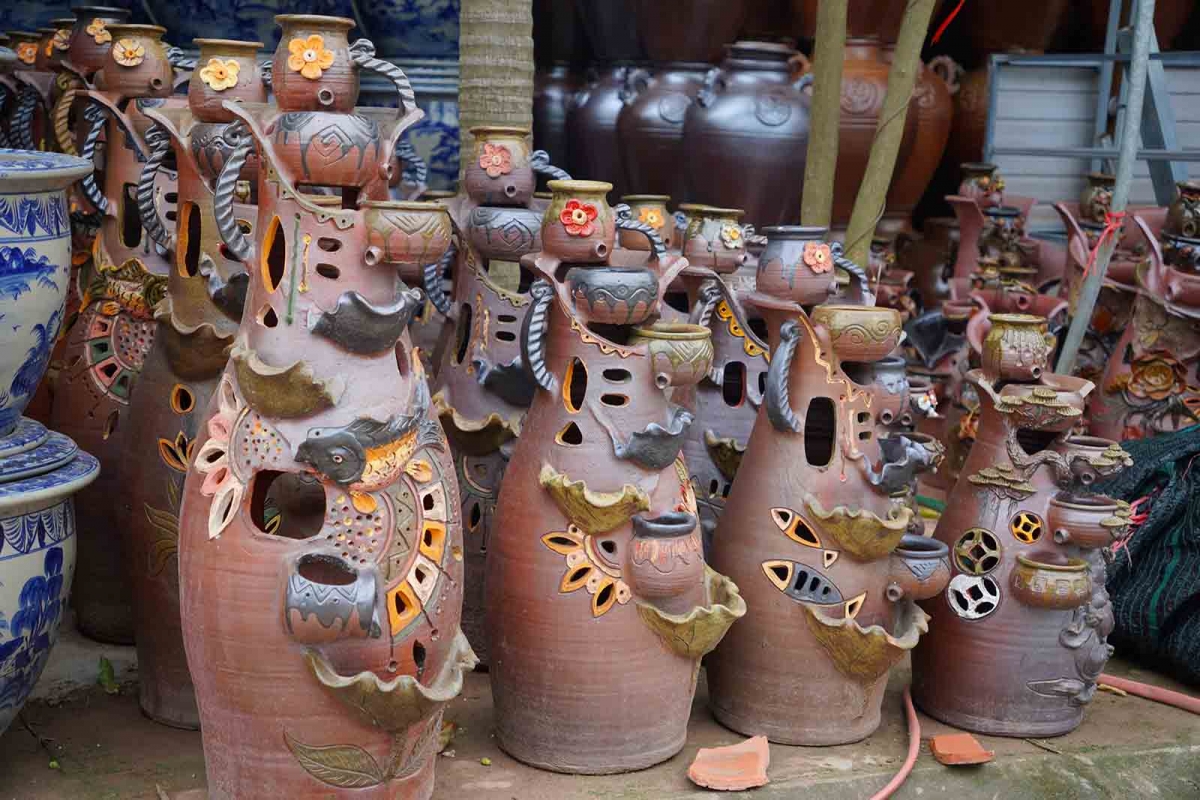
Preserving the craft means learning the ancient techniques but also keeping alive the creative spirit of past generations. Kim Lan still uses the traditional forms and glaze hues, but the younger artisans are experimenting with new designs and using e-commerce platforms to bring their products to a wider market.
Binh, the Ceramics Association Chairman, said, "Today, many households in the village sell their products on e-commerce platforms. Sales have been very good, which helps to promote our products."
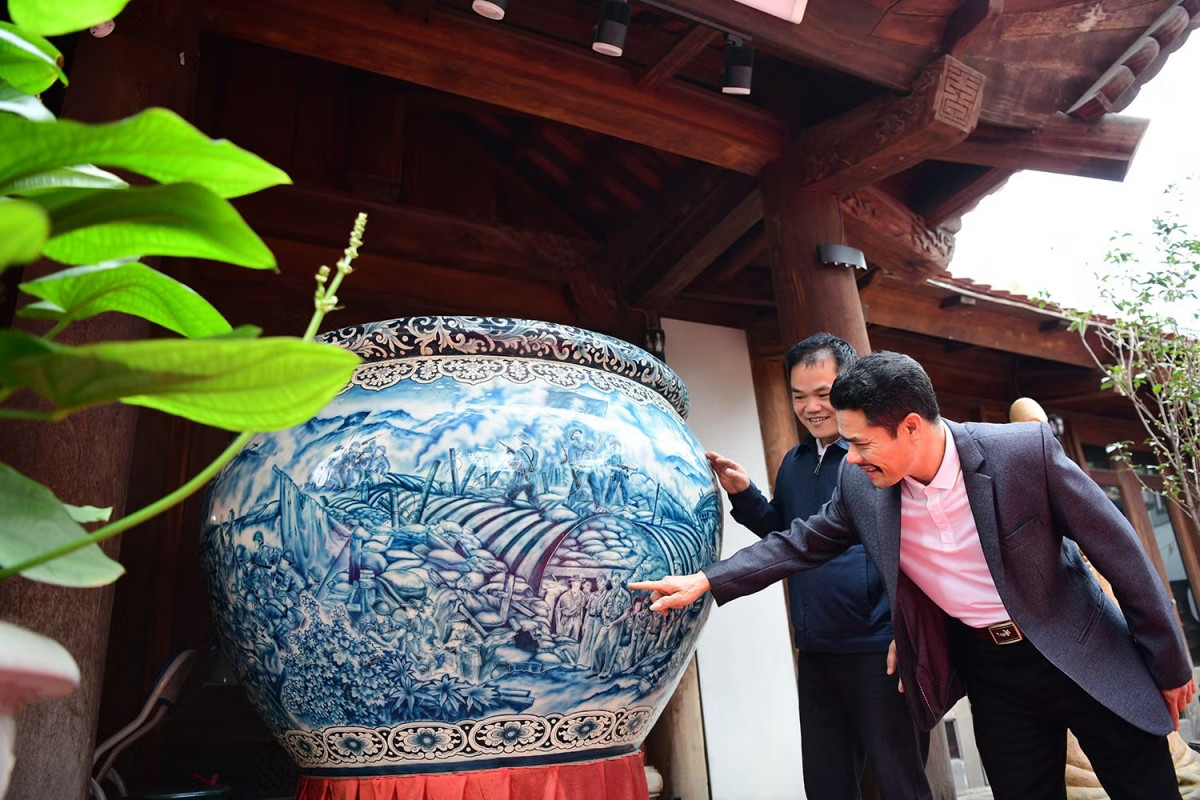
Anchored by the Kim Lan Ceramics Museum, Kim Lan has become a popular tourist destination as well as a production hub. The 200-square-meter museum containing 3,000 artifacts, historical relics, and stories from the thousand-year-old craft village, has become a popular destination for tourists, says Binh.
He added, "An OCOP product display has been set up next to the Kim Lan Ceramics Museum. We’re preserving traditional coal-fired kilns in their original state, which international visitors find particularly fascinating. Our strategy is to develop the ceramic craft alongside tourism."
Kim Lan’s artisans organize pottery training classes every year to pass the village’s legacy to future generations.