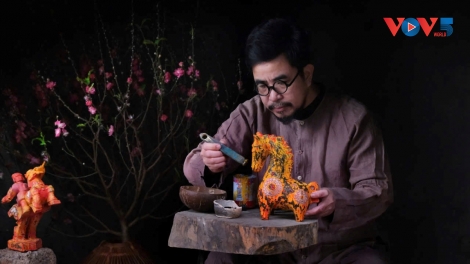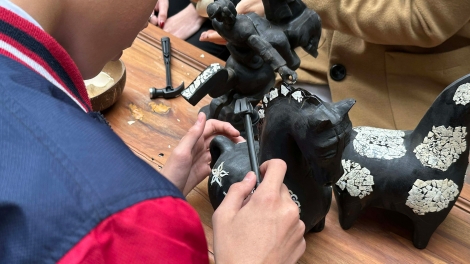




It takes an artisan 3 to 6 months to complete a traditional lacquerware piece through 25 stages of intricate, painstaking work. The distinctive value of Tuong Binh Hiep lacquerware lies in its exquisite inlay and painting techniques and its closely guarded material formulas.
At the heart of the craft is a unique blend of lacquer sap from Phú Thọ province and lacquer from Cambodia. The mixture gives the finished product remarkable depth, a lustrous finish, and exceptional durability.
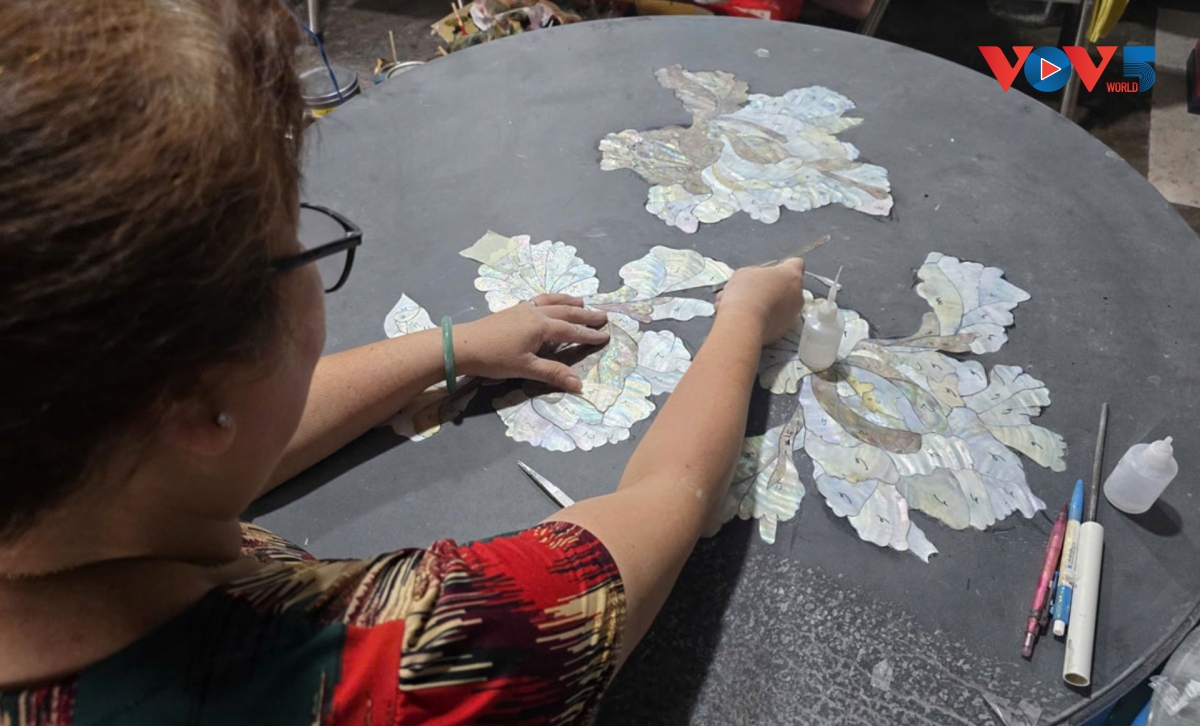
On a carefully prepared wooden base, the artisan incorporates gold leaf, silver leaf, mother-of-pearl, sea snail shells, eggshells, and other decorative materials, using carved lacquer, sunken painting, and relief painting techniques to create delicate artworks that embody the elegance of Eastern aesthetics.
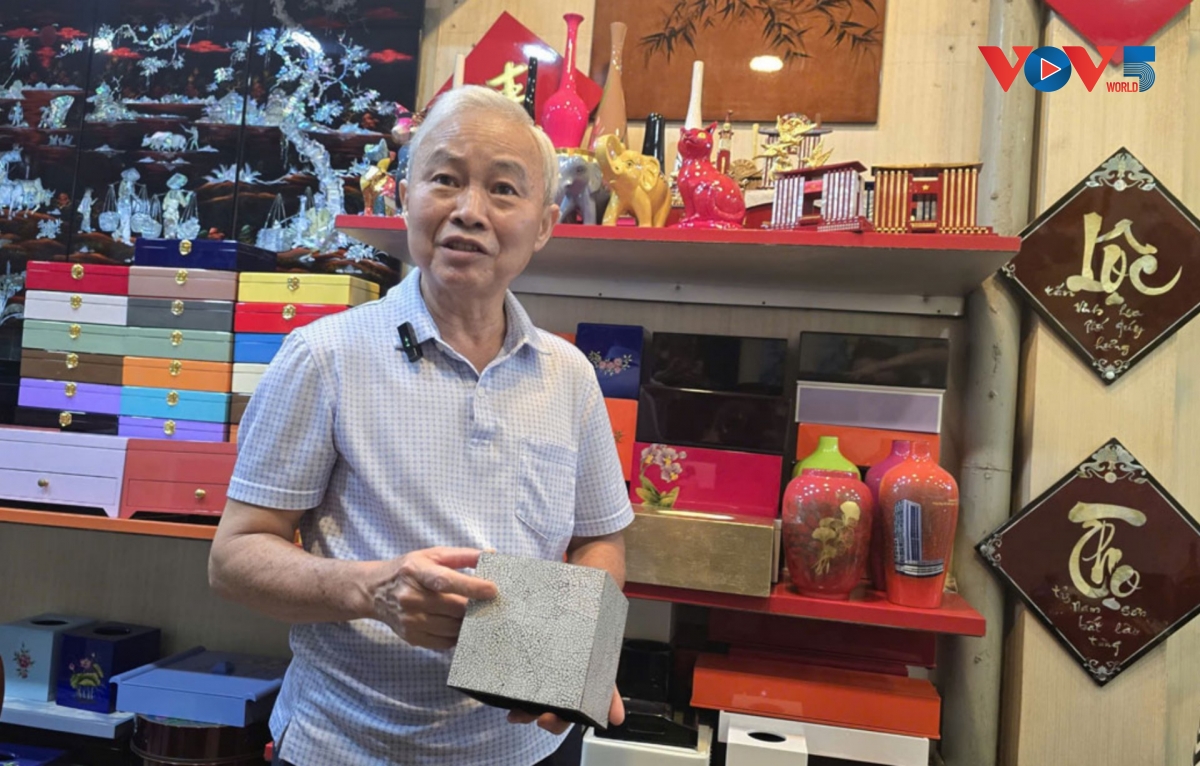
Meritorious Artisan Le Ba Linh, known as Tu Bon, said, "It’s very difficult to sell high-end products to rich customers. A piece we find beautiful might not suit the customer’s taste or fit their living space. So we shift our focus toward more popular lacquerware – decorative items, gifts, and premium packaging for coffee, bird's nest products, and mooncakes."
Tuong Binh Hiep is one of the few craft villages capable of producing all three traditional categories of lacquerware: functional everyday items, decorative pieces such as folding screens, and fine art lacquer paintings.
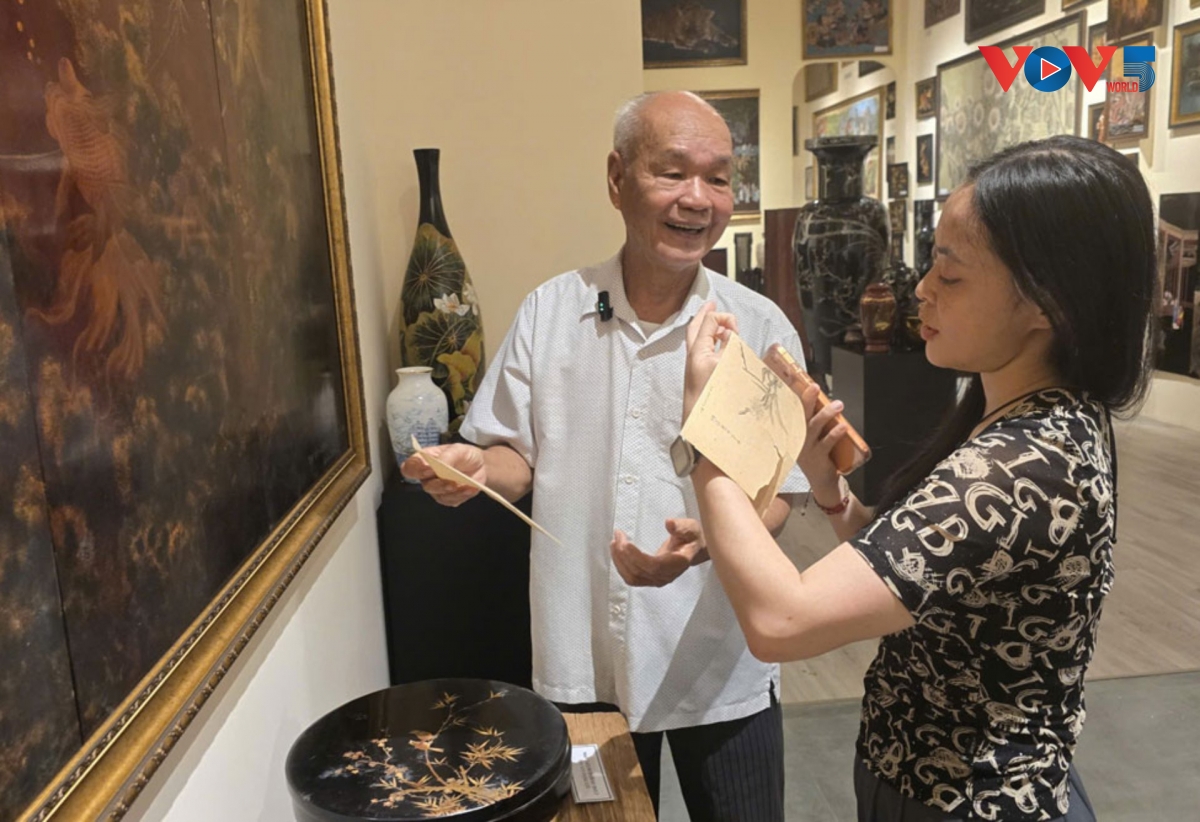
Their lacquer products are appreciated by customers abroad and are sold in foreign markets, according to Meritorious Artisan Truong Quang Tinh, who used his own money to build a private lacquerware center on his family's land.
"I collect and preserve documents and artifacts related to Saigon and Binh Duong lacquer art. My greatest joy has been creating a space to preserve this heritage and help future generations understand the real value of lacquerware. By introducing this art to young people, we can inspire them, shape new trends, and stimulate consumer demand, which is essential to preserving and developing the traditional craft village," said Tinh.
Hiep’s center displays hundreds of lacquerware pieces, offers tourists a hands-on experience, and provides free vocational training for young people.
Luu Phuong Mai, a visitor from Hanoi, said, "This is my first time seeing firsthand artworks I previously only heard about or read about. I knew something about the work of artist Duy Liem and the story of the Thanh Le Lacquerware Company, a pioneer with a remarkably forward-thinking approach to marketing. Although I had heard a great deal about them, seeing the original works with my own eyes and hearing detailed explanations left me truly amazed and impressed."
The craft village has experienced two golden eras. From 1945 to 1975, the Thanh Le workshop was established and brought together talented artisans who helped the village break into European markets. The village’s products became famous for their durability and ability to withstand cold, dry climates. A second boom came in the 1980s and 1990s, when the establishment of a lacquerware cooperative provided livelihoods for 700 households.
But the once-thriving craft has suffered a steady decline over the past 2 decades. At its peak, 90% of the village’s residents were involved in lacquerware production. Today, only a few dozen establishments remain.
Artisan Tran Thanh Danh recalled that from 1985 to 1999, lacquerware was extremely popular. Almost every household was making lacquerware. But from 2010 or 2011 onward, the craft began to decline. “Whether due to market conditions or changing tastes among art buyers, demand fell sharply, and many people gave up the craft to pursue other jobs," said Danh.
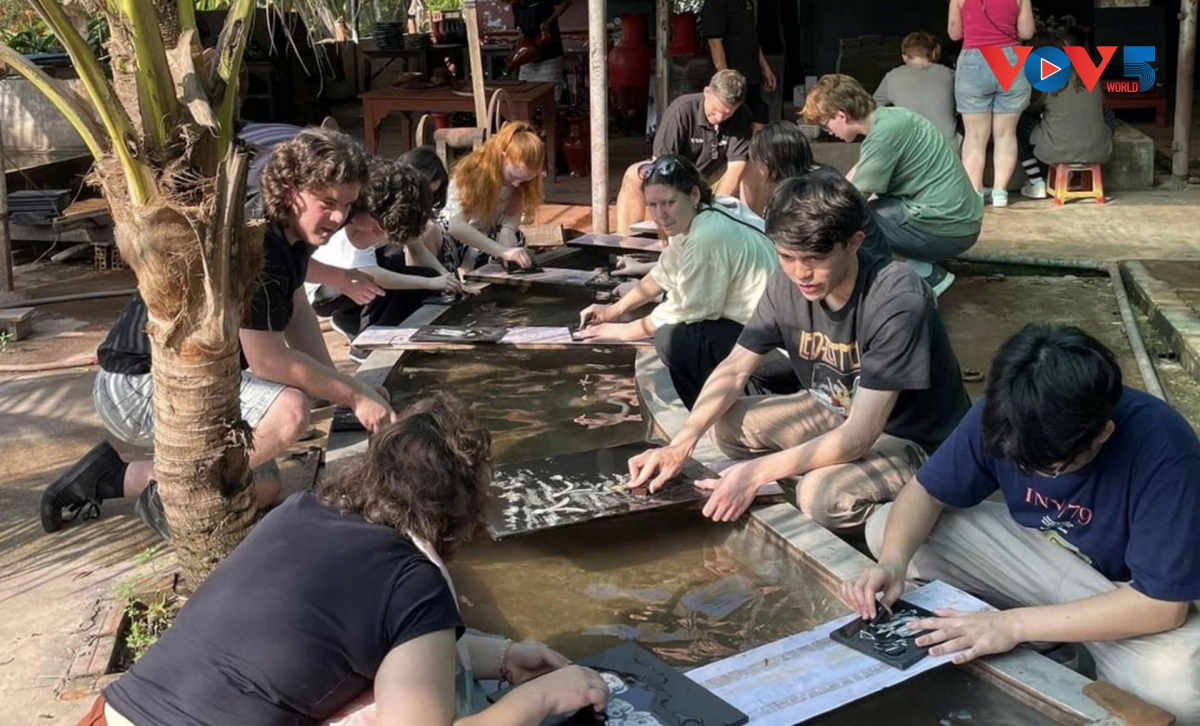
In 2020, a project was approved to preserve and develop the lacquer craft in combination with tourism.
Duong Thai Khanh, Vice Chairman of the Chanh Hiep ward People's Committee, said, "What concerns artisans in Tuong Binh Hiep lacquer craft village is not just a loss of livelihood, but seeing the soul of their craft dying, with no successors to carry the craft forward. Local authorities should work hand in hand with the artisans to preserve the village craft."
The artisans of Tuong Binh Hiep are trying to keep alive a centuries-old tradition and pass on their cultural identity to future generations.