



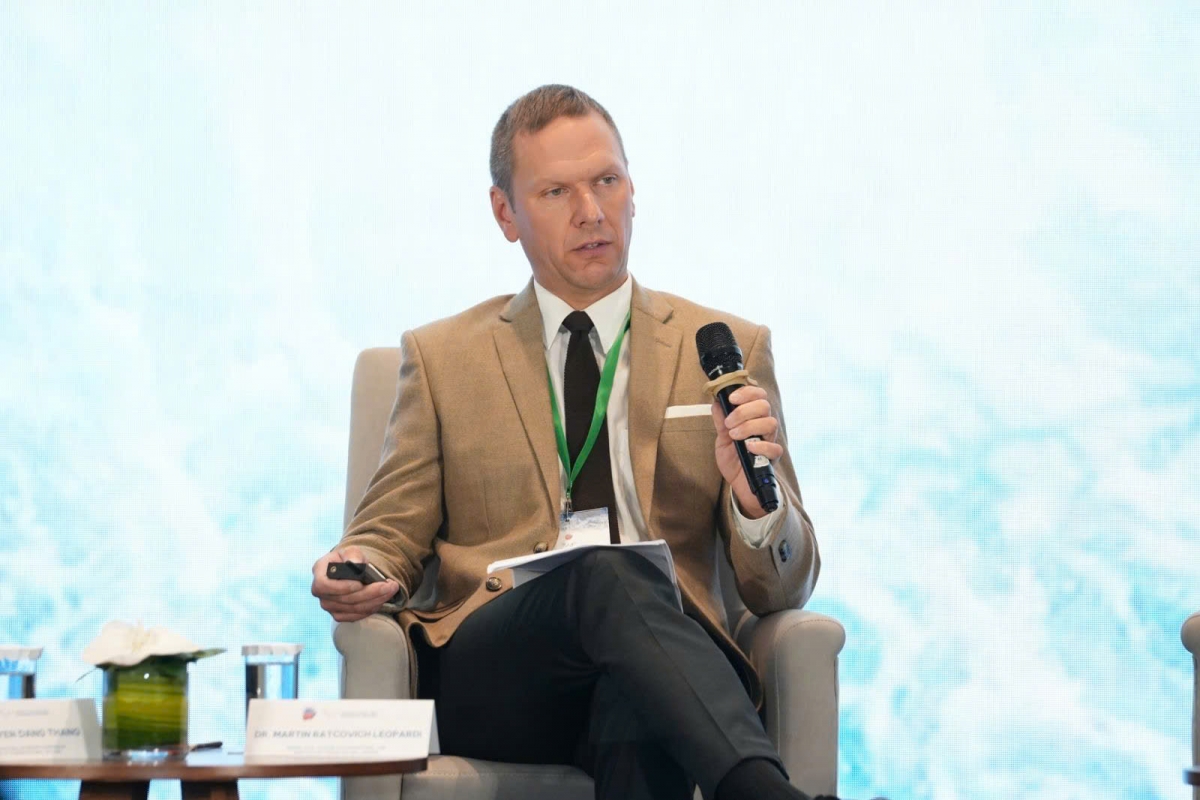
Talking to VOVWORLD on the sidelines of the conference, Dr. Martin Ratcovich Leopardi, Senior Legal Adviser on International Law at the Ministry for Foreign Affairs of Sweden, stressed that UNCLOS is a vital shield for small and middle powers and that Vietnam plays a role in promoting international dialogue.
- Since 2019 Dr. Martin Ratcovich Leopardi has been a senior legal adviser on international law at Sweden’s Ministry for Foreign Affairs.
- Dr. Leopardi has a Doctorate in Law from Stockholm University and extensive expertise in maritime security, the Law of the Sea, maritime search and rescue, underwater infrastructure regulation, and Arctic legal frameworks.
- His distinguished career spans roles at Swedish Coast Guard Headquarters and the Ministry of Defense, and he currently leads Sweden’s delegation to the Antarctic Treaty Consultative Meeting.
- As a fellow at the Stockholm Centre for International Law and Justice, Dr. Leopardi joins us today to share his legal perspective on UNCLOS and maritime governance in the East Sea.
Reporter: Thank you Dr. Leopardi for talking with VOV24/7 today. Dr. Leopardi, the 1982 UN Convention on the Law of the Sea is widely regarded as the legal foundation of the international maritime order. How does the Convention help promote stability, predictability, and trust among countries, particularly in the East Sea, internationally known as the South China Sea?
Dr. Martin Ratcovich Leopardi: Thank you very much for inviting me to the Voice of Vietnam. The adoption of UNCLOS was a milestone in the global security architecture. By establishing the legal framework within which all activities in the oceans and seas must take place, the Convention’s contribution to predictability and stability in international relations cannot be overstated. By acting in accordance with UNCLOS and other rules of international law, countries can promote international cooperation and build trust. This is just as relevant to the South China Sea as it is to the Baltic Sea and other maritime regions around the world.
Reporter: Given the evolving challenges facing the world's oceans, how can countries strengthen their commitment to UNCLOS, particularly when addressing maritime security concerns and safeguarding the interests of small and middle powers?
Dr. Leopardi: Like many other instruments of international law, UNCLOS was developed with the understanding that the circumstances in which it would be applied could change over time. By clearly reaffirming their commitment to the Convention, all countries can contribute to a safe and lawful maritime order. For small and middle powers, UNCLOS can provide an important foundation for their individual positions or joint action.
Reporter: Sweden has consistently placed international law at the center of its foreign policy and supported UNCLOS and its institutions. How has this approach contributed to maritime cooperation?
Dr. Leopardi: Regardless of political affiliation, successive Swedish governments have regarded international law as a cornerstone of the country’s foreign policy. Sweden has also consistently supported UNCLOS and its institutions. I am convinced that this approach has benefited international cooperation in the Baltic Sea and other maritime activities involving Sweden. In line with this, we support similar approaches by other countries in other regions, including the South China Sea.
Reporter: Vietnam has hosted the South China Sea International Conference annually, providing a platform for dialogue on maritime issues. What do you think Vietnam can do to further contribute to maritime cooperation?
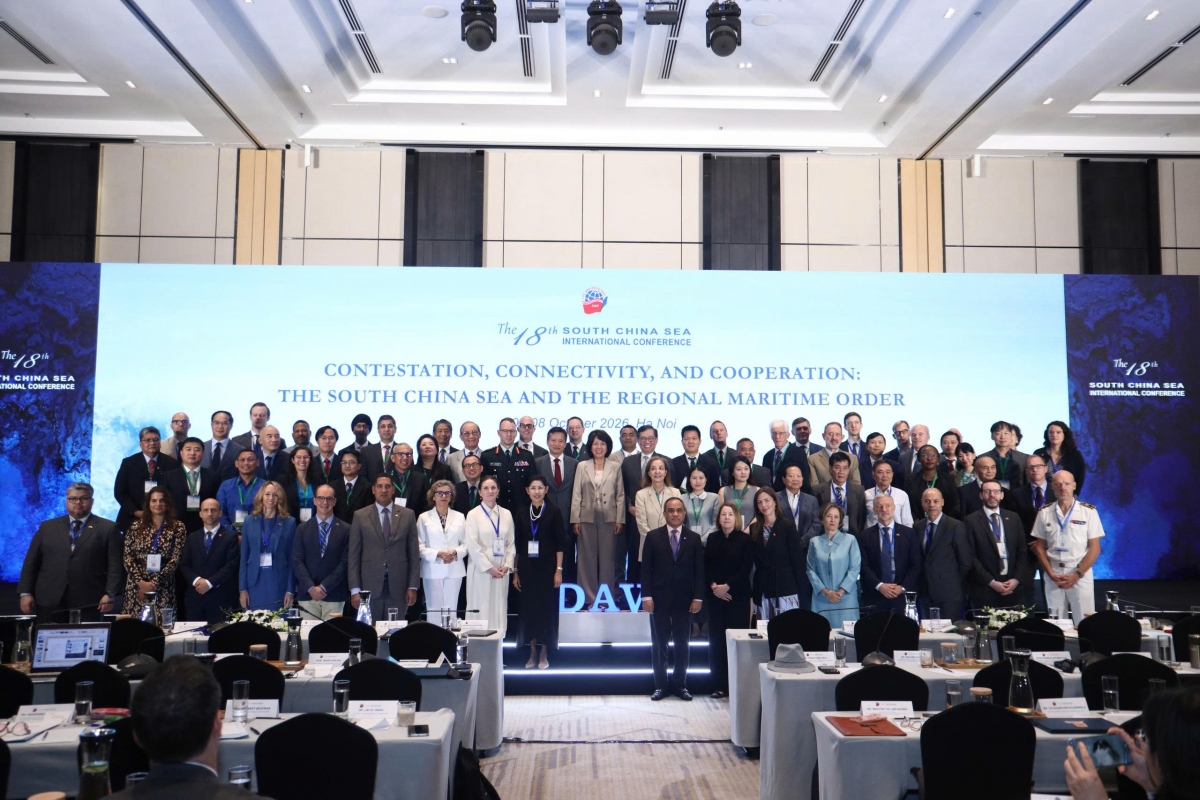
Dr. Leopardi: I am aware of Vietnam’s efforts to convene and promote dialogue in many areas, which are recognised and appreciated by Sweden and the international community. The annual South China Sea International Conference is a good example of a forum for exchanging views and promoting dialogue. Its importance cannot be overstated.
Reporter: Looking ahead, what practical steps can countries in the region take to strengthen maritime cooperation and make more effective use of the existing international legal framework?
Dr. Leopardi: UNCLOS provides a comprehensive and reasonably clear framework for maritime activities. Recognising the Convention as the common legal framework can help promote international cooperation at sea. Of course, there are many other aspects to consider, but this is an important starting point.
Reporter: Thank you, Dr. Martin Ratcovich Leopardi, Senior Legal Adviser on International Law at Sweden’s Ministry for Foreign Affairs, for sharing your insights with VOVWORLD.
Dr. Leopardi: Thank you very much for having me.