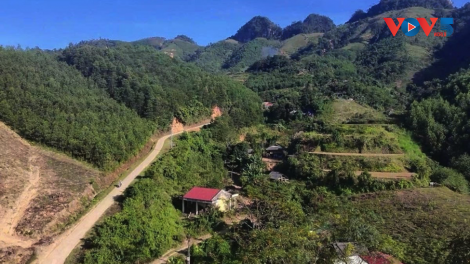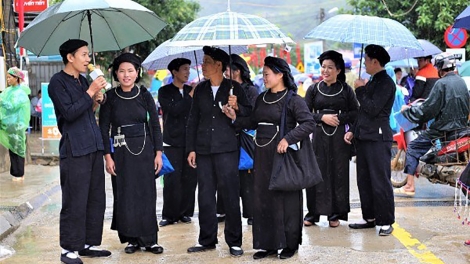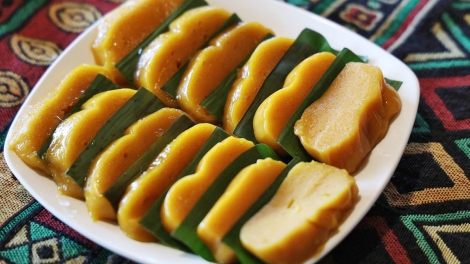




Tay communities in Chiem Hoa live in traditional wooden houses beside the gentle Gam River, surrounded by carefully tended ramie-leaf gardens. When the leaves are mature, the Tay women pick them, dry them, and use them as the main ingredient for gai cake.
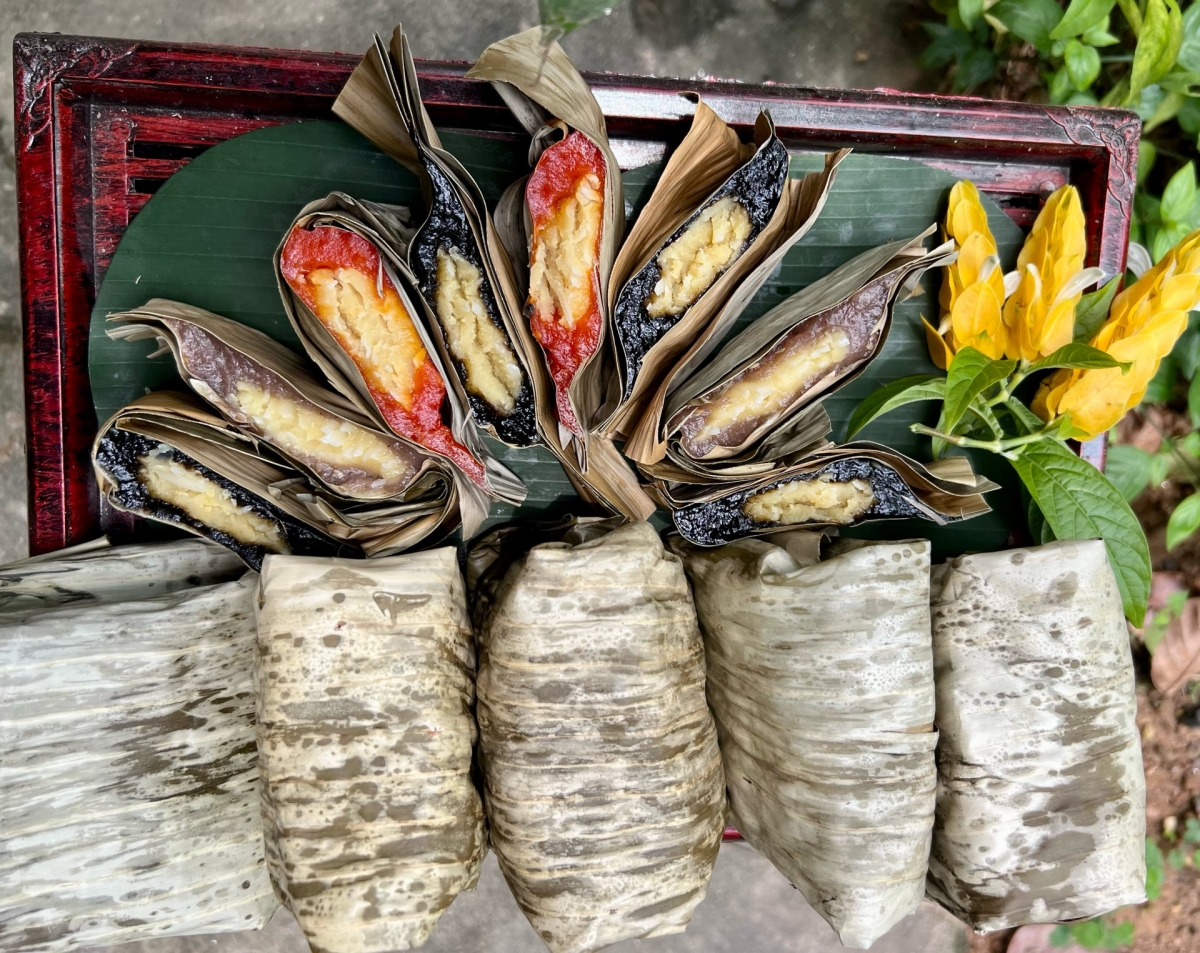
To prepare wrapping leaves, they go to the forest and cut wild banana leaves, which are long, broad, and mildly fragrant. The wild banana leaves, washed, boiled, and dried before being used to wrap the cakes, give the cakes a distinctive flavor that home-grown banana leaves can’t provide.
“The ramie leaves need to be at the right stage of maturity to make good cakes. They shouldn’t turn too black or yellow, but should have a slightly greenish colour. When steamed, the cakes are glossy and fragrant. As for the banana leaves, I have to order them from a village further away. After steaming, wild banana leaves turn white, while locally grown leaves turn darker,” said Tran Thi Ha, who has been making gai cake for more than 20 years.
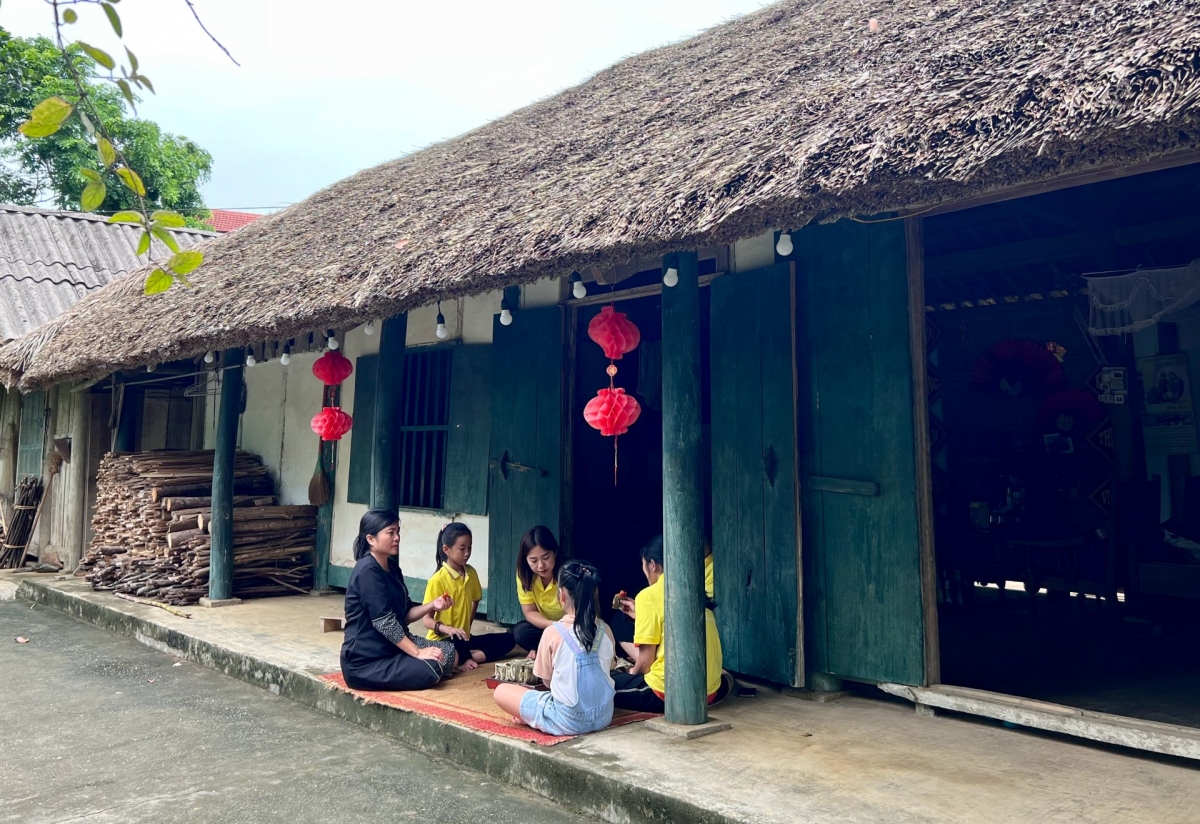
The cake makers boil the ramie leaves for four or five hours until they become very soft. Through years of experience, they have learned that the longer the leaves are cooked, the richer the flavor they impart to the cake’s outer layer. They let the boiled leaves sit overnight to develop a rich, glossy black color. The leaves are then squeezed dry and finely ground before being slowly stirred with sugar for about two hours to bring out their aroma.
The filling is equally refined. In addition to mildly nutty mung beans, grated coconut, and a touch of sweet jam – ingredients found in many other gai versions – Chiem Hoa gai cake has an ingredient that makes it distinctive: cured pork fat.
The pork fat is diced and soaked in sugar for a day or two to mellow its richness and give it a slightly crunchy texture. Although most customers today prefer a less sweet filling, sugar-prepared pork fat remains a culinary tradition that reflects the creativity of the people of Chiem Hoa.
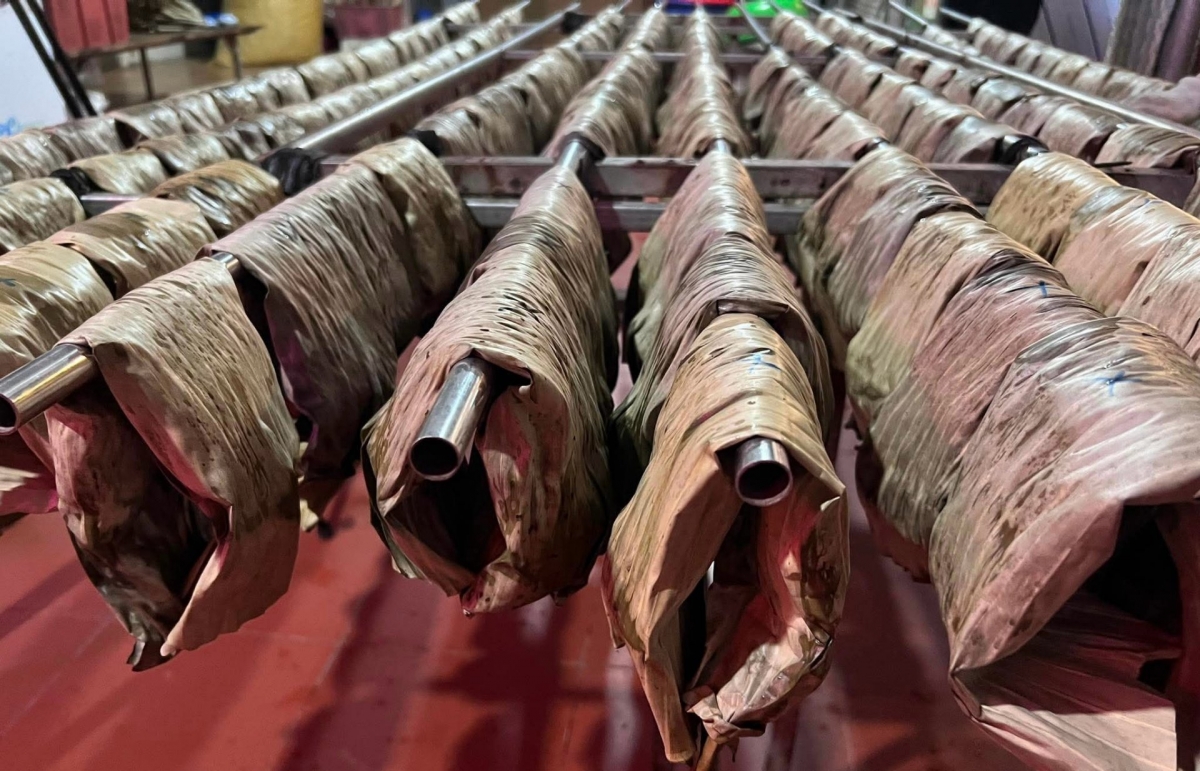
“We choose good pork fat, dice it and blanch it in boiling water, then drain it. After that, we soak it in sugar for about two hours. Once the fat has absorbed the sugar, we dry it in the sun for a day. The pieces become translucent and the sugar crystallises around them, like jam. A gai cake with pieces of pork fat in the filling tastes much better,” said Gai cake maker Nguyen Thi Thanh Hoa.
The Tay people in Chiem Hoa always wrap gai cakes in pairs. Two cakes are wrapped together in a single banana leaf.
“Traditionally, the Tay wrap the cakes in pairs. The wild banana leaves are long enough. If a customer asks for an individual cake, we make it that way, but wrapping the cakes in pairs is our tradition,” said a gai cake maker named Mai Thi Loan.
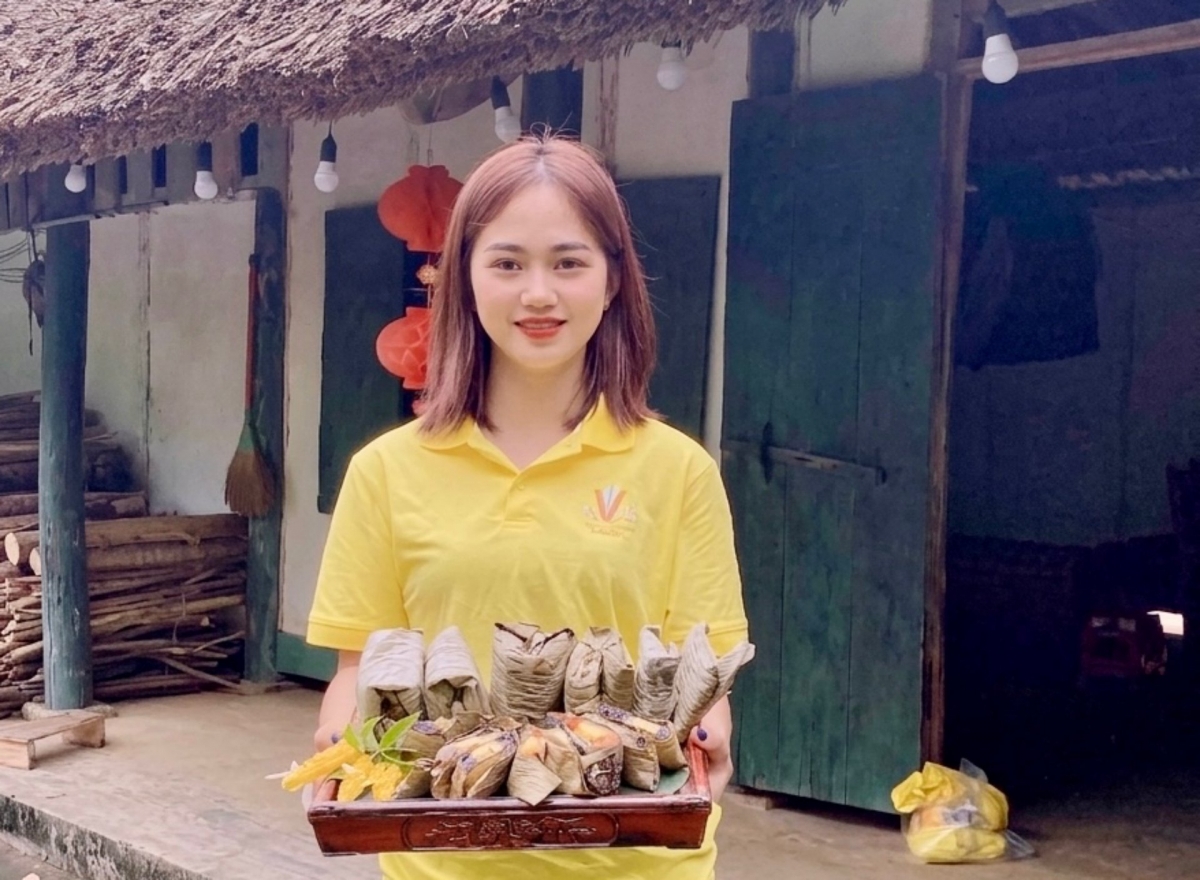
In the past, the Tay people in Chiem Hoa made gai cakes mainly as offerings to their ancestors. Today, the craft provides a livelihood for many families, including that of Nguyen Van Thang and Tran Thi Ha, who have been able to build a spacious three-story house thanks to the income it generates.
“Making gai cakes is hard work because it involves so many steps. Some days we have to get up at 1 a.m. and work until morning. Before we started selling gai cakes, we were very poor. Now we’ve earned enough money to build a house and buy all the household items we need,” said Ha.
Tay families also make gac fruit (spiny bitter gourd) cakes and banana-root cakes. These local delicacies are also sold in many parts of Vietnam, and earn the makers a decent living.