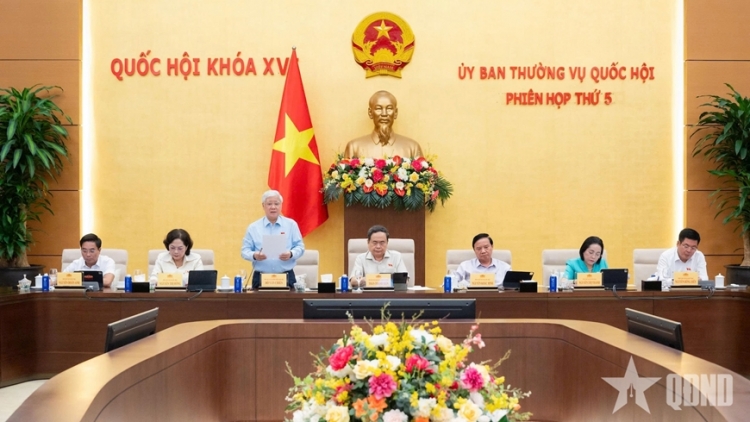




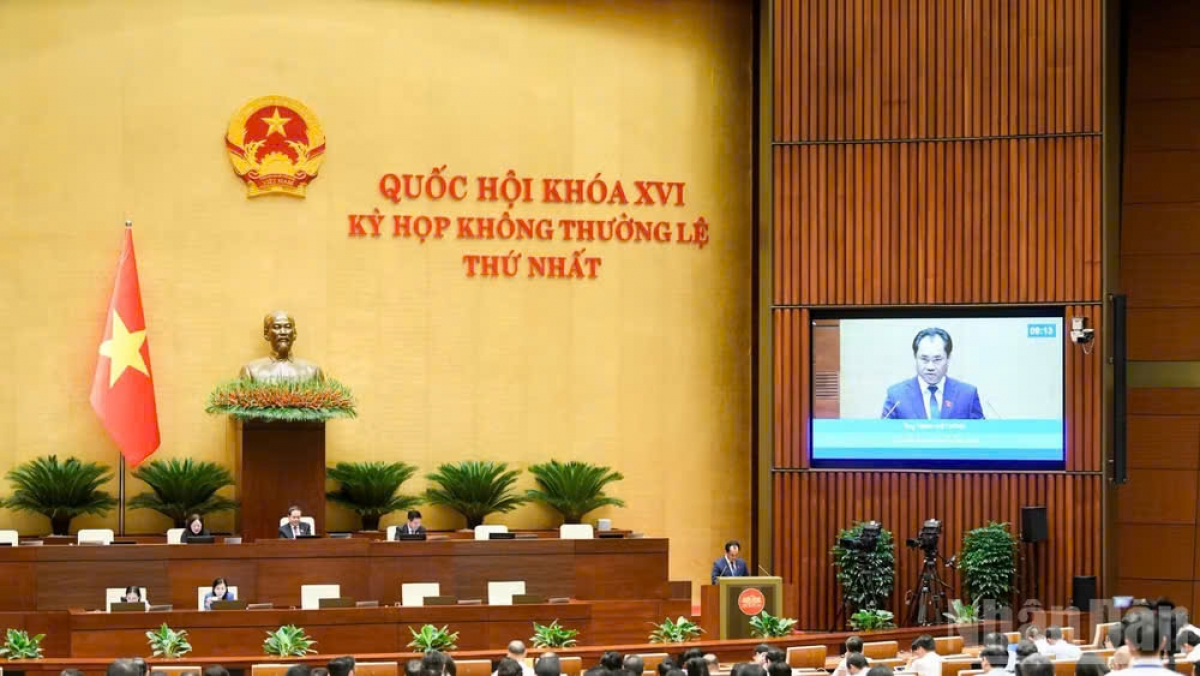
With legislation and consideration of major national issues at the top of the agenda, the session responded to a push by the National Assembly, Government, and relevant agencies to turn policy into action and respond more quickly to real-world demands. The aim of the session was to translate Party guidelines into law, address the concerns of people and businesses, and ensure that Vietnam misses no opportunity for growth.
Lawmaking high on the agenda
The National Assembly faced the challenge of completing a heavy workload in a limited timeframe while ensuring the quality of draft laws and resolutions. Legislators worked through the weekends to complete the agenda.
The interval between the two phases of the session has been set aside for relevant agencies to revise draft legislation to incorporate lawmakers’ opinions before resubmitting the legislation to the Assembly.
Nguyen Thi Thu, a deputy representing Quang Ninh province, said: “National Assembly deputies have devoted their time, energy and effort to lawmaking in order to create opportunities and conditions to achieve our socio-economic development goals and remove obstacles. At this point, the National Assembly deputies have fulfilled their legislative responsibility to ensure that institutions are not a bottleneck.”
The deputies gave opinions on specific provisions, assessing their potential impact and feasibility and proposing adjustments to make them more realistic.
Deputy Nguyen Thi Viet Nga for Hai Phong city said: “Deputies were focused and conducted thorough, in-depth research on important issues. Contributions made during group discussions and plenary sessions were specific, detailed, and valuable.”
Institutions designed to unlock development
High on the agenda were socio-economic issues, including administrative reform, the removal of business conditions, urban development, infrastructure development, resource mobilization, digital transformation, science and technology, and national security and defense.
In addition to regulatory obstacles, lawmakers placed particular emphasis on whether policies would actually work in practice.
Trinh Xuan An, a deputy for Dong Nai province and a member of the National Assembly Committee on National Defense, Security and External Relations, said: “Discussion focused on streamlining procedures and creating an enabling environment to mobilize resources and generate new resources and opportunities for national development. Decentralization and delegation of authority and empowerment at the local and grassroots level are clearly reflected in all draft laws. We have taken a step forward. Instead of simply removing bottlenecks, we are now focused on legislation that drives development.”
Decentralization and delegation of authority must take into account the capacity and resources of the level receiving the authority. Cutting administrative procedures must bring tangible benefits to people and businesses. And shifting from pre-inspection to post-inspection must be accompanied by effective risk management and clearly defined responsibilities.
Deputy Trinh Xuan An said: “The opinions expressed at the National Assembly have closely followed Party guidelines, with the aim of building an enabling institutional framework that promotes and guides development. This reflects the deputies’ shared sense of responsibility and creates synergy with the spirit of the Party and the National Assembly.”
The first phase has completed a substantial workload in a short period of time. The opinions and recommendations of the deputies will be incorporated into revised drafts before the National Assembly considers and votes on them during the second phase of the session, scheduled for this Wednesday to next Monday.