



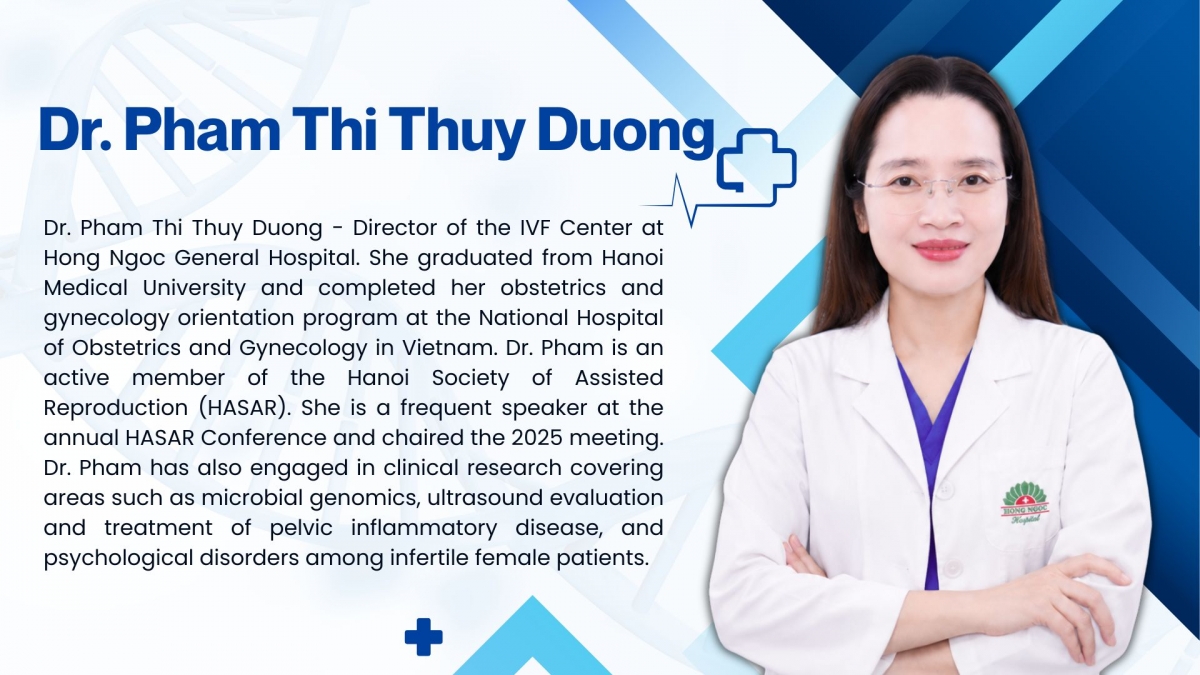
Reporter: Hello, Dr. Duong. Thank you for joining us today. Although Premature Ovarian Insufficiency, or POI, affects many women, awareness of the condition remains limited. Could you explain what POI is and what impact it can have on women’s lives?
Dr. Thuy Duong: Premature Ovarian Insufficiency, or POI, is a condition in which the ovaries stop working normally before the age of 40. Women with POI may have irregular or absent periods, lower estrogen levels, and reduced fertility. Unlike natural menopause, POI does not always mean that the ovaries have completely stopped functioning. Some women with POI may still ovulate occasionally and, in rare cases, can become pregnant naturally. Natural menopause usually occurs around the age of 50 and is a permanent end to ovarian function, while POI happens much earlier and the ovarian function can sometimes be intermittent.
Reporter: So, what should women look out for? What are the early signs that might point to POI?
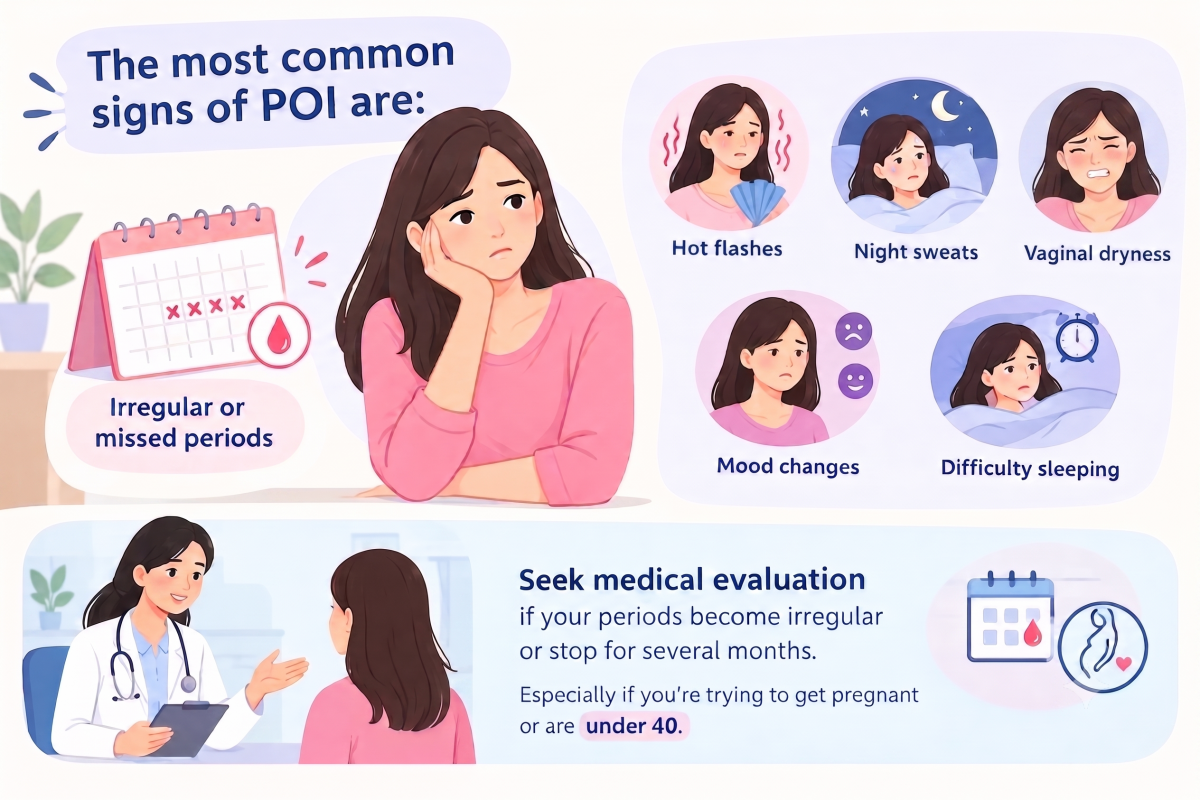
Dr. Thuy Duong: The most common signs of POI are irregular or missed periods, especially in women under the age of 40. Some women may also experience symptoms similar to menopause, such as hot flashes, night sweats, vaginal dryness, mood changes, or difficulty sleeping because of low estrogen levels. Women should seek medical evaluation if their periods become irregular or stop for several months, especially if they are trying to get pregnant or are under the age of 40.
Reporter: What are the main causes and risk factors associated with POI, and who should consider earlier fertility assessment?
Dr. Thuy Duong: In many women, we cannot identify a clear cause of POI. However, there are several known causes and risk factors. These include genetic conditions, autoimmune diseases, certain medical treatments such as chemotherapy or radiation, and surgery involving the ovaries. Infections are a rare cause. Women with a family history of POI may also have a higher risk. These women should consider an earlier fertility assessment. Simple tests such as an AMH blood test and an ultrasound can provide useful information about ovarian reserve and help them make informed decisions about future family planning.
Reporter: How does POI affect a woman's fertility as well as her overall health and quality of life?
Dr. Thuy Duong: POI reduces the number and function of the remaining eggs, so it can make pregnancy much more difficult. Because fertility can decline quickly, women with POI should see a fertility specialist as early as possible to discuss their reproductive options. Beyond fertility, low estrogen levels can also affect a woman’s overall health. Over the long term, low estrogen can also increase the risk of osteoporosis and cardiovascular disease. That’s why women with POI need both fertility care and long-term medical follow-up.
Reporter: So what tests are typically used to diagnose POI, and why is early diagnosis important?
Dr. Thuy Duong: The diagnosis is based on a woman’s symptoms, medical history, and blood tests. We usually measure hormone levels, especially FSH and estrogen, and these tests are often repeated to confirm the diagnosis. We may also check AMH and perform an ultrasound to assess ovarian reserve. In some cases, genetic or autoimmune testing may be recommended. Early diagnosis is important because it allows women to receive appropriate treatment, protect their long-term health, and discuss fertility options before ovarian function declines further.
Reporter: What advice would you give women on maintaining ovarian health and reducing their risk of POI?
Dr. Thuy Duong: Unfortunately, there is no proven way to prevent POI, especially when it is caused by genetic or autoimmune factors. However, women can protect their overall reproductive health by avoiding smoking, maintaining a healthy lifestyle, and seeking medical advice if they notice changes in their menstrual cycle.
For women who may delay having children or who have risk factors for POI, an early fertility assessment is very helpful. In some cases, egg freezing may also be an option to preserve fertility. My advice is simple: don’t wait until you are ready to have a baby to learn about your fertility. Understanding your fertility early gives you more choices and more opportunities for the future.
Reporter: Thank you, Dr. Duong, for sharing these valuable insights with us. We hope today’s discussion has helped our listeners better understand POI and the importance of early awareness and timely care. That’s all for today’s edition of Doctor at Home. Thanks for listening!