



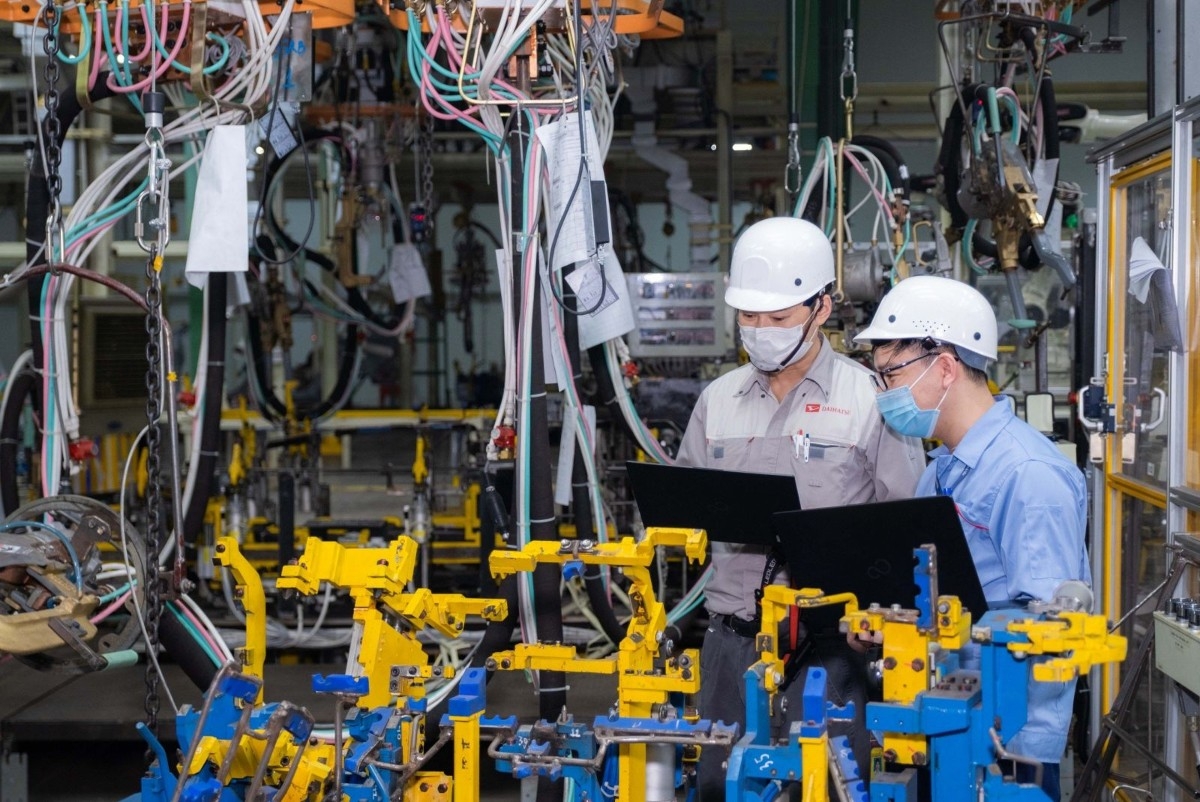
Breakthrough micro-economic policies go beyond piecemeal measures or selective support for a handful of companies. They require reforms that remove production and business bottlenecks, lower costs and boost productivity, quality, and innovation for millions of businesses.
Prof., Dr. Le Van Loi, President of the Vietnam Academy of Social Sciences, says to turn micro-economic breakthroughs into true drivers of double-digit growth, special attention must be paid to three key requirements.
“First is to shift from a management mindset to a development-enabling mindset. Institutions should not merely mitigate risks but must pave the way for innovation, competition, and investment. Second is to move from uniform, blanket policies to targeted, prioritized policies. Resources must be prioritized to the sectors, businesses, localities, and projects capable of generating high spillover effects. Breakthroughs cannot be achieved by fragmenting resources. Finally, execution quality must be considered an integral component of the policy itself."
Experts say four major bottlenecks demand urgent action: institutions, resources, markets, and innovation. Rather than benefiting only a select group of firms, micro-economic policies should strengthen the entire business community to build a dynamic and resilient corporate ecosystem.
Dr. Pham Anh Tuan, Deputy Director of the Institute of Vietnam and World Economy, said, "First, I propose a suite of policies focused on capacity building for the enterprise system. We need pioneering, lead enterprises with global competitiveness that can represent the Vietnamese economy on the global stage."
"Small and medium enterprises (SMEs) need to grow into large enterprises and large enterprises must evolve into industry leaders. Second, further institutional reforms are needed to unlock resources, develop capital markets, adopt tax incentives, advance data and digital infrastructure, improve connectivity with FDI enterprises, and leverage science, technology, and management expertise from FDI enterprises."

Vietnam is building a transparent legal framework for AI, which is widely regarded as a new engine of economic growth. According to Dr. Ho Duc Thang, Director of the National Institute of Digital Technology and Transformation, "Greater attention must be paid to productivity if we want to achieve double-digit growth. And when it comes to productivity, no technology surpasses AI. But AI infrastructure is extremely costly.”
“The State should designate AI infrastructure as national infrastructure, investing in it for businesses’ use. If a business wants to boost labor productivity, it needs to optimize processes, data, and human resources," Thang noted.
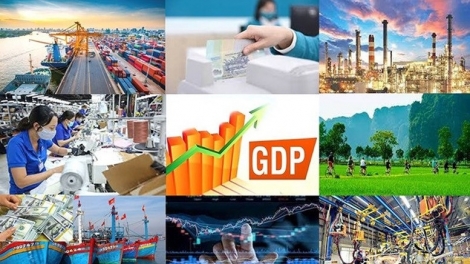
Vietnam’s GDP grew 8.18% in the first half of the year, the fastest first-half growth in 16 years. Experts urge for harmonizing macro- and micro-economic policies and cultivating globally competitive enterprises capable of integrating more deeply into international value chains to achieve double-digit growth in the next five years.