Hanoi’s ancient gate-opening ritual for Lunar New Year reenacted
Hai Ha -
(VOVWORLD) - Hanoi held the gate-opening ceremony at O Quan Chuong Gate — the last intact city gate of ancient Thang Long Citadel – on February 8 as part of the old quarter program to welcome the Lunar New Year of the Horse 2026.
|
Residents and visitors gather from early morning at O Quan Chuong Gate to witness the gate-opening ritual, marking the beginning of the “Vietnamese Tet – Tet in the Old Quarter” program.
|
The opening of O Quan Chuong Gate, one of the few remaining vestiges of ancient Thang Long, has a strong symbolic meaning, welcoming the new spring while evoking the historical and cultural legacy of the former imperial capital.
|
A procession moves through O Quan Chuong Gate, recreating ceremonial escorts entering the ancient capital. Participants in traditional costumes proceed slowly through the historic gate.
|
A group of children in traditional costumes lead wooden Thong Dong horses – a familiar toy model for Hanoians in the early 20th century. It evokes childhood memories and symbolises the intergenerational transmission of cultural traditions.
|
The spring-announcing procession, featuring 15 horses, is a highlight of the event. Horses moving through the Old Quarter evokes memories of the Dai Viet cavalry, who symbolise strength, valor, and the martial spirit.
|
|
Performers in traditional costumes demonstrate horse-handling techniques to spectators.
|
Set in a rich heritage space, a procession featuring ceremonial flags, traditional costumes, and ritual music marks the beginning of spring.
|
The costume parade features traditional outfits.
|
The festive spring atmosphere is enlivened by a performance of the folk dance “Con di danh bong” ("flirting whore").
|
Drums and gongs celebrate Vietnam’s folk arts and spread the wish for a peaceful and prosperous New Year.
|
Young participants in traditional attire parade through the Old Quarter.
|
A procession through the streets of the Old Quarter draws large crowds of residents and visitors.
|
A blend of historical costumes, ceremonial flags, and ritual music evokes a sense that spring is returning.
|
|
A joyful atmosphere spreads throughout the festival as spectators engage in traditional cultural activities to welcome the new spring.
|
After marching through the streets of the Old Quarter, the procession enters the courtyard of the Kim Ngan Communal House to perform rituals expressing gratitude to past generations and praying for a peaceful new year.
|
The moment when the festival procession gathers at the historic site links past and present.
|
The solemn rituals held at Kim Ngan Communal House highlight the spiritual significance and enduring cultural values of Tet and spring.
|
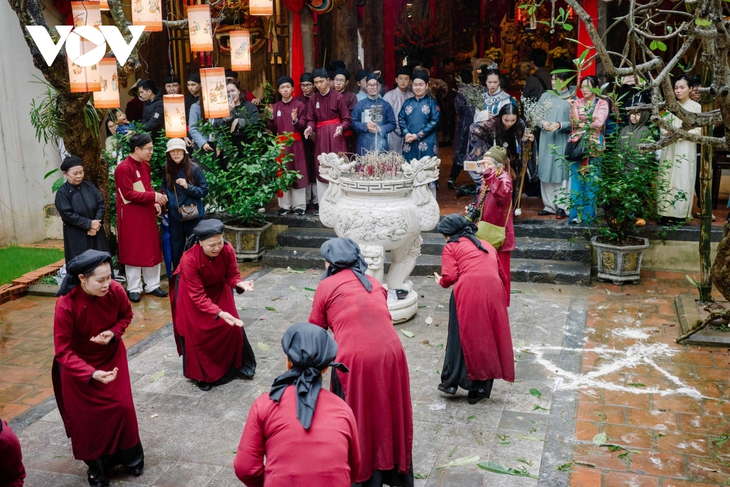
The Cao Yet (informing the god) ritual is conducted by local elders and ceremonial officials with the crowd watching.
|
Wearing traditional ceremonial attire, the delegation performs incense offerings, recites prayers, and carries out each step of the ritual in accordance with ancient customs. Every movement strictly follows the conventions of Vietnamese village rituals, expressing reverence for the Tutelary Deity regarded as the protector and unifying spiritual figure of the community.
|
Set against the usually bustling backdrop of Hanoi’s Old Quarter, the Cao Yet ritual makes participants appreciate the city’s spiritual heritage.
|
A calligrapher draws an auspicious wish – "Success comes with the horse's return" – to be hung on the traditional Neu pole during Tet.
|
Adorned with symbolic, spiritual objects, the Neu pole represents wishes for peace and good fortune, while warding off misfortune and negative influences in the new year.
|
The Neu pole erection offers younger generations a valuable insight into the cultural and spiritual significance of Vietnam’s traditions.
|
In the ‘Con Di Danh Bong’ folk dance of Hanoi’s Trieu Khuc village, male dancers dress up as women. The joyful dance embodies prayers for good harvests and blessings.
|
The dance wards off negative influences and prays for good fortune and a peaceful, prosperous new year.
|
Phu Tho’s Xoan singing guild perform at the gate of the Kim Ngan Communal House.
|
 The Xoan singing performance praying for good harvests and blessings is one of the most important performances of this folk art form closely associated with worship of the Hung Kings. The Xoan singing performance praying for good harvests and blessings is one of the most important performances of this folk art form closely associated with worship of the Hung Kings.
|
Hai Ha