(VOVWORLD) -As Tet (Lunar New Year) approaches, Bao An incense-making village in Mai Phu commune (formerly Thach My commune, Thach Ha district), Ha Tinh province, is bustling as villagers race to supply fragrant incense sticks for the market. Thanks to the skill and experience of local artisans, Bao An incense has become a trusted choice for households worshipping their ancestors during Tet.
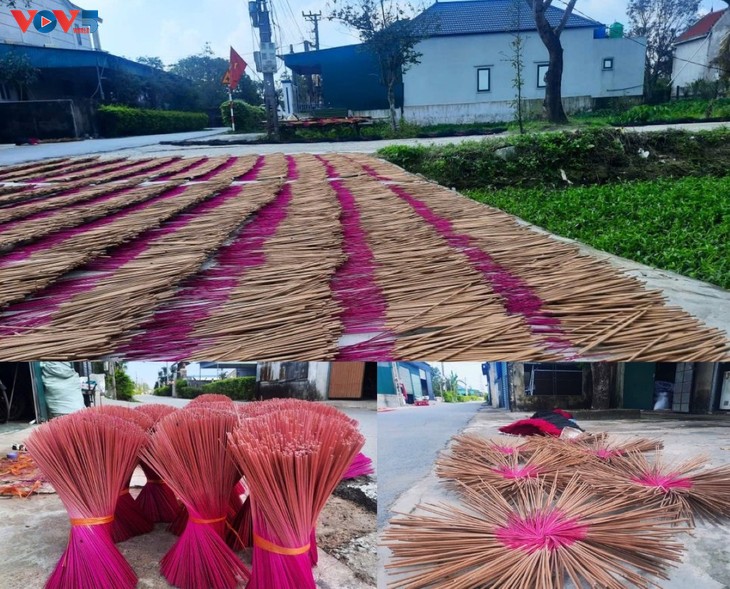 Colorful bundles of incense line the roads leading into the village. (Photo: Kim Lieu) Colorful bundles of incense line the roads leading into the village. (Photo: Kim Lieu) |
Roads leading into the village glow with thousands of colorful incense bundles. Bright red clusters of incense sticks are laid out to dry along narrow alleys and in household courtyards throughout Bao An. Visitors passing through the village are welcomed by the warm, comforting aroma of traditional herbal ingredients.
For 50 years, Bao An has been recognized as one of Vietnam’s best-known traditional craft villages. Production continues year-round, but the last lunar month is always the busiest period, with trucks carrying raw materials and finished products moving in and out continuously.
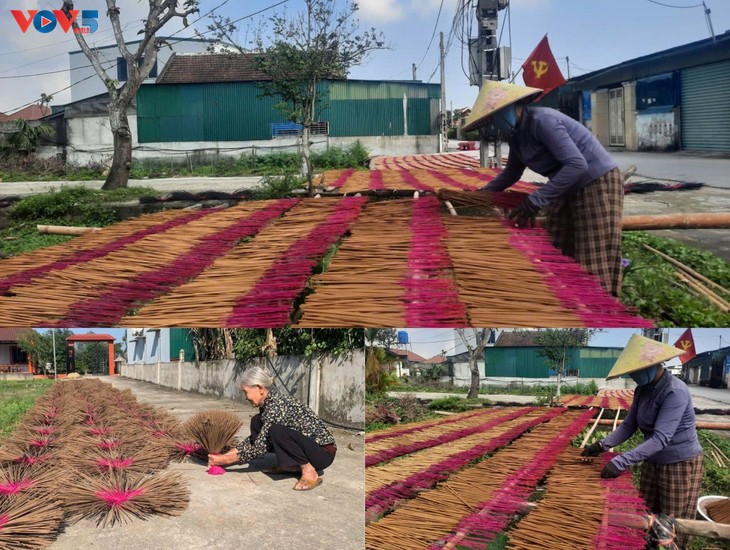 Villagers dry incense sticks in the sun. (Photo: Kim Lieu) Villagers dry incense sticks in the sun. (Photo: Kim Lieu) |
Le Tien Luong, Chairman of the Mai Phu commune Farmers' Association, told VOV that around mid-October, villagers begin upgrading machinery and purchasing raw materials to ensure the village can meet the demand for incense inside and outside the province, including Quang Tri and Nghe An. “Incense making in Bao An provides jobs for the locals and preserves the traditional craft passed down by our ancestors," said Luong.
Pham Thu Hien, a long-time incense maker in Bao An, said, "As Tet nears, our facility has increased production, working hours and workforce to meet the market demand. In addition to selling within the province, we also ship to major cities like Hanoi, Ho Chi Minh City, and Da Nang."
To create these fragrant sticks, workers carefully select natural ingredients – cinnamon powder, cardamom, cloves, herbal mixtures, sawdust, and adhesive powder. A distinctive feature of Bao An incense is the blend of 10 to 30 herbal ingredients combined with glue extracted from Litsea bark, producing a warm, sweet fragrance and natural adhesion. The incense cores are made from sharpened bamboo sticks, dyed red, and carefully dried.
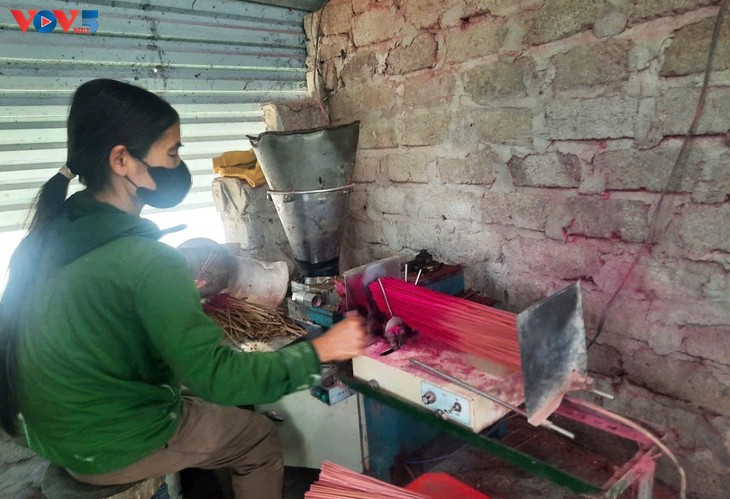 A Bao An worker performs key steps in producing the signature incense. (Photo: Kim Lieu) A Bao An worker performs key steps in producing the signature incense. (Photo: Kim Lieu) |
Ninh Van Long, whose family has practiced the craft for more than 30 years, recalled, "Our craft has been passed down through generations. Our main product is stick incense. To make quality products, we must be careful at every step, from selecting materials to grinding, mixing, rolling, and drying. We use safe materials and blend traditional herbs with natural fragrances to create a relaxing, pleasant scent."
Le Thi Lien, another long-time producer in Bao An, said, "The process starts with choosing incense powder and additives. The powder is made from agarwood, star anise, traditional herbs, cinnamon, and sawdust. Bamboo sticks are then prepared, the powder is mixed and rotated evenly in machines, water is added, and the mixture is compressed and rolled. After shaping, the incense sticks are dried, so the fragrance lasts longer."
Despite the introduction of machinery, many families still complete several stages manually, from dye mixing to incense rolling, ensuring craftsmanship remains central to the process.
Dang Thi Bich, a trader from Dien Chau commune of neighboring Nghe An province, told VOV, "I travel from Nghe An to buy incense here for resale. Bao An incense has a gentle, soothing scent, and when burned, the ash curls beautifully. During Tet, demand is high, so I’m stocking up more than usual."
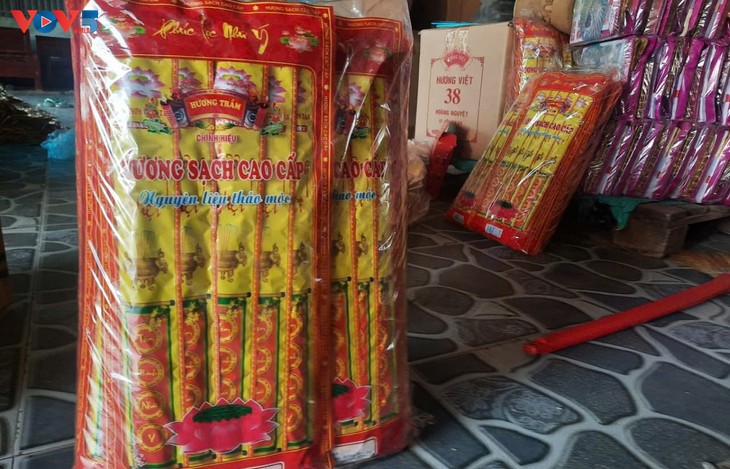 Safe, high-quality incense products from Bao An craft village (Photo: Kim Lieu) Safe, high-quality incense products from Bao An craft village (Photo: Kim Lieu) |
Over the years, the preservation and development of the incense craft has brought strong economic benefits to Bao An, creating stable employment and income for dozens of households.
Accoding to Le Van Than, Chief of Office of the Mai Phu commune People's Committee, in recent years, provincial and central policies have focused on developing craft villages. “Currently, 51 households are engaged in production, with some operating on a large scale and investing in machinery. There are 119 regular workers, and many seasonal workers during the peak Tet season. Regular workers earn between 570 and 770 USD per month," said Than.
Each stick of incense burned on a family altar during Tet carries descendants’ gratitude to their ancestors and is a beautiful element of Vietnamese tradition. Bao An villagers take pride in preserving and spreading that tradition through their craft.