



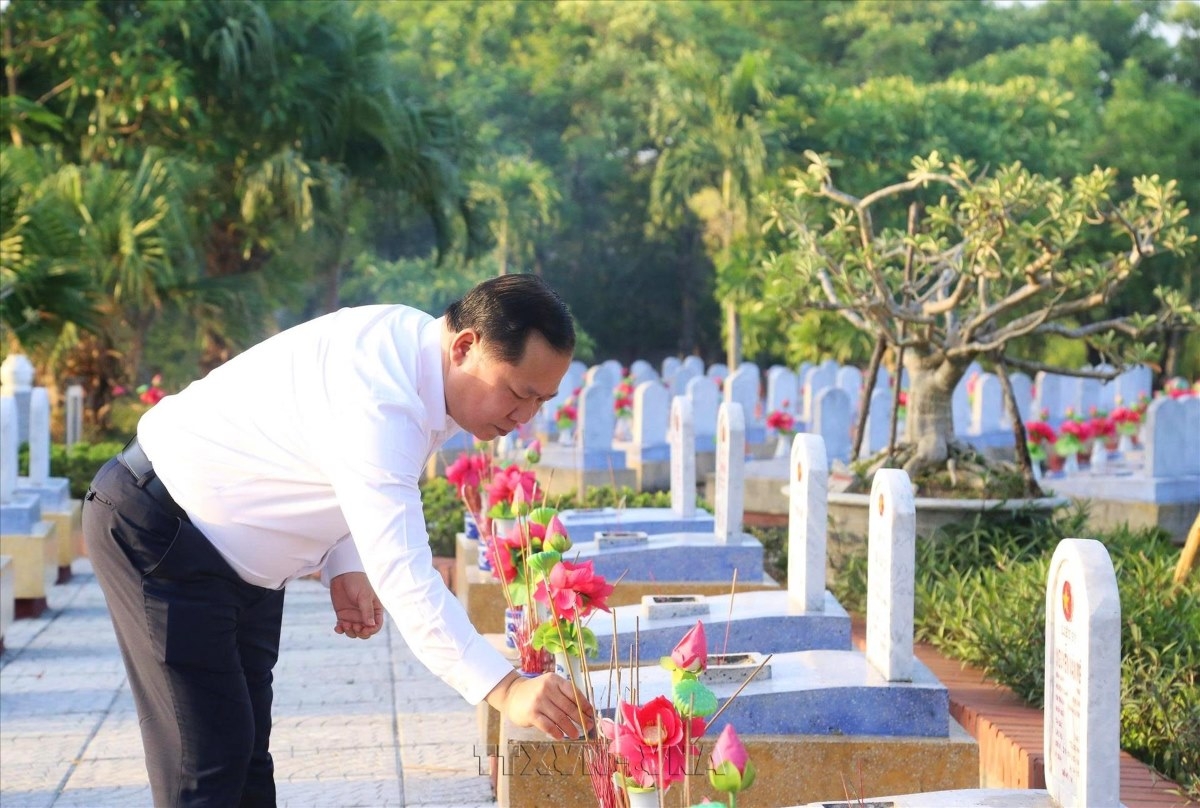
Led by Nguyen Phi Long, Vice President of the Vietnam Fatherland Front Central Committee, the delegation offered flowers and incense in remembrance of those who sacrificed their lives for national independence and freedom.
The Road 9 National Martyrs' Cemetery is the final resting place of nearly 11,000 soldiers who fell on the Road 9 battlefield and in Laos during the anti-US war and in the cause of national construction and defense. In a solemn ceremony, the delegation rang the memorial bell, observed a minute of silence, and paid their respects to the fallen.
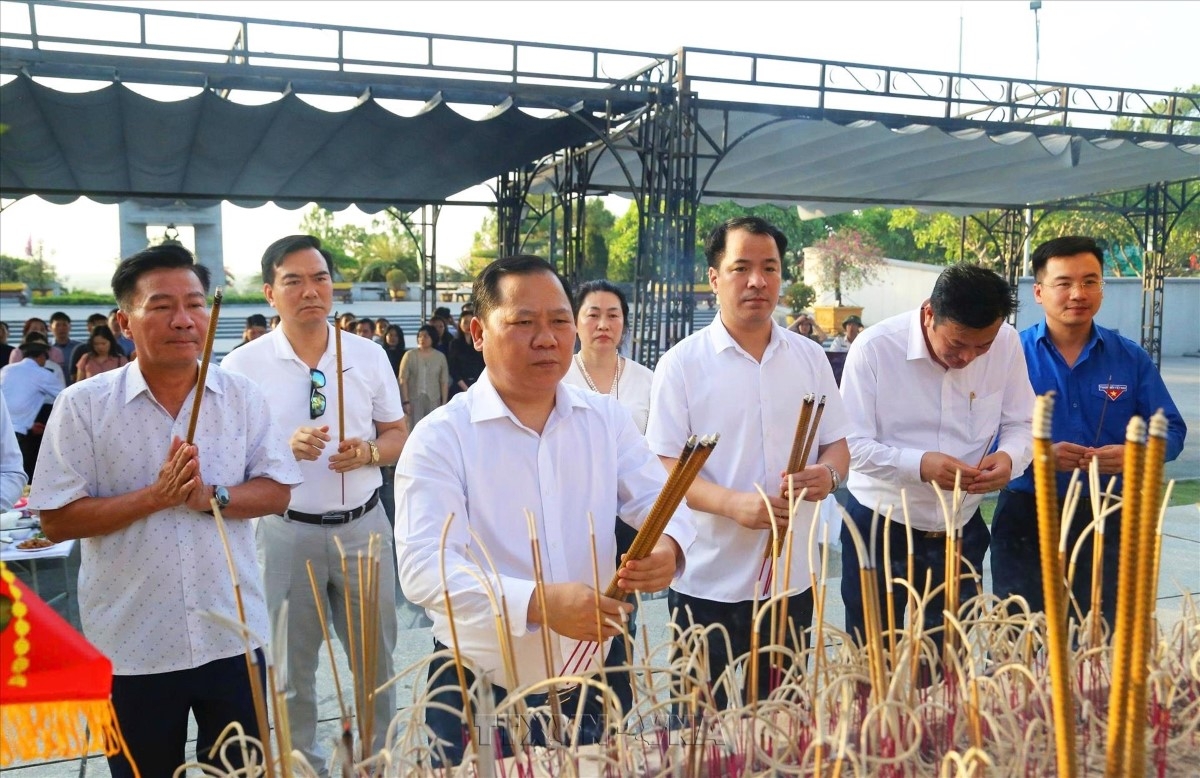
At the Truong Son National Martyrs' Cemetery, where nearly 10,300 soldiers who died along the legendary Truong Son supply route are buried, the delegation continued its tribute with flower and incense offerings.
The Road 9 battlefield, also known as the Road 9–Khe Sanh Front, stretched along National Highway 9 from Dong Ha City in Quang Tri province to the Lao border and into Savannakhet Province, Laos. It was one of the fiercest battlefields during the anti-US war.
The Truong Son Trail, internationally known as the Ho Chi Minh Trail, was a vast strategic military supply network extending from northern Vietnam through the central region and the Central Highlands to the southeastern region, with branches reaching into Laos and Cambodia along the Truong Son mountain range. Today's Ho Chi Minh Highway follows parts of this historic route.