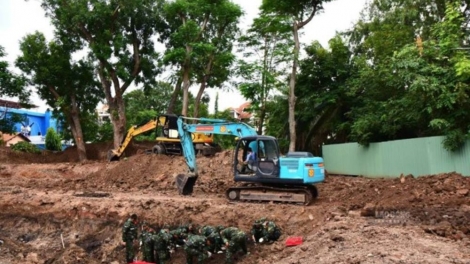
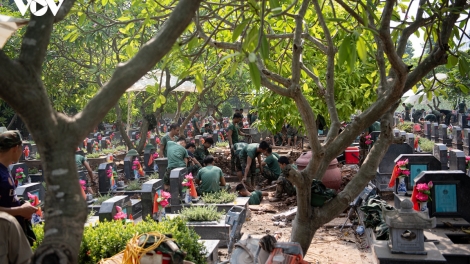
At a working session of the National Steering Committee for the Search, Collection and Identification of Martyrs’ Remains, in Hanoi on Monday, Ms Tra, who is also head of the Committee, said the Ministry of Public Security was ordered to accelerate the collection of paternal-line DNA samples from martyrs' relatives by the end of 2026. It will fast-track a project to build a repository capable of storing about 2 million biological samples from relatives for at least 50 years.
On technology and staffing, those tasked with handling the testing include the Military Institute of Forensic Medicine under the Ministry of National Defence, the Institute of Forensic Science under the MOPS, the National Institute of Forensic Medicine under the Ministry of Health, and the Institute of Biology under the Vietnam Academy of Science and Technology.
Ms Tra told the meeting: “We have accomplished a great deal over the past period, but there is still a huge amount of work ahead. There is no other way forward than for all of us to make extraordinary efforts. I was deeply moved by the images of soldiers carrying a 100-year-old man to a site to collect his biological sample. I was also moved by images of soldiers painstakingly carrying out excavation work under the midday sun in Quang Tri. They remained committed to their work with extraordinary effort, determination and a strong sense of duty. Their dedication has contributed significantly to the results achieved so far.”