



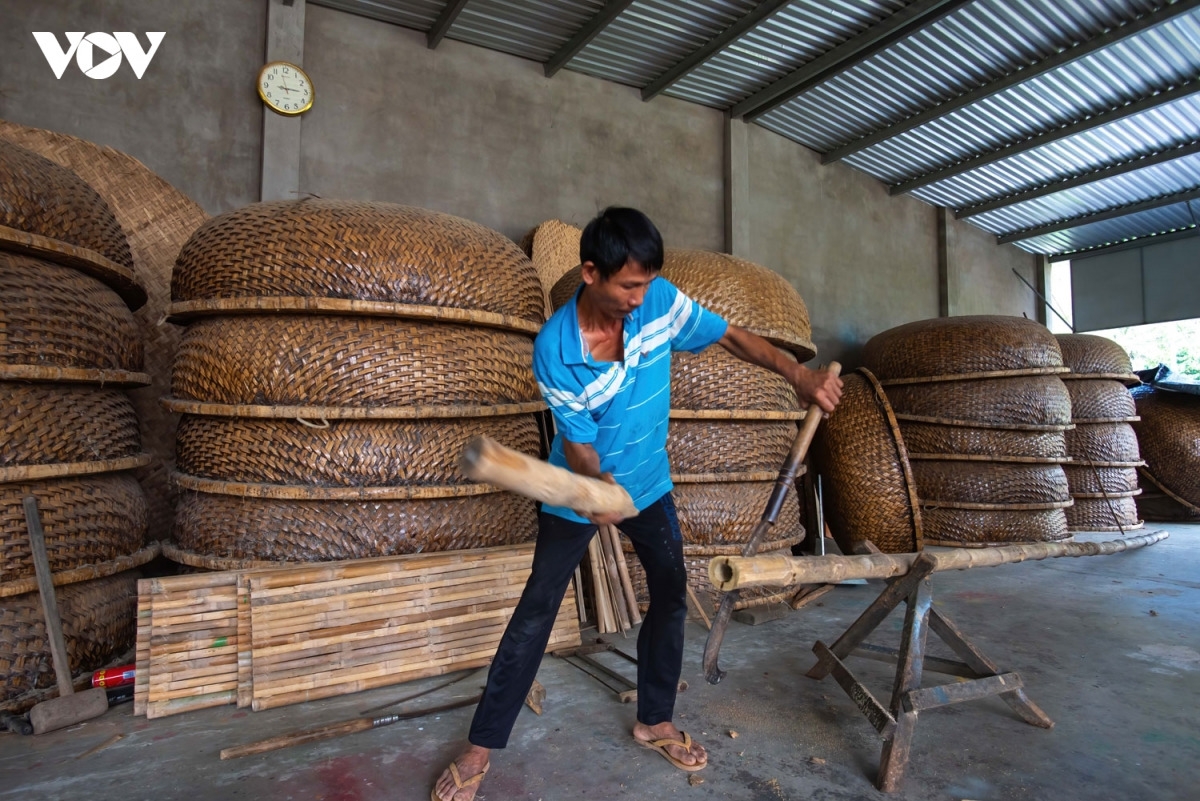
For generations, basket boat making has been an important part of life in Phu My, providing a livelihood and shaping the lifestyle of the community. Basket boats are made entirely by hand, from splitting bamboo strips to weaving the belly of the boat. A team of artisans dividing up the tasks can complete a basket boat measuring 2.3 meters in diameter in about a week.
Bamboo is the main material. To ensure durability and meet technical and safety requirements, the artisans select bamboo that’s neither too young nor too mature. Only the outer layer from the lower half of the culm is used. The process involves splitting and paring the bamboo, weaving the body, shaping the rim, binding the edges, and applying protective oil.
Unlike other boat builders, the Phu My artisans don’t shape their basket boats on the ground using wooden stakes. Instead, they shape them inside specially dug pits. Families with a large production capacity dig several pits in front of their home, the width and depth of each pit determining the dimensions of the boat.
After the main hull has been woven, the artisan places it in the pit and begins shaping it using specialized tools, a keen eye, and skilled hands. Sand is packed down around the boat to hold it firmly in place until the shaping is complete.
This technique sets Phu My apart from other boat building localities. Although labor-intensive and time-consuming, it allows artisans to achieve a high level of precision and safety. Once the hull is shaped, the artisan inspects and fine-tunes it before trimming the bamboo strips along the edge to fit the rim. After the rim is bound, the boat is left to dry in the sun for several days.
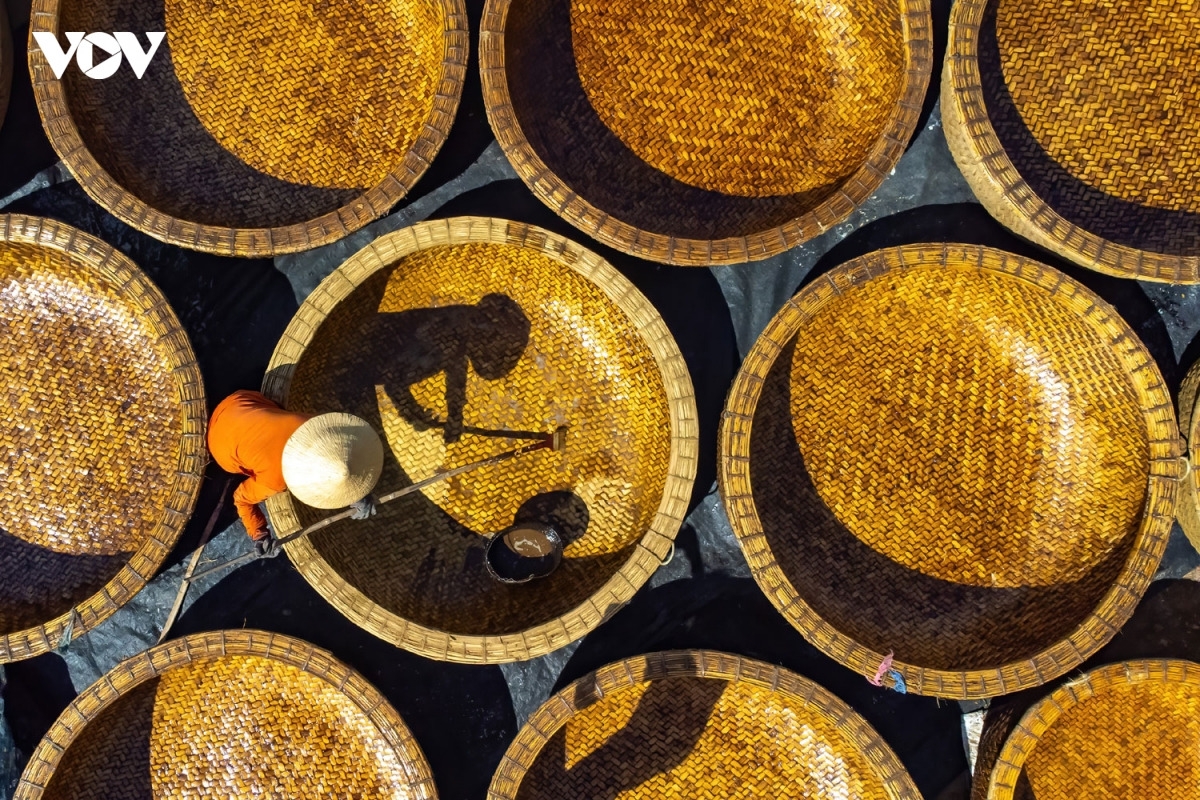
The waterproofing stage prevents leaks when the boat is on the sea. Phu My artisans use an unusual combination of fresh cow dung and resin from the Gurjun tree. Fresh cow dung is evenly smeared over the surface twice to seal the gaps between the bamboo strips. Once the coating has dried, two layers of resin are applied. When they have dried, the basket boat is complete.
Truong Thi Bich Kieu, a boat maker from Phu My village, says waterproofing with cow dung and resin is a technique that’s been handed down through generations. It gives the boats an attractive color and protects them from wood-boring insects. The coating can withstand harsh marine conditions for four to five years.
"A basket boat must be waterproofed on a sunny day. Even a few drops of rain soaking into the cow dung and resin layers can ruin them and prevent the coatings from drying properly. Then, when the boat is put into the ocean, the dung and resin layers might rot and give off a foul smell," said Kieu.
Phu My basket boats have some distinct advantages. They are highly resistant to capsizing, and their circular shape makes them easy to maneuver in tight spaces. Because they’re made of bamboo, tears or punctures can be easily repaired.
Cultural history researcher Nguyen Danh Hanh said, "This village is the origin of vessels used by fishermen throughout the coastal provinces. No other village in Central Vietnam practices this craft anymore. During field trips to Phu My, I met tourists who said this craft village should be preserved and promoted as a unique tourism product serving the maritime economy."
Traditionally used for fishing, today these basket boats are being repurposed for tourism. They now decorate resorts, hotels, and community culture centers. Artisan Kieu told us, "I love this craft. Whenever a finished boat reaches a customer—maybe a fisherman, or maybe a designer or tour operator who will paint artwork on the boat—their positive feedback gives me great joy. People tell us Phu My is the last remaining basket boat village in Vietnam. I hope my children will continue to preserve this heritage for future generations."
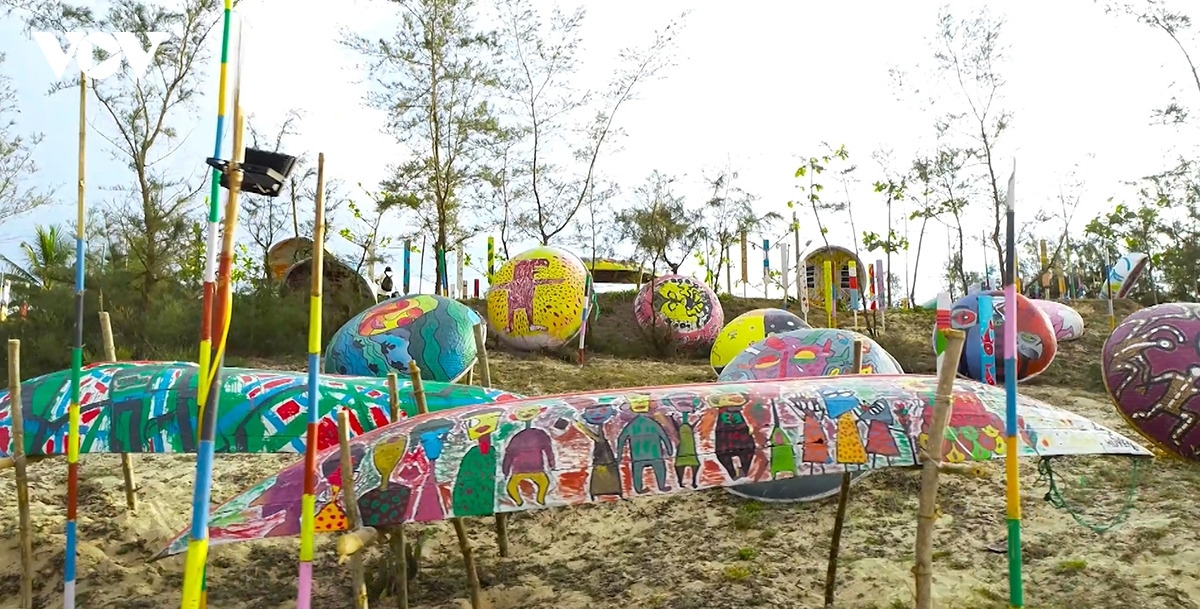
100 Phu My villagers still practice the craft, which has earned a place on Dak Lak province's list of intangible cultural heritages requiring preservation and promotion. And boat maker Mai Van Tao says Phu My is becoming a popular destination for travelers exploring the Dak Lak coast.
"Because we have long-time customers, we keep the craft alive. As long as they need boats, we’ll make them. Tour companies in Ho Chi Minh City place orders every month or two. Whenever they call with their requirements, we ship the exact quantity they need," Tao noted.
For generations, basket boat making has been part of the life of communities along the lower Cai River and the Central coast. Today, in addition to serving fishermen and providing a livelihood for the builders, these boats now also support tourism and cultural preservation.