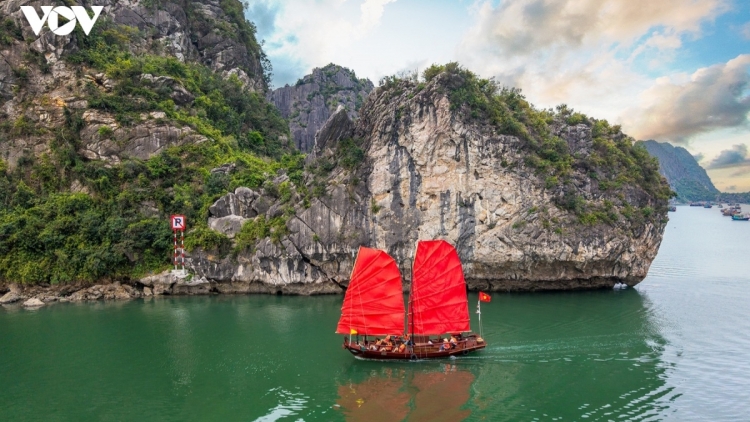




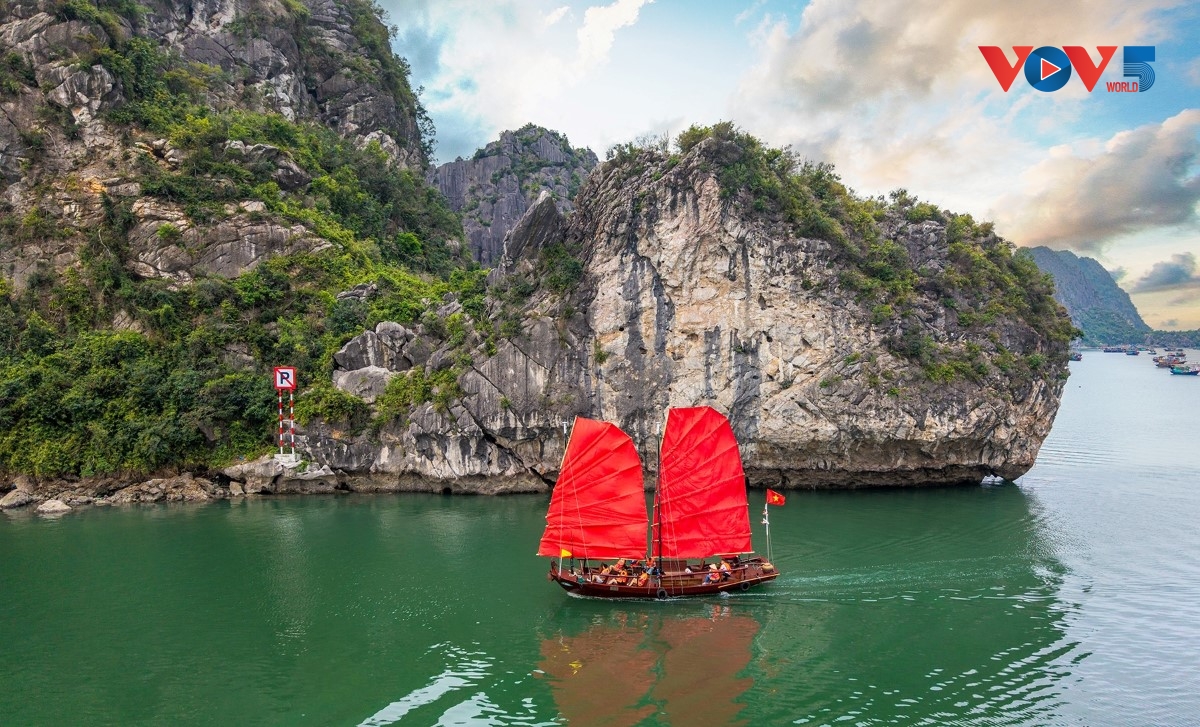
Once the primary mode of transportation of Quang Ninh fishing communities, particularly in the Quang Yen area, the three-plank sailboat is made from three wooden planks—one forming the bottom and two making up the sides—and fitted with two distinctive batwing-shaped sails. This design allows the boat to sail efficiently against the wind and ride the waves, and gives it remarkable stability.
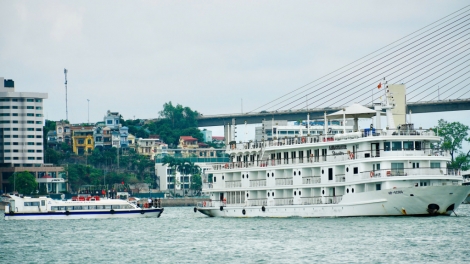
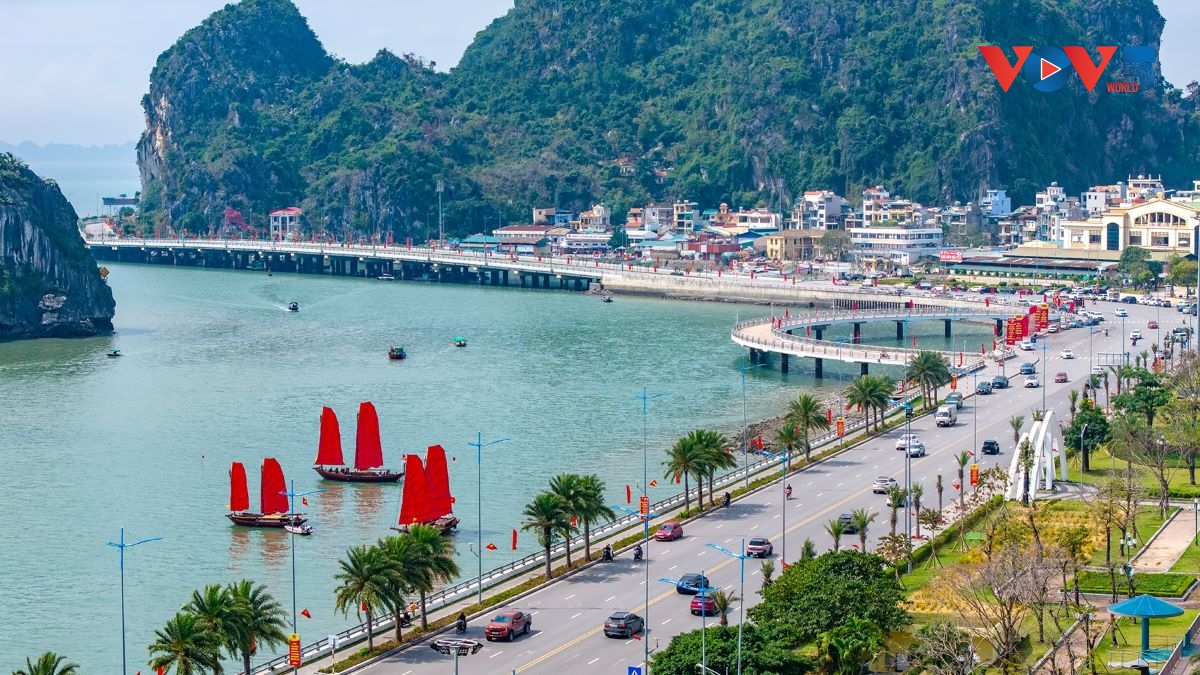
Three-plank sailboat tour operates daily from 8 a.m. to 5 p.m. The sightseeing tour along the shoreline of Ha Long Bay departs from the Quang Ninh Waterway Passenger Transport pier near Ha Long Market No. 1 in Hong Gai ward and passes the Quang Ninh Museum and Library on the Bai Tho Bridge waterfront before returning to its starting point.
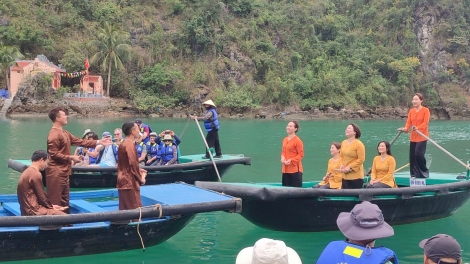
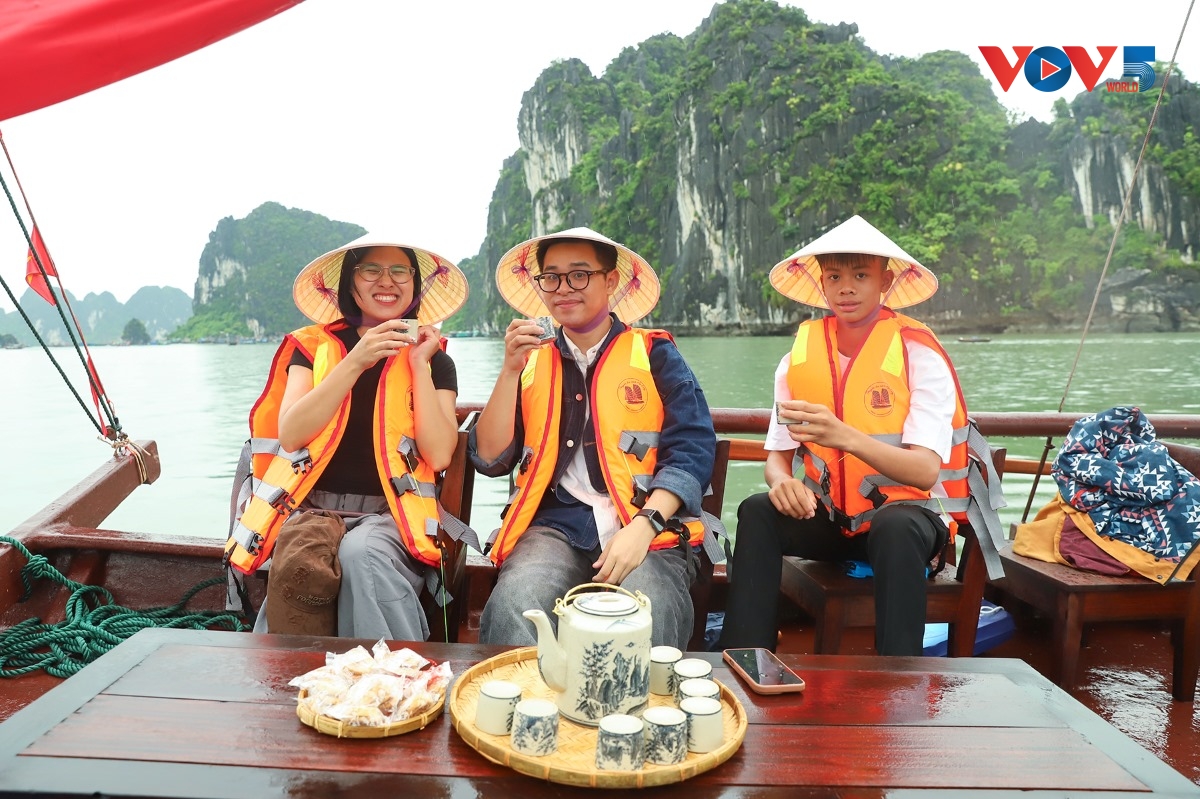
Truong Quoc Hung, a Quang Ninh resident and one of the first to take the journey, said, "The first things that impressed me when I stepped onto the boat were the traditional costume of the boat operator and the classic-colored sails. Guests are served local tea and cakes. These details create an authentic experience of the culture and daily life of ancient Ha Long."
For Quang Ninh residents, the sight of batwing sails evokes memories of a bygone era. For hundreds of years, the three-plank sailboat served as a floating home and a means of livelihood for the local fishermen.
This type of boat played a role in the legendary Bach Dang victory over foreign invaders in 938 and was later used to transport materials for the construction of ancient structures.
From the 1950s onward, the dark reddish-brown sails were a symbol of Ha Long that appeared in countless photographs and films. Their distinctive color was a traditional hue made from areca nut, betel leaves, and slaked lime.

One of the people keeping this centuries-old icon alive is People's Artisan Le Duc Chan, a 17th-generation descendant of a boatbuilding family from Ha Nam Island, now in Lien Hoa ward.
There was a time when his family's wooden boatbuilding craft seemed destined to disappear as more modern vessels began to replace traditional sailboats. Building a single three-plank boat still takes Chan and a team of 7 or 8 craftsmen at least a month.
"I always worried that this type of boat might one day disappear. Fortunately, we received support from the province and tourism agencies to build new boats. To me, that is the greatest achievement I can report to my ancestors—that I’ve fulfilled my responsibility to preserve our family's craft," Chan told VOV.
Six boats built by Chan's workshop have now been put into service for tourists. Nguyen Tat Hieu, Director of the Vietnam Sightseeing Company, said that Quang Ninh already had a well-developed tourism industry with many modern cruise services, but there’s been a shortage of tourism products that showcase the locality’s traditional culture.
“By restoring the three-plank sailboat, we hope to preserve and honor that unique heritage, support local artisans, and introduce the beauty of Quang Ninh's culture to visitors," said Hieu.
Miniature three-plank boat models have become popular souvenirs. Local tourism authorities are now considering organizing a three-plank sailboat race, giving visitors an opportunity to learn how to handle the batwing sails, and transforming this treasured piece of maritime heritage into an international sporting attraction.