





 Vietnamese
 中文
中文
 日本語
日本語
 한국어
한국어
 Français
 Русский
 Deutsch
 Español
 Bahasa Indonesia
 ไทย
ไทย
 ພາສາລາວ
 ខ្មែរ
ខ្មែរ




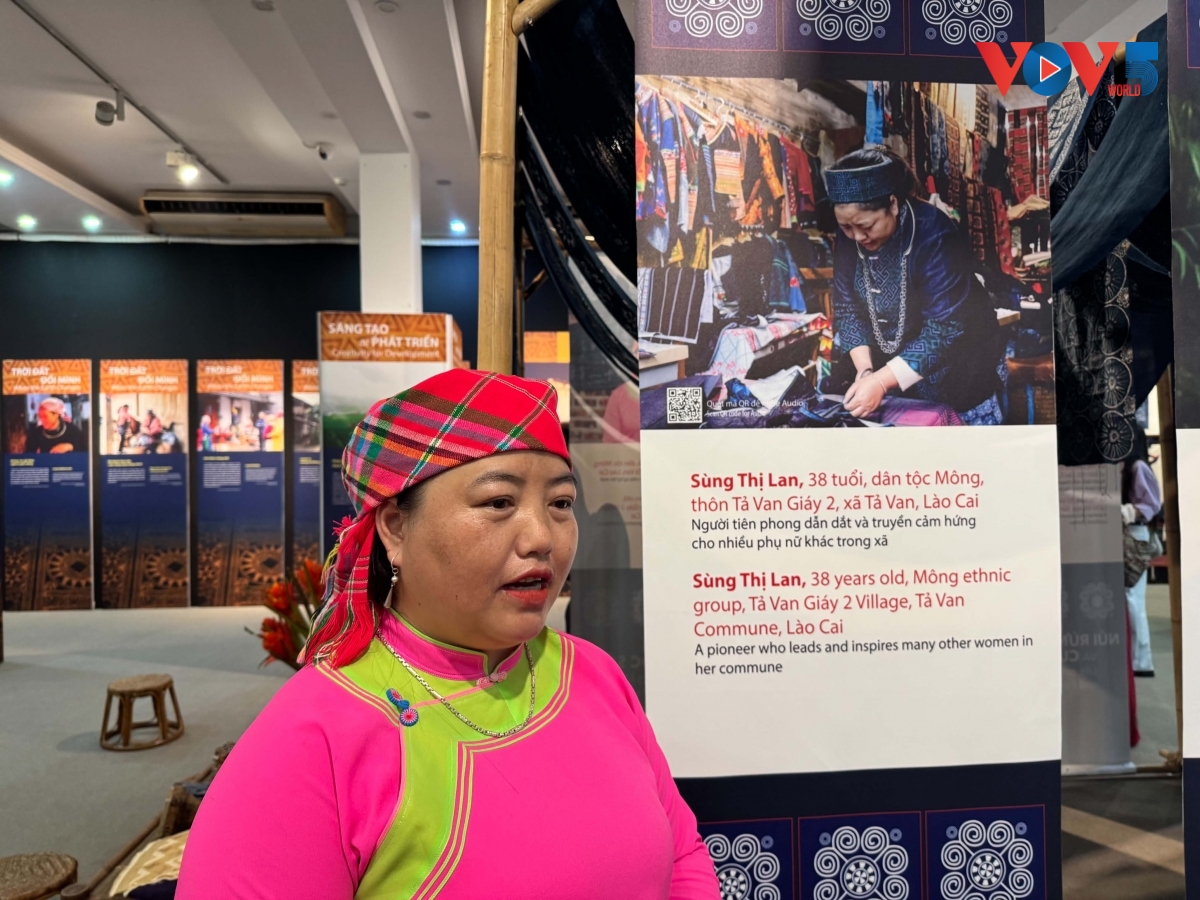
Hoang Lien National Park has a uniquely valuable ecosystem and a rich accumulation of ethnic cultural traditions shaped over generations, forging a strong bond between humans, nature, and indigenous knowledge.
However, climate change, with its more severe weather patterns, plus pressures from economic development, intensive agriculture, and mass tourism, is posing significant threats to local ecosystems and livelihoods. In this backdrop, women in Ta Van and Ban Ho communes, Lao Cai province, are finding ways to adapt and sustain their livelihoods while safeguarding cultural identity.
Sung Thi Lan, a resident of Ta Van commune, said: “At Muong Hoa cooperative, we’re producing recycled brocade products linked to tourism and agriculture. We guide locals to collect used items such as traditional costume accessories, and through handicrafts, embroidery, and sewing, we transform them into new products for sale the market.”
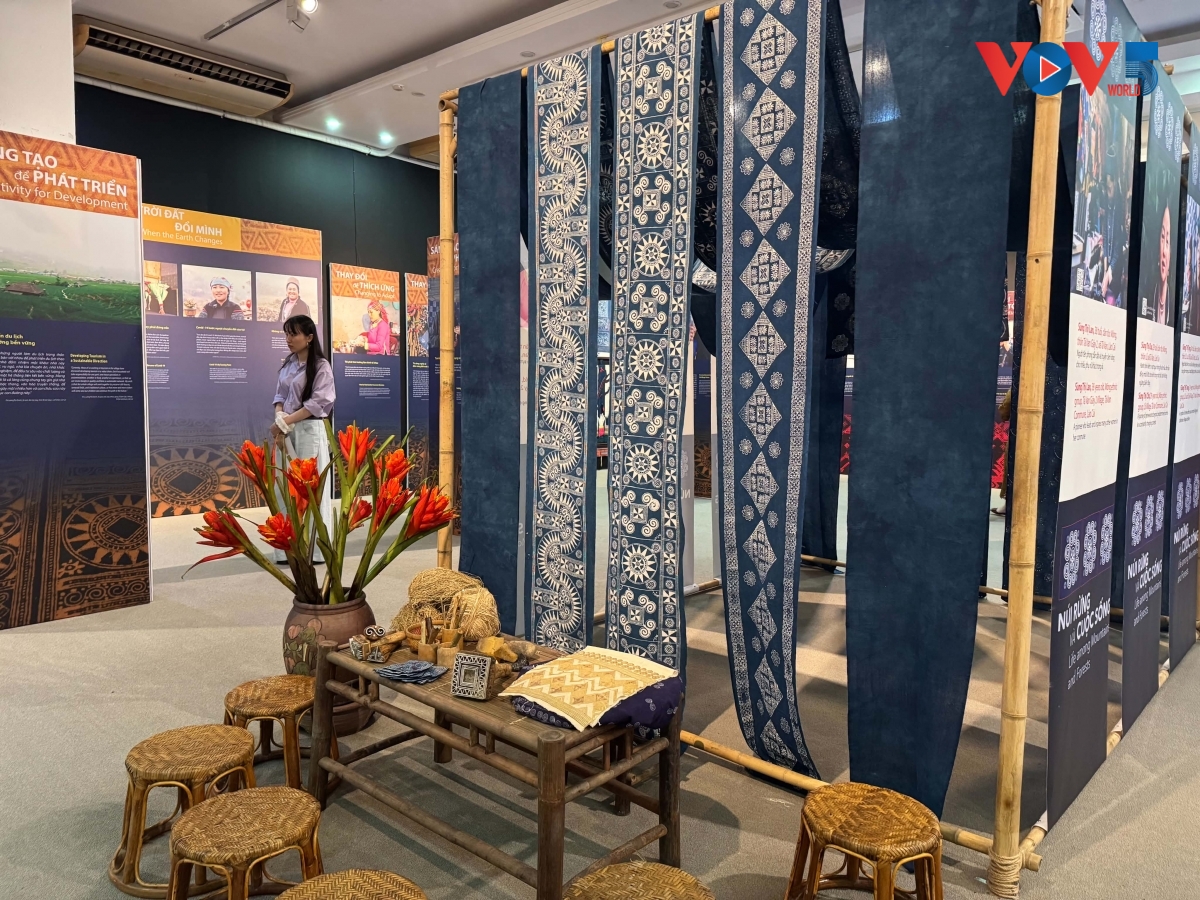
Each sustainable livelihood, each tourism initiative, and each adaptive step reflects a practical effort for the future.
Giang Thi Tang of Ta Van commune said: “We want to preserve traditional skills like drawing and embroidery passed down from our mothers, so that future generations can continue and develop them. We sell brocade products and offer visitors hands-on experiences with wax painting and embroidery, both to promote our culture and pass it on to younger generations.”
Inspired by these highland women, from July 2024 to December 2025 experts from Vietnam’s Institute of Natural Resources and Environment, University of Hull, Loughborough University of the UK, and the Vietnam Women's Museum collaborated on a research project titled “Storytelling Journey of Heroic Vietnamese Women in Ecotourism Adaptation to Climate Change.”
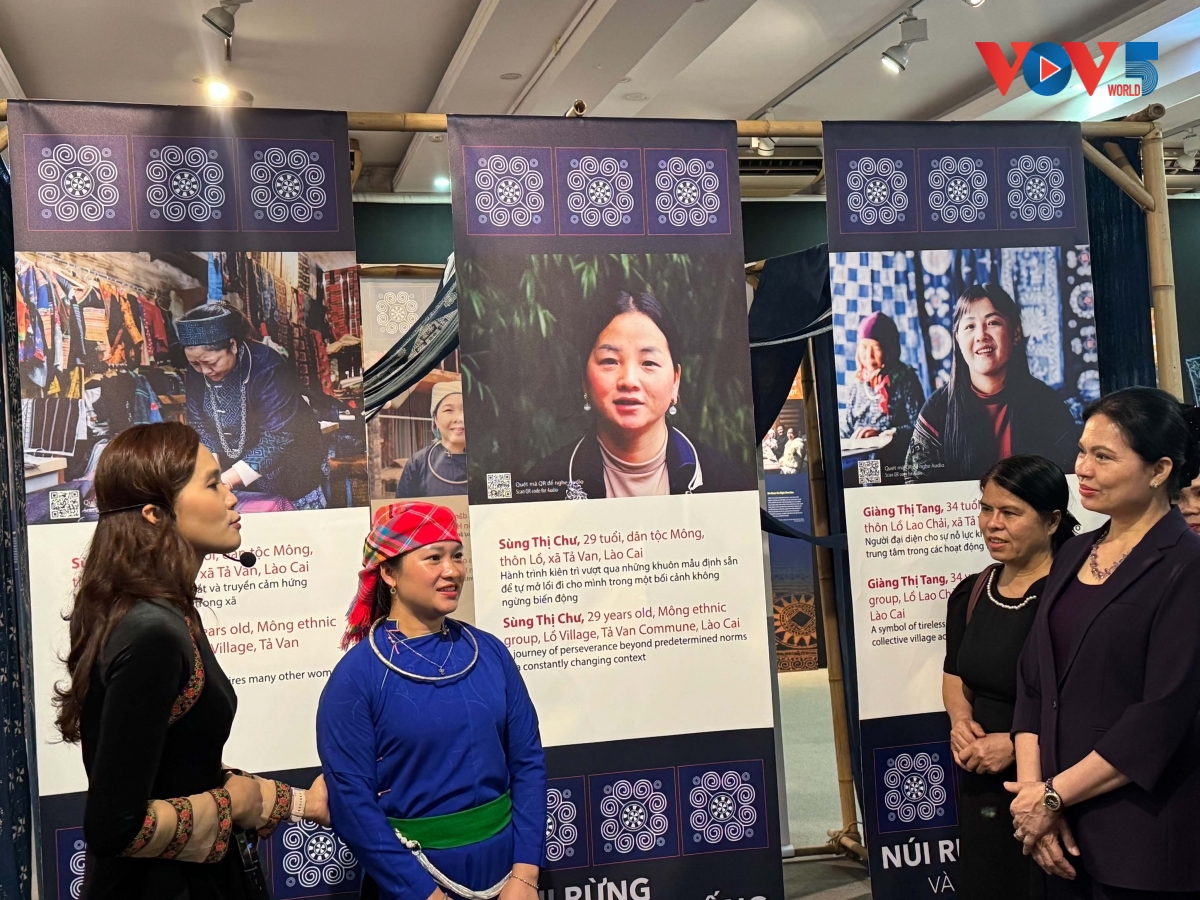
The project aims to support ethnic minority women in the buffer zone of Hoang Lien National Park in conserving nature and culture, while recognizing their pioneering role in sustainable development amid climate change.
Assoc. Prof., Dr. Bui Ngoc Quy, Deputy Director of the Institute of Natural Resources and Environment, said: “Our research focuses on identifying how women have adapted to these changes in their daily lives. At the same time, we’re studying local livelihoods in the new context to see how women adapt and how they preserve cultural identity and traditional values.”
This journey by highland women to preserve natural and cultural heritage is showcased in the exhibition “Green Seeds at Cloud Peaks” at the Vietnam Women’s Museum until April 10. The exhibition portrays the lives of women from the Mong, Dao, Giay, Thai, and Tay ethnic groups, highlighting their efforts to adapt their livelihoods to climate change.
