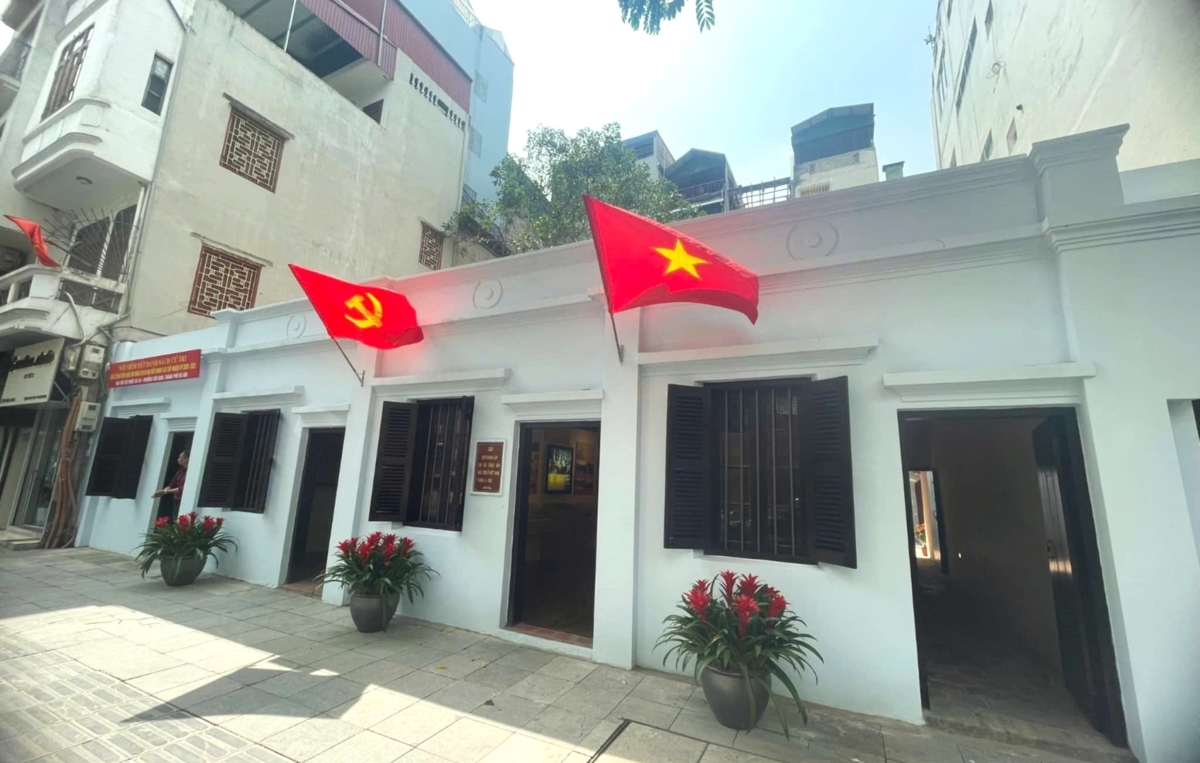
The house at 5D Ham Long is one in a row of four single-storey brick houses for rent - 5A, 5B, 5C, and 5D – owned by a bourgeois family. Built in classic French architectural style with yellow walls, red-tiled roofs, and windows designed to receive natural light, the house has a living room, a small courtyard, and a simple kitchen.
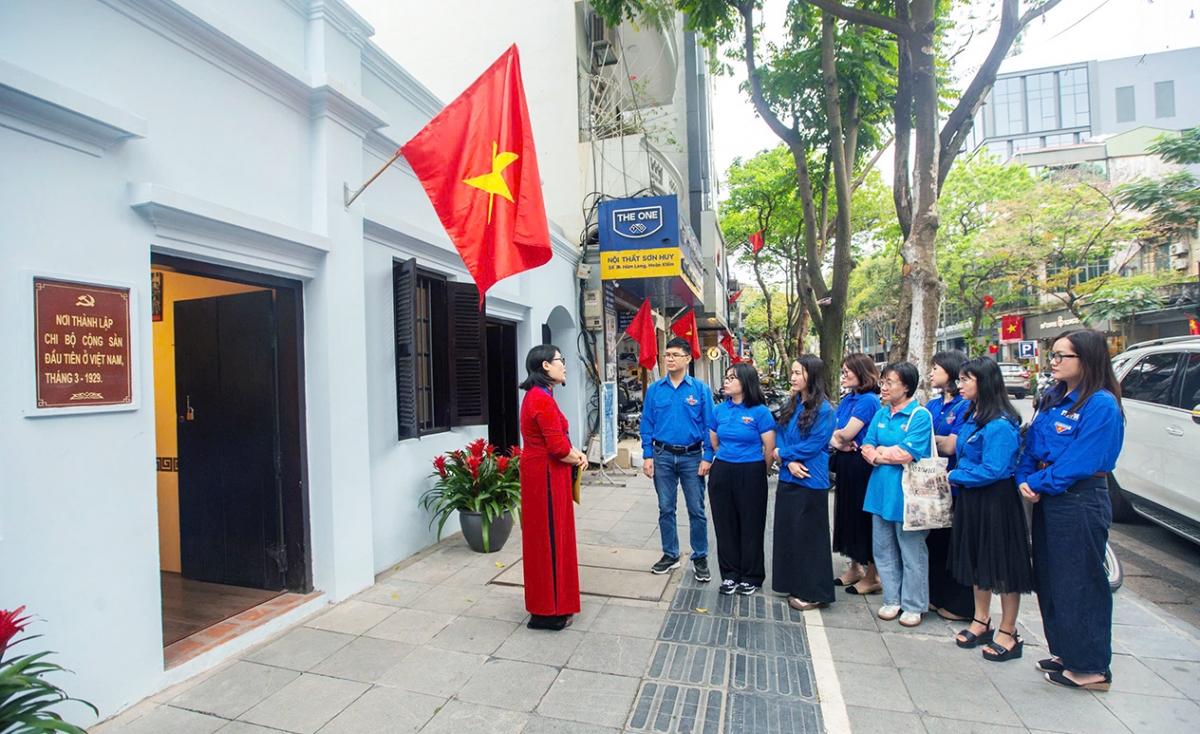
In late 1928, the Vietnam Revolutionary Youth League rented the house to use it as a secret revolutionary base and assigned Mr. Tran Van Cung and his wife Nguyen Thi Lien, to live there, disguised as a poor civil servant family.
Nguyen Thi Thu Hien, a guide at the 5D Ham Long historical site, said: “Among the four houses for rent, 5D has a particular advantage. It shares a wall with house 5C on the right and borders an alley on the left, which was rarely used at the time. In case of emergency, comrades could quickly escape through the back door to this alley.”
On a night in late March 1929, progressive young leaders of the Tonkin Regional Committee and the Hanoi Provincial Committee of the Vietnam Revolutionary Youth League secretly met at 5D Ham Long to establish the first Communist Party cell in Vietnam. This event marked the beginning of a movement that led to the founding of the Communist Party of Vietnam on February 3, 1930.
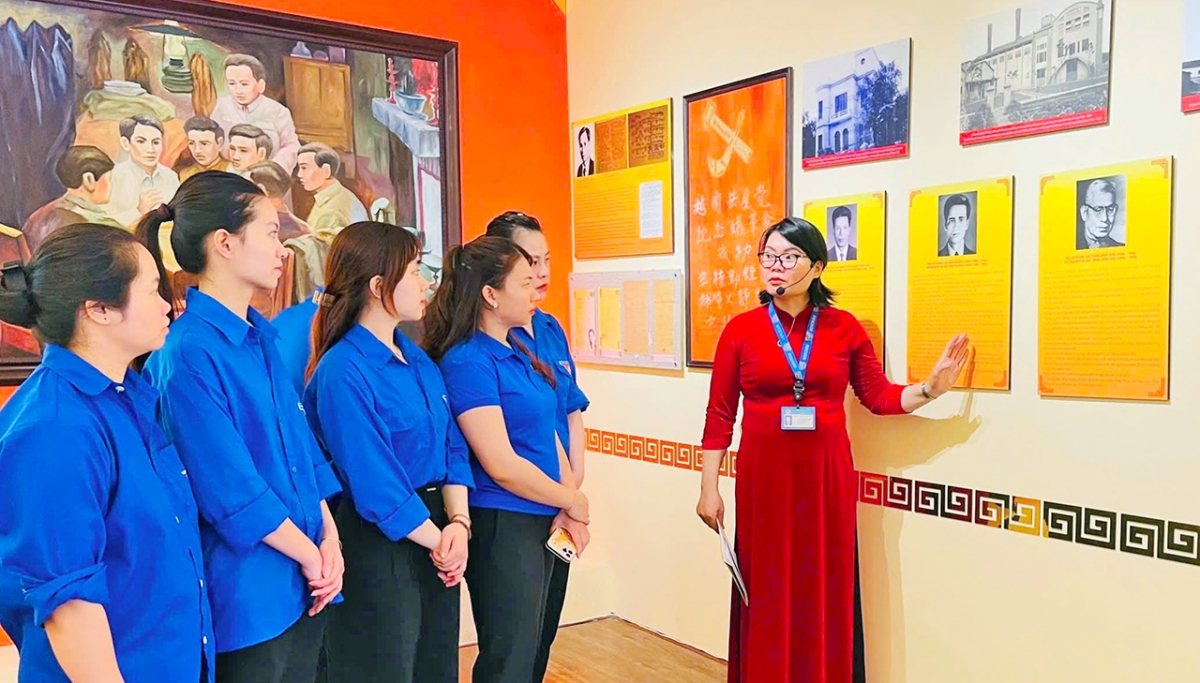
The interior of the house is simple and modest. The most valuable items were a set of wooden couches and a double-bottom chest used to conceal documents. A small oil lamp was placed on top of the chest, which Mr Cung often used as a desk. The small room received many guests for meetings to plan the organization of the Communist Party of Vietnam.
On November 25, 1959, the house at 5D Ham Long was restored as a memorial site displaying documents and artefacts associated with the establishment of the first Communist Party cell in Vietnam. Nguyễn Thi Hong Ha, granddaughter of revolutionary Nguyen Phong Sac, who was one of the eight founding members, told VOV.
“The 5D Ham Long site was closely associated with my grandfather in the early days of his revolutionary career. As a patriot, he joined the revolution and then became a member of the Communist Party of Vietnam. In recent years, I’ve made an effort to bring my children and grandchildren here to learn the history of our country and the Communist Party of Vietnam and feel proud of our great-grandfather,” said Mrs. Ha.
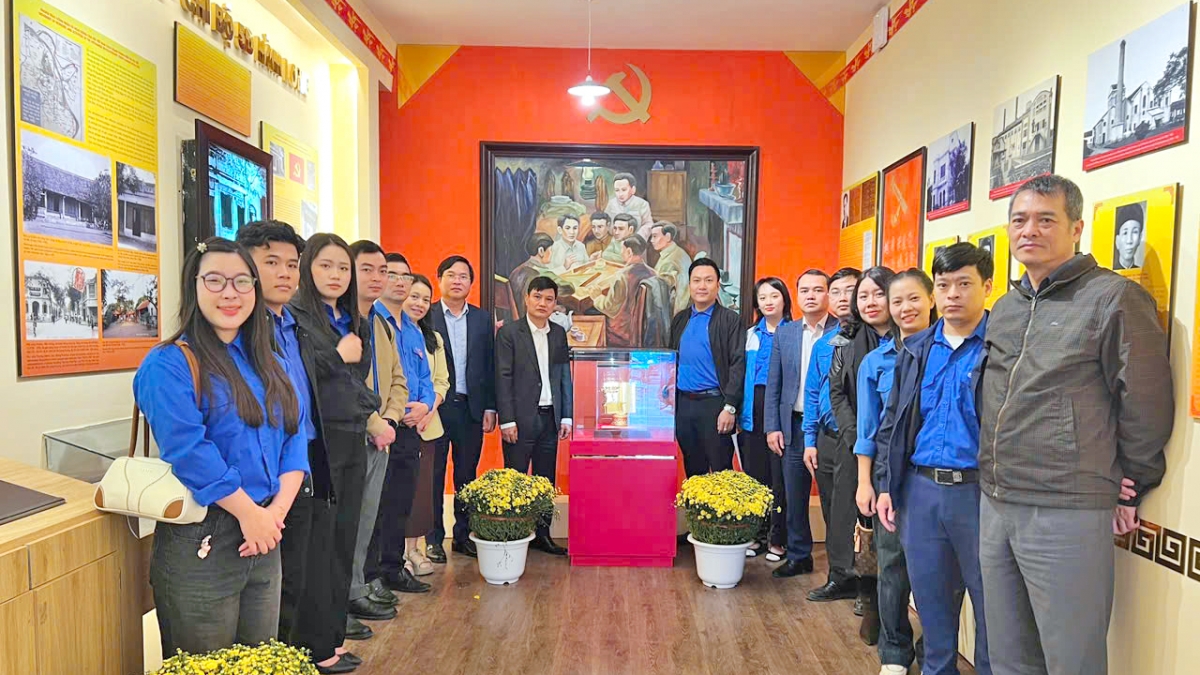
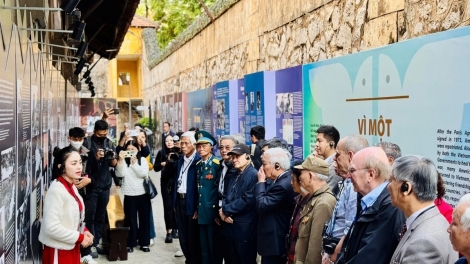
Today, the relic site spans 500 square meters and includes a memorial room, exhibition room, ceremonial hall, and workroom. The Hanoi Relic Sites and Scenic Spots Management Board conducts restoration work to preserve the site’s original condition.
Digital 3D modelling, virtual reality, QR code scanning, and AR/VR technology provide visitors with a more engaging and interactive experience. Ngo Thi Minh Tam, Deputy Manager of the site, said: “The 5D Ham Long relic has been restored, and residents in neighboring houses were compensated for relocation. At present, the site comprises four units. Display screens enhance the visitor experience, particularly for younger visitors.”
5D Ham Long is a “red address” tied to Vietnam’s revolutionary history. Nguyen Khanh Linh, a 7-grader at Quang Trung Secondary School, said: “When we study history in school, we learn mainly from textbooks, and it’s difficult to imagine the events that took place in the past. The guide’s explanation of these artefacts, this site, and the founding of the Communist Party of Vietnam makes that part of history much more engaging.”