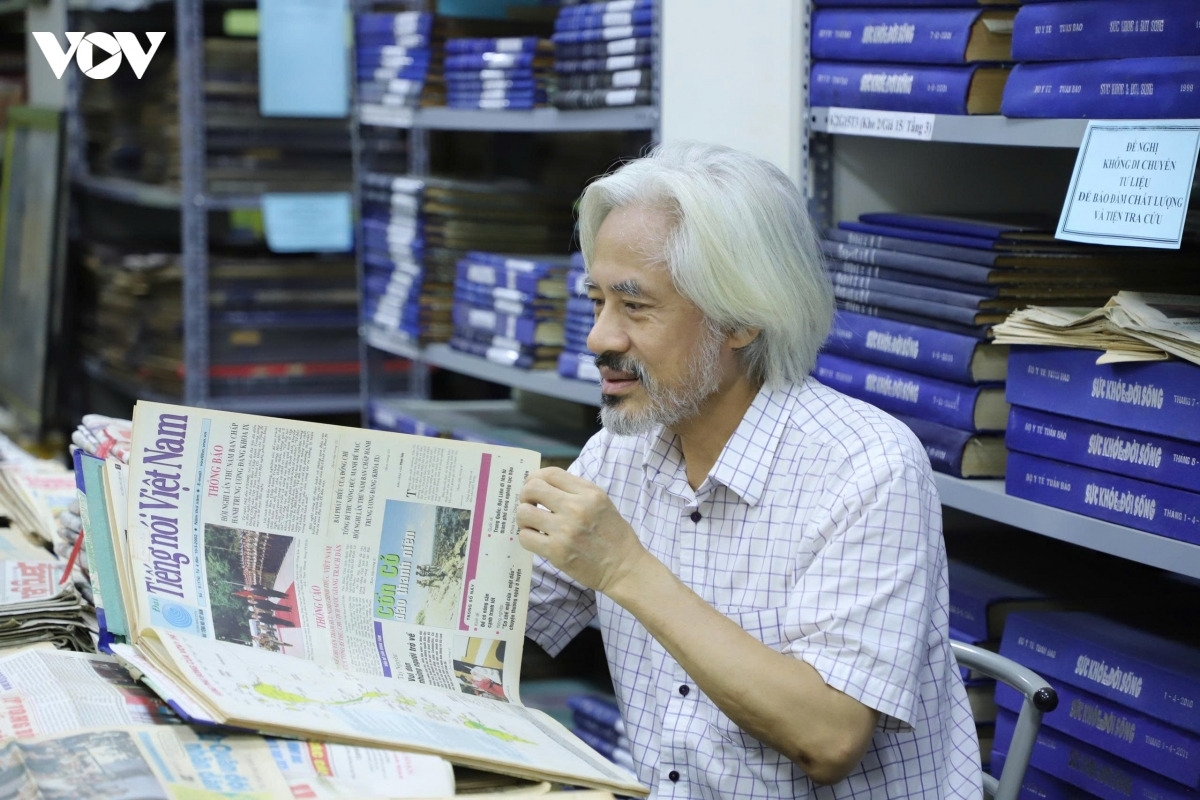
In his 170-square-meter home at 595 Truong Chinh street in Nam Dinh ward, Ninh Binh province, Nguyen Phi Dung has dedicated a room to newspapers published before 1954.
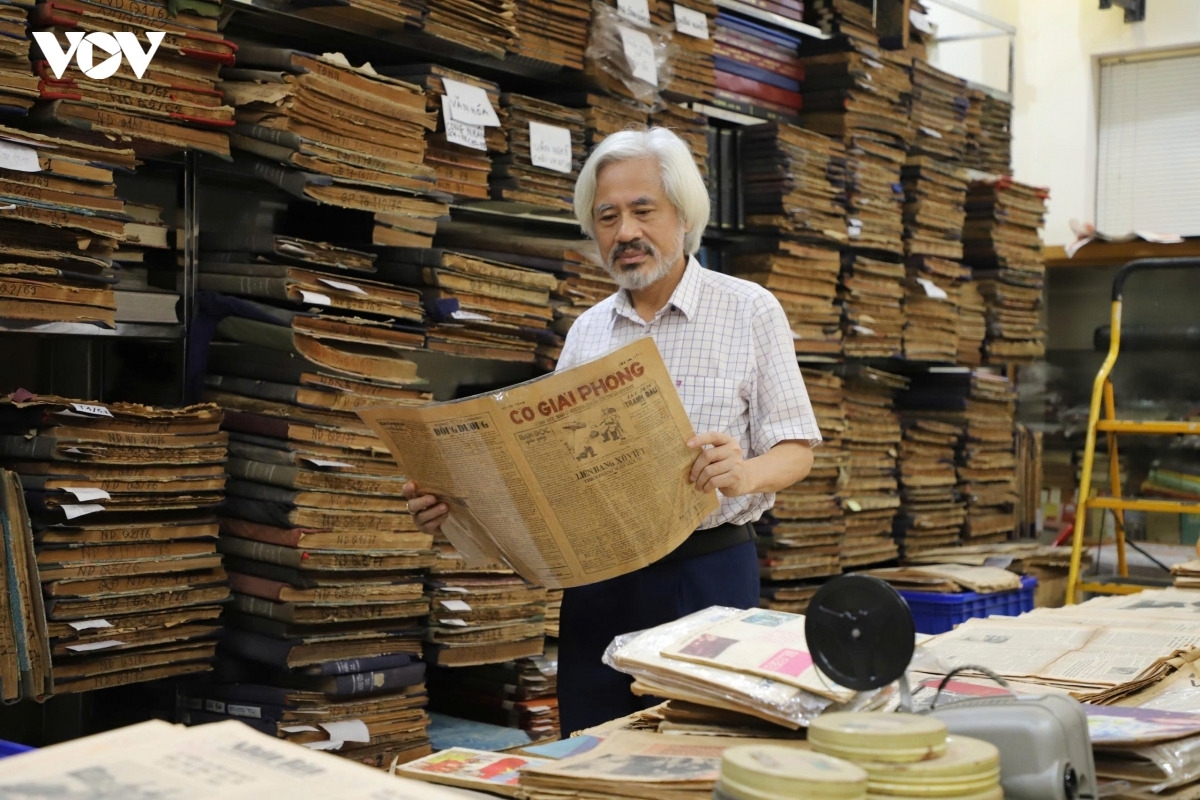
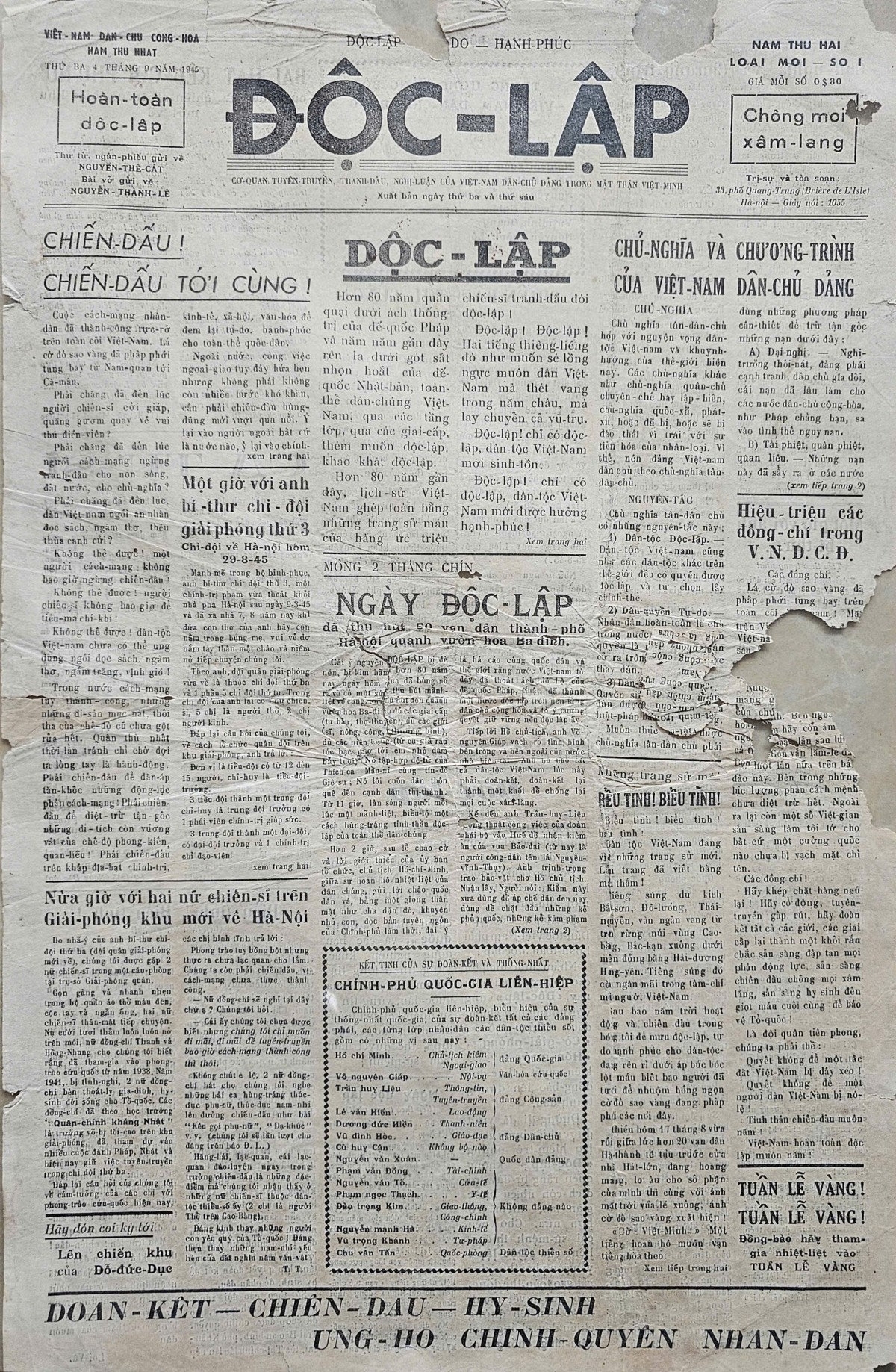
Recognized by the Vietnam Records Organization as Vietnam’s largest collection of printed newspapers, Dung’s 400,000 issues of various publications include some 200 featuring Independence Day. Among his most treasured items are Issue No. 1, published on September 4, 1945, and Issue No. 2, published on September 7, 1945, of the Doc Lap (Independence) newspaper.
Mr. Dung said, "Both Issue No. 1 and Issue No. 2 of the Doc Lap covered Vietnam’s National Day celebration. Through these pages, we learn that half a million people from the inner and outer areas of Hanoi gathered at Ba Dinh Square at 11:00 AM. The newspaper explicitly noted that the flag-raising ceremony began at 2:00 PM, a specific detail that few people today might know."
Having collected an almost complete set of newspapers published on Independence Day since 1945, Dung considers the September 2, 1975, issue of Nhan Dan (The People) newspaper the most beautifully printed, despite the limited printing technology of the time.
Covering National Day celebrations, the paper contains illustrations that capture the excited atmosphere of public rallies and images of President Ho Chi Minh and Vietnam’s red flag with a gold star.
"The September 2 issue was laid out in striking colors, with many photos capturing the grand military parade and the public’s joy in celebrating national reunification," said Dung.
In addition to newspapers, Phi Dung preserves sets of postage stamps issued for National Day. Among them is a five-color stamp set featuring President Ho Chi Minh, issued by Vietnam Post in 1946 to mark the first anniversary of National Day.
To protect these artifacts, Dung has installed air conditioning and dehumidifiers in his collection room. For exceptionally rare newspapers, he individually wraps each issue in protective plastic, carefully rolls them, and stores them in glass display cabinets.
Collector Dung said, "Due to wars and harsh climatic conditions, many newspapers were badly damaged, making the surviving ones even more precious. To this day, I feel extremely fortunate to possess these historical papers. Through press archives, we can uncover fascinating historical details that carry immense revolutionary value."
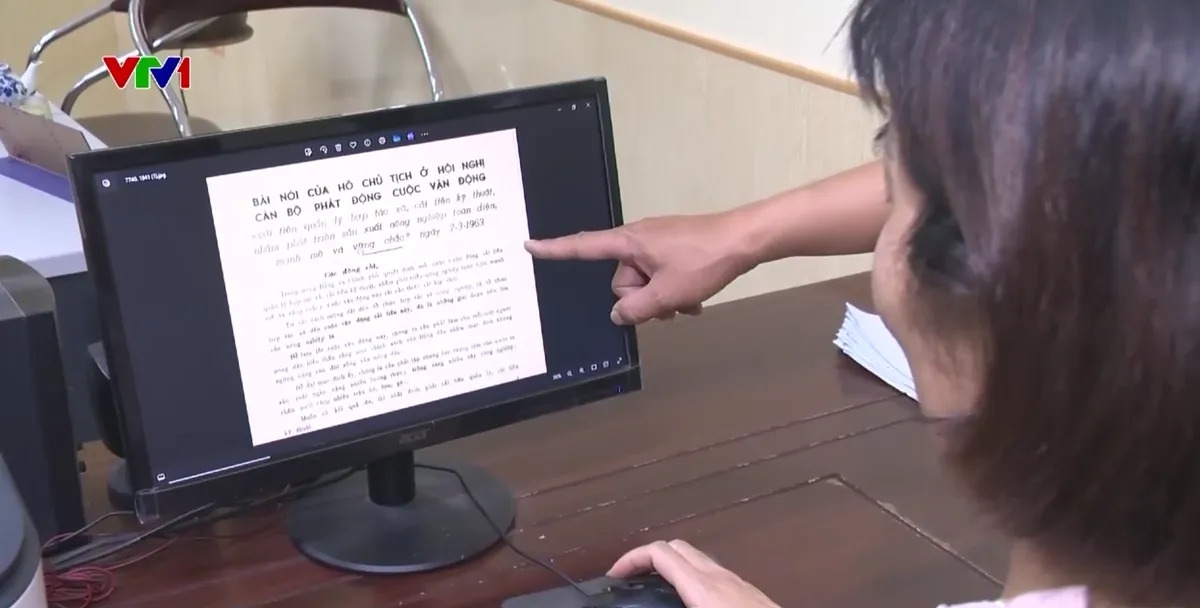
The Ninh Binh Provincial Museum preserves 200 paper artifacts related to Independence Day. Inventory work requires strict adherence to technical preservation protocols.
When preserving artifacts, staff prepare a flat work surface covered with flexible plastic sheeting and acid-free paper to prevent microbial growth. Conservators wear special clothing, face masks, and gloves to prevent sweat and other contaminants from coming into contact with and damaging the materials.
Pham Thi Loan, Deputy Head of the Inventory and Preservation Section at the Ninh Binh Provincial Museum, said, "We take stock not only of the quantity, but also of the physical condition of each artifact. We check for insect damage, tears, dimensional changes, or faded lettering to determine the appropriate preservation measures."
In the preservation laboratory, paper artifacts undergo multiple treatments, including flattening, dust removal, and smoothing of creases with low-wattage irons. Every step requires precision and extreme care.
Nguyen Man The, chief of the artifact preservation technical team at the Ninh Binh Provincial Museum, said, "For torn artifacts, we apply traditional paper-backing techniques. For faded or missing text and patterns, we work with artisans and painters to restore the lost details. Using these techniques has helped our museum conserve many paper artifacts associated with Independence Day and President Ho Chi Minh."
Yellowed by time, the printed words and photographs preserved on paper keep historical memories alive, ensuring that memories of the August Revolution on August 19 and National Day on September 2 remain vivid, inspiring, and enduring for future generations.