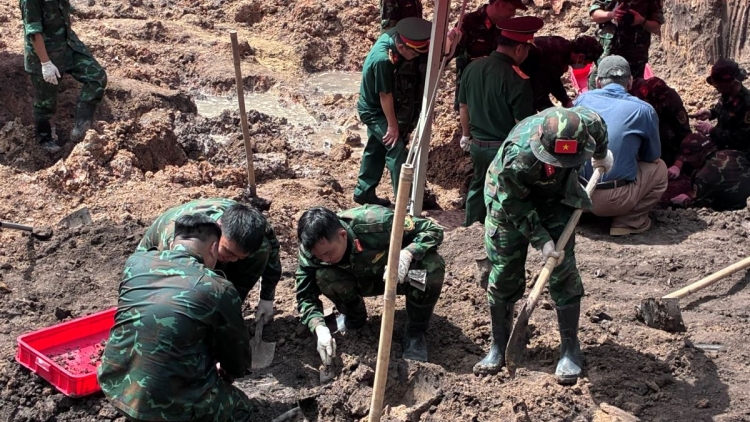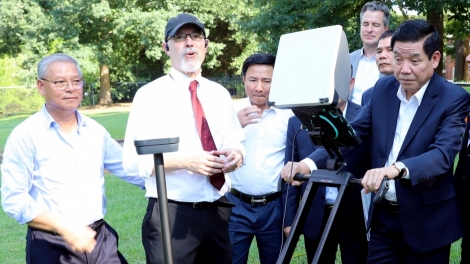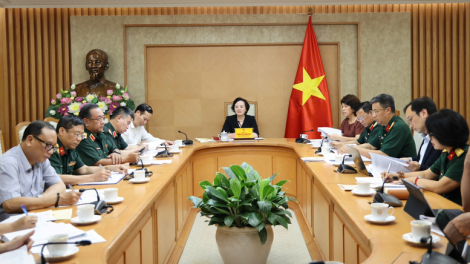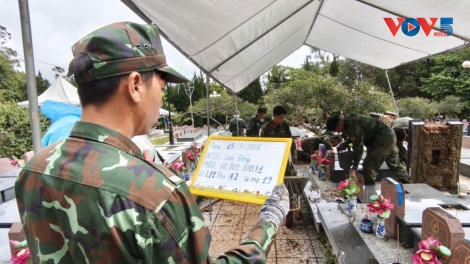




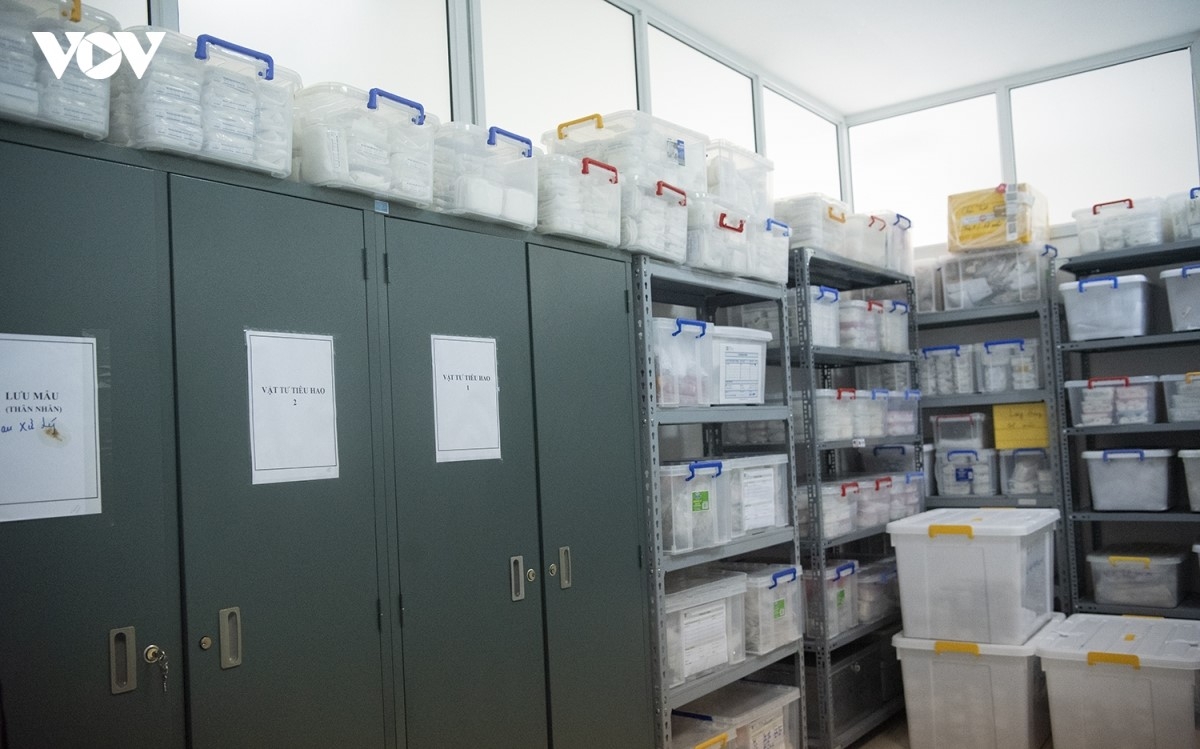
There are thousands of bone samples being preserved at the Vietnam Academy of Science and Technology (VAST), but some consist of only a few small fragments after having lain underground for over half a century; all that remains within the bone is fragmented DNA. This is precisely why identifying fallen soldiers remains is one of the most challenging problems in forensic science.
VAST Vice President Professor Chu Hoang Ha said a highly advanced procedure has been applied. “This new procedure uses single-nucleotide polymorphism (SNP) markers located on human nuclear DNA. The method employs more than 500 SNP markers, and when combined with next-generation sequencing, can take DNA identification to a new level. Fallen soldiers' DNA can now be matched with up to fourth-generation family members. Even fragmented DNA can be used for identification. This is a major advancement and offers new solutions to identifying fallen soldiers' remains in Vietnam,” according to Ha.
After receiving this technology from the Netherlands-based International Commission on Missing Persons, scientists at the Academy’s Centre for DNA Identification (CDI) conducted further research, modified, and optimized the new procedure for the samples found in Vietnam.
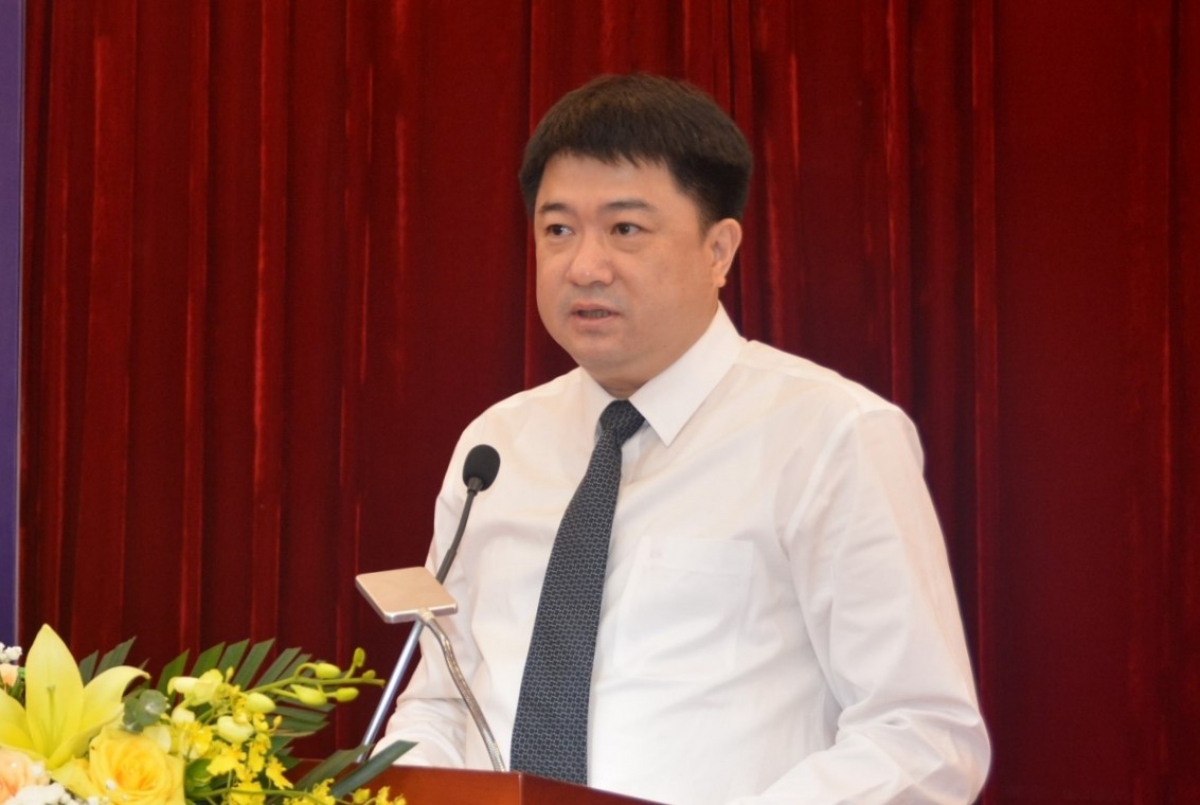
CDI's Director Dr. Tran Trung Thanh said, “It was thanks to the International Commission on Missing Persons, a leader in forensic research, that we now have access to this new procedure. The samples collected from fallen soldiers' remains in Vietnam, however, are unique and among the most challenging cases in the world; so we had to make some modifications. Our scientists worked hard to optimize this new technology to fit the cases in Vietnam. We have moved from basic research to actually applying the technology in practice.”
This new technology has been piloted on actual samples found at Tra Linh Martyrs’ Cemetery in Cao Bang province and found matches with martyrs' relatives. Recently, it has been used on nearly 1,000 samples collected at Rong Rieng Martyrs' Cemetery in An Giang province.
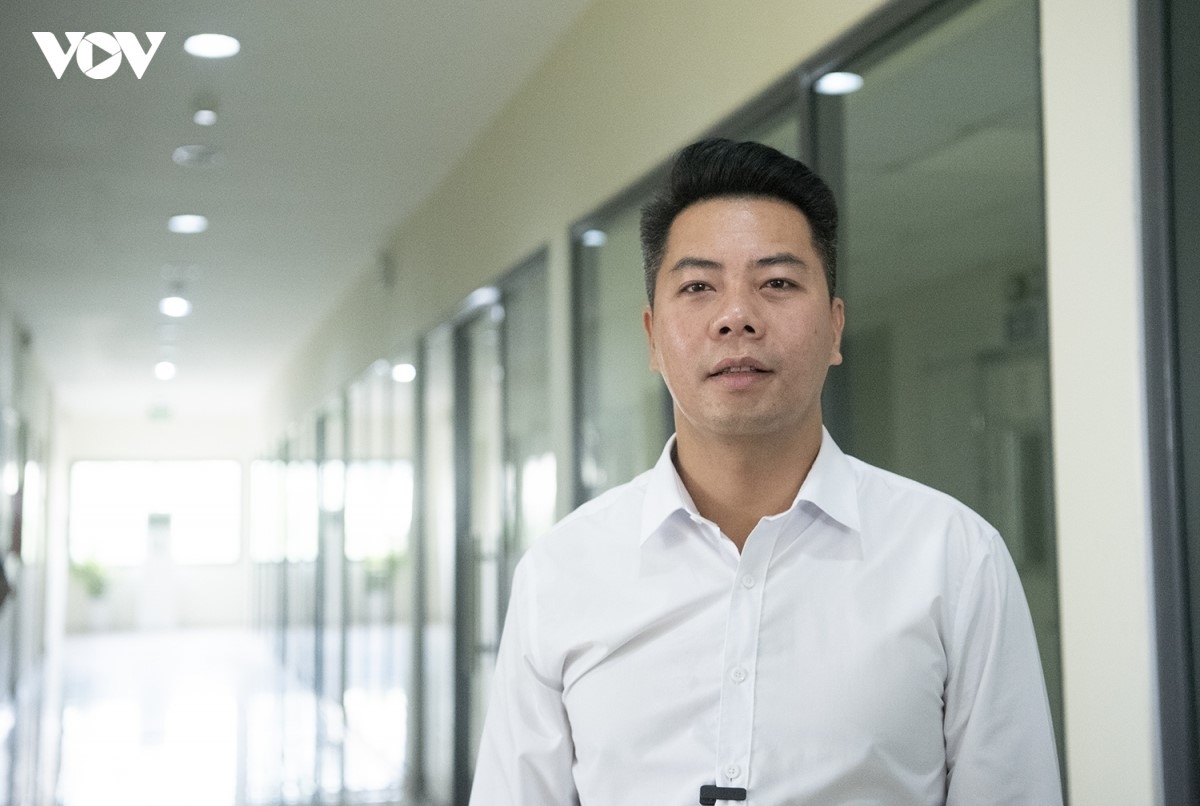
However, the 500-day Campaign requires more DNA identification capacity. Vu Anh Tuan, a forensic scientist from CDI said, "To master new technologies, we need people with lots of technical and scientific expertise. Preparing our human resource well is key to implement this new procedure. Our technicians and DNA examiners have been trained at home and abroad to adopt, master, and carry out advanced technological processes."
At its current capacity, the CDI can analyze around 4,000 samples a year using mitochondrial DNA (mtDNA) analysis and around 1,000 cases using the new tech with SNP markers. A large number of fallen soldiers' remains are still awaiting identification.
The CDI has invested in modern equipment and automation, and is working to complete the DNA database of fallen soldiers' relatives. This database will help shorten the time needed for matching relatives' DNA and improve identification's accuracy.
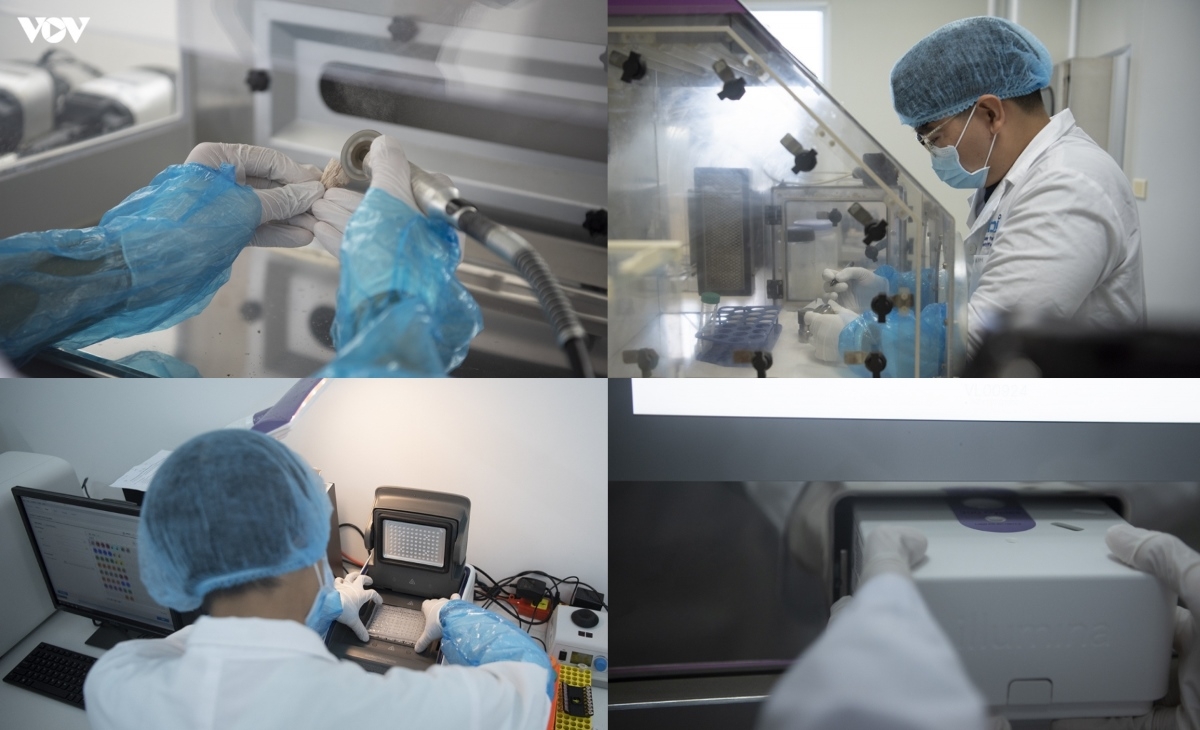
“To achieve the goals of the 500 Day Campaign, we must quickly collect biological samples from fallen soldiers' remains and preserve them according to standards so avoid further deterioration. We also need to build a DNA database of relatives of fallen soldiers,” said VAST Vice President Prof. Chu Hoang Ha.
Mastering new technology, strengthening human resources' capacity, and updating DNA database will improve fallen soldiers identification works. They are how the science and technology sectors are carrying forward the Vietnamese tradition of “drinking water, remembering its source”.