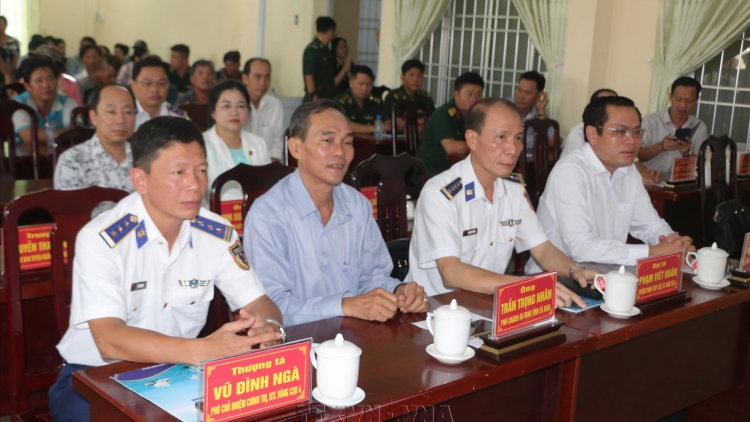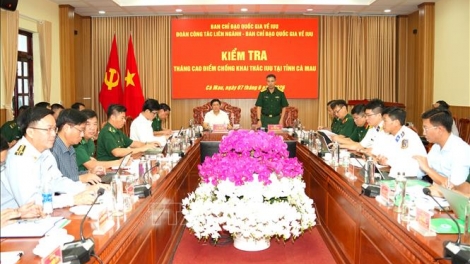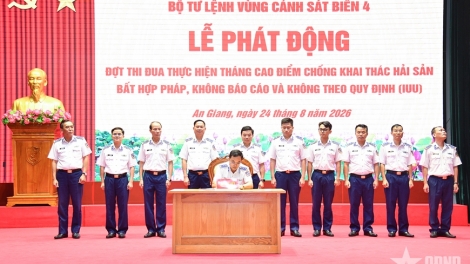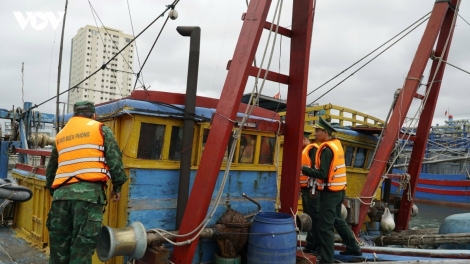




The campaign aims to ensure transparent seafood traceability, protect marine resources, and contribute to the nation's efforts to have the European Commission's IUU "Yellow Card" lifted as soon as possible.
As of early this month, all fishing vessels in Dak Lak had been updated in the national fisheries database. At Phu Lac fishing port in Hoa Hiep ward, vessels must meet all requirements regarding documentation, vessel monitoring systems (VMS), fishing logbooks, and designated operating zones before setting sail.
Major Luong Cong Hau, Deputy Commander of the Hoa Hiep Nam Border Guard Post, said, “Fishermen strictly comply with anti-IUU fishing regulations. There are no longer any ‘3 No's’ fishing vessels in the area (vessels with no registration, no inspection, or no fishing license). All fishing vessels are equipped with monitoring devices and strictly follow repair procedures whenever equipment encounters technical problems, ensuring compliance with the law.”
Nguyen Xuan Canh, Chairman of the People’s Committee of Phu Yen ward, home to a deep-sea tuna fleet operating primarily in offshore waters, said fleet management is closely coordinated among local authorities, border guards, fishing ports, and neighborhood groups.
“We have directed relevant units to work closely with the Đà Rằng Border Guard Post and the fishing port to combat IUU fishing effectively. We have also partnered with neighborhood units to closely manage the fleet and crew members during fishing trips, requiring daily monitoring, photos, and standardized reports,” Canh added.
In Quang Ngai, weekly reviews have been carried out to assess progress. Vo Van Hai, head of the provincial Sub-Department of Fisheries and Islands, said the approach has enabled authorities to address difficulties and obstacles in tackling IUU fishing in a timely manner.
“Anti-IUU measures are being implemented vigorously in line with the Prime Minister's directions,” Hai said, adding, “The provincial Party Committee and People's Committee have strictly required weekly reporting. To date, we have basically met key requirements in Quang Ngai, from managing vessel conditions to ensuring seafood traceability from sea to port. This provides a solid foundation for tracing the origin of seafood, strictly managing unqualified vessels, and imposing severe penalties on violators.”
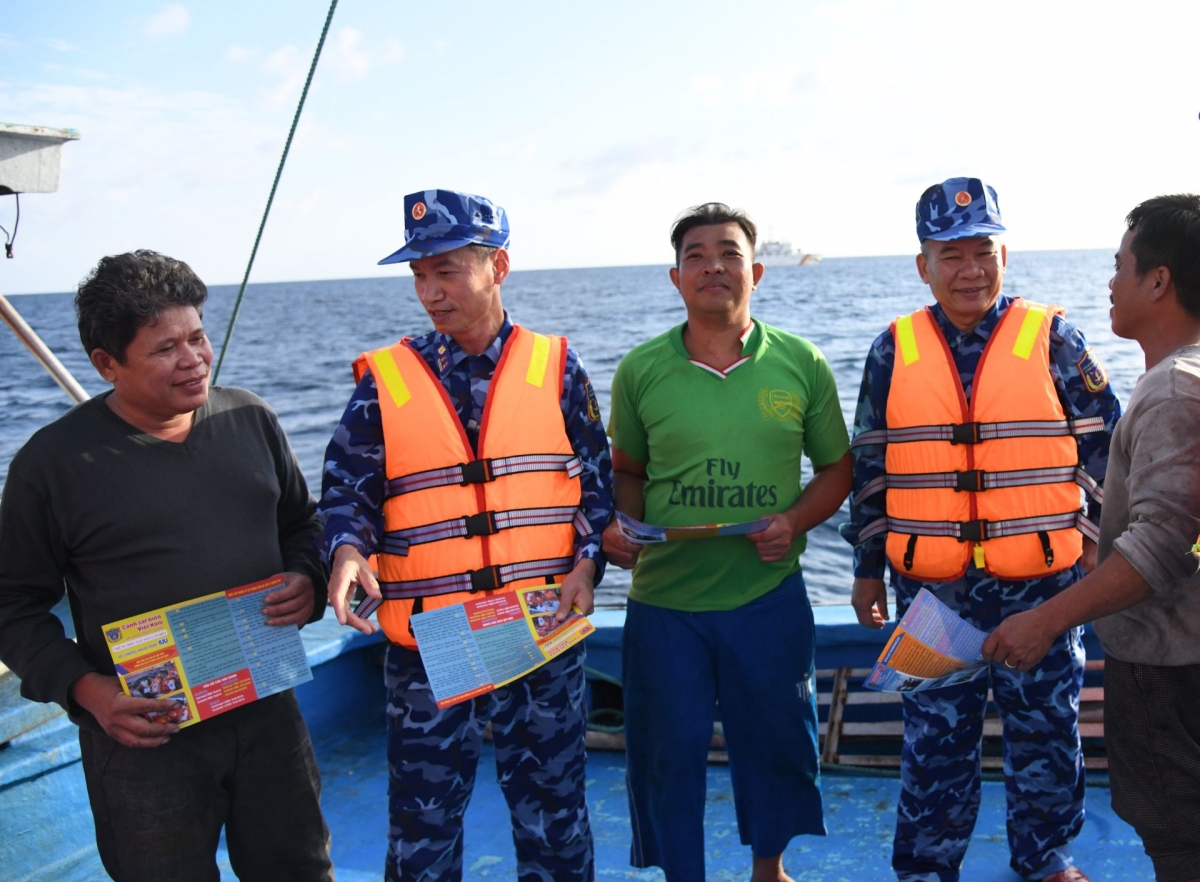
In coastal localities and the Ly Son Special Administrative Zone, the Quang Ngai provincial Border Guard has monitored fishermen and fishing vessels during sea voyages and integrated outreach on the Fisheries Law and IUU regulations. The efforts aim to ensure that fishermen clearly understand their responsibilities and remind one another to comply with regulations while operating at sea.