





 Vietnamese
 中文
中文
 日本語
日本語
 한국어
한국어
 Français
 Русский
 Deutsch
 Español
 Bahasa Indonesia
 ไทย
ไทย
 ພາສາລາວ
 ខ្មែរ
ខ្មែរ




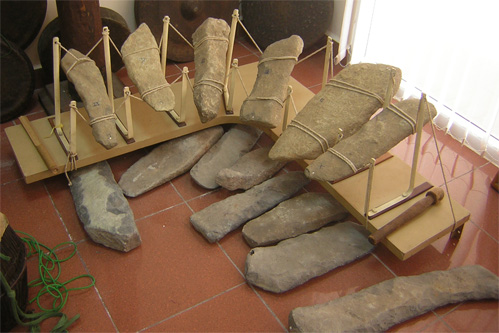 A lithophone displayed at Dac Lac Museum |
The M’nong produced many lithophones. They combined rocks of different sizes to create melodies. The long, thick rocks create deeper sounds while short, thin rocks create clearer sounds.
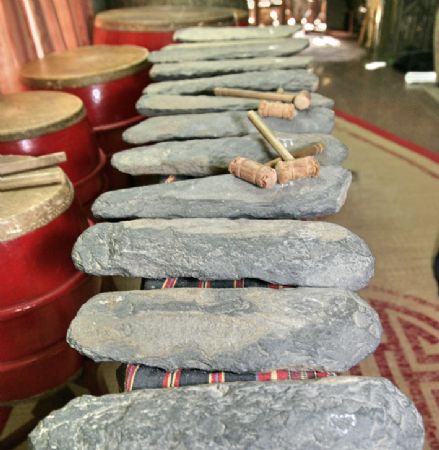 A lithophone at Dac Lac Museum
|
A lithophone usually has 6 rocks of different sizes. The longest is about 30 cm, and the smallest 10 cm. They make sounds similar to a 6-tone gong set called a Cung Bor. In ancient times, the M’nong used lithophones to scare away wild animals and protect their crops. Later they used lithophones in community events such as New Year festivals and celebrations of planting and harvesting.
The M’nong considered rock gongs a way to connect the world of men with the world of genies and spirits, the present with the past. Dieu Nhom is an experienced lithophone player in Quang Tin commune, Rlap district: “Rock gongs reminds me of our parents and grandparents. This musical instrument is our group’s tradition. Our children will continue to play it because they cannot lose that tradition. We play it to celebrate a bumper crop and pray for prosperity.”
For thousands of years the M’nong and other ethnic groups in the Central Highlands have used bronze gongs and they still preserve many sets of lithophones. They play the rock gongs to preserve their cultural values and to maintain a connection with the past.
