







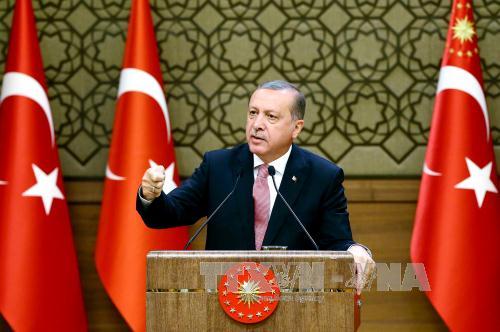
 Turkey's President Recep Tayyip Erdogan talked at an event in Ankara on Aug 2, 2016 |
Administration shake-up
President Erdogan imposed a state of emergency nationwide for three months. He vowed that Turkey’s democracy would not be harmed and people’s fundamental rights would not be affected. After the failed coup he launched the biggest ever political purge. More than 7,500 people have been arrested, including 103 generals and high-ranking officers, 2,800 soldiers, and 2,800 judges. 8,000 policemen were discharged. President Erdogan will not rule out the death penalty for traitors.
Turkey’s western allies have expressed concern over Erdogan’s actions although they supported him in the coup. The US and the EU have warned President Erdogan not to execute those involved in the coup. Erdogan has persistently defended his uncompromising approach as essential to guarantee peace in Turkey. Deputy Prime Minister Numan Kurtulmus appeared on TV to assure the public that the government will not impose a curfew. Free market mechanisms will not be affected and people’s fundamental rights will not be violated.
Consequences of the failed coup
Who planned the coup remains an open question. President Erdogan has accused Muslim cleric Fethullah Gulen, who is living in exile in the US, of orchestrating the attempted power grab. 77-year-old Gulen, who used to be a close ally of President Erdogan before becoming a foe, has denied the accusation. He accused the Erdogan administration of masterminding the coup to increase his power. President Erdogan has reversed the situation from being a criticized leader to a winner with strong public support.
