







Hon Doc is the largest of the 16 islands in the Hai Tac Archipelago, belonging to Tien Hai commune, An Giang province. Hon Doc is located near the maritime border between Vietnam and Cambodia, a crucial transportation route between the two countries. Station 625 of the 551st Regiment at the 5th Naval Region Command is stationed independently on the island's hilltop. As the chirping of birds blends with the gentle lapping of waves under the soft morning sunlight, the soldiers begin their daily routine.
Since being assigned to Hon Doc Island, soldier Mai Van Chien, a radar operator born and raised in Ho Chi Minh City, has become a skilled gardener. Like his comrades, he understands every seed, knows the characteristics and care of each type of vegetable. Though the island is only 20km from the mainland, the supply of fresh vegetables cannot depend entirely on cargo ships.
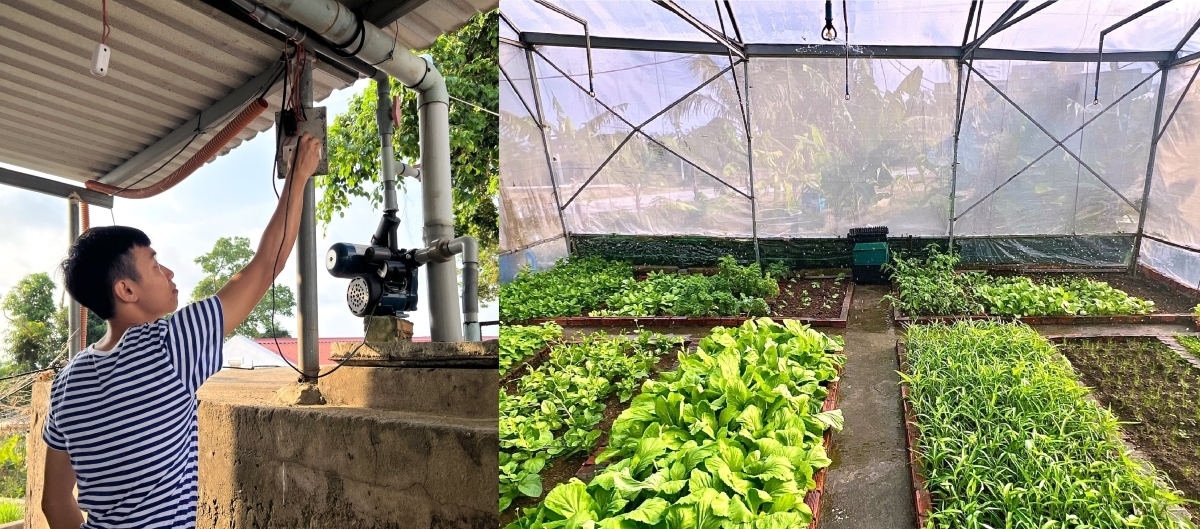
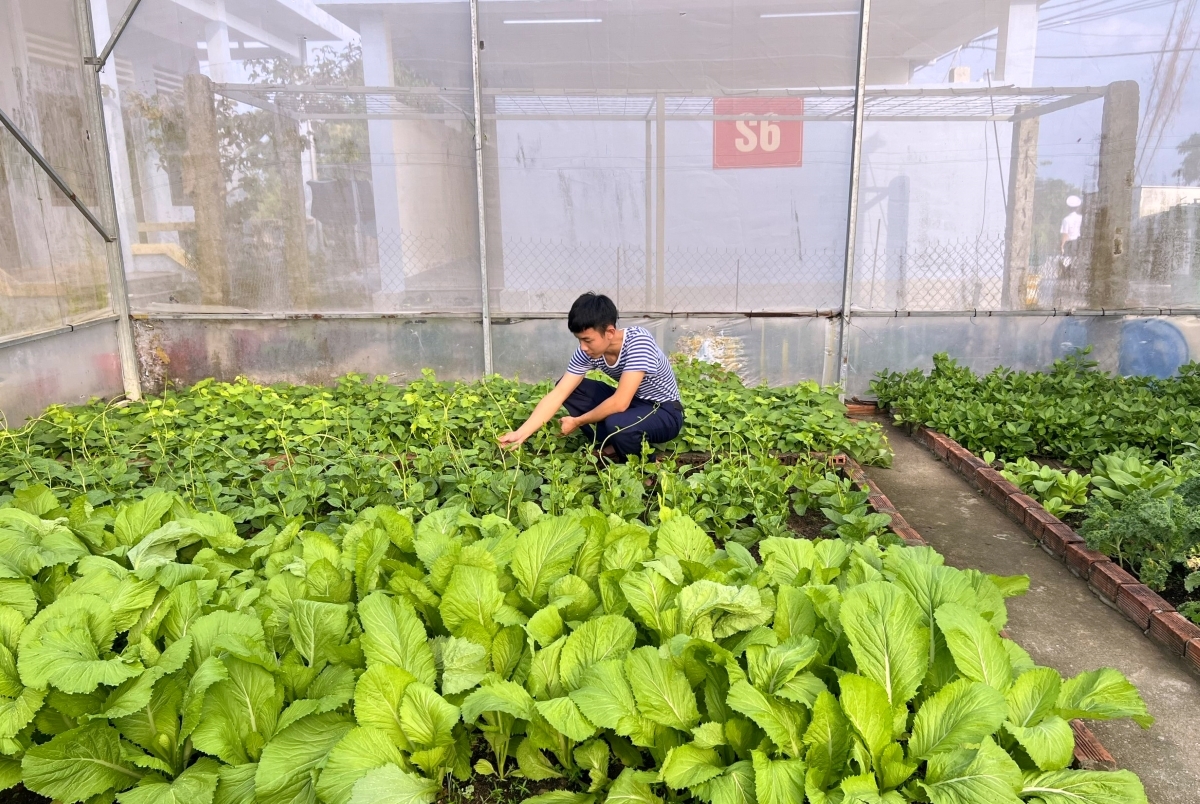
The officers and soldiers have created a small garden to supplement their income. Nets have been erected to create a small greenhouse for growing various vegetables. Alongside rows of water spinach and malabar spinach ready for harvest are rows of tender green lettuce and sprouting kale. This small garden provides enough fresh vegetables for all the meals of the service members at Radar Station 625.
“Usually, after an hour of work, there’s an hour dedicated to production and physical exercise. There’s plenty of fresh vegetables, so the unit never runs out of vegetables and food safety is ensured. We also grow fruit trees and raise pigs, ducks, and chickens,” Chien said.
In the past, soldiers had to carry buckets of water to water vegetable beds, but now, with just a flick of a switch, water is distributed throughout the garden. During the dry season, freshwater resources on the island are scarce, so rational water use is crucial. Captain Le Duc Anh researched and designed a watering model suitable for the island's conditions.
Together with his comrades, the captain carefully calculated the garden area, the amount of water to be stored, and the pipelines to build a simple yet effective automatic irrigation system. The small project demonstrates the initiative of the islanders in improving their living conditions.
According to Captain Le Duc Anh, “My colleagues and I created a sprinkler irrigation system for the vegetable garden. I researched models and methods on the internet to come up with the most suitable model and then implemented the irrigation system using sprinklers. Whether it's the dry or rainy season, there's always enough water for irrigation to increase vegetable production for the unit.”
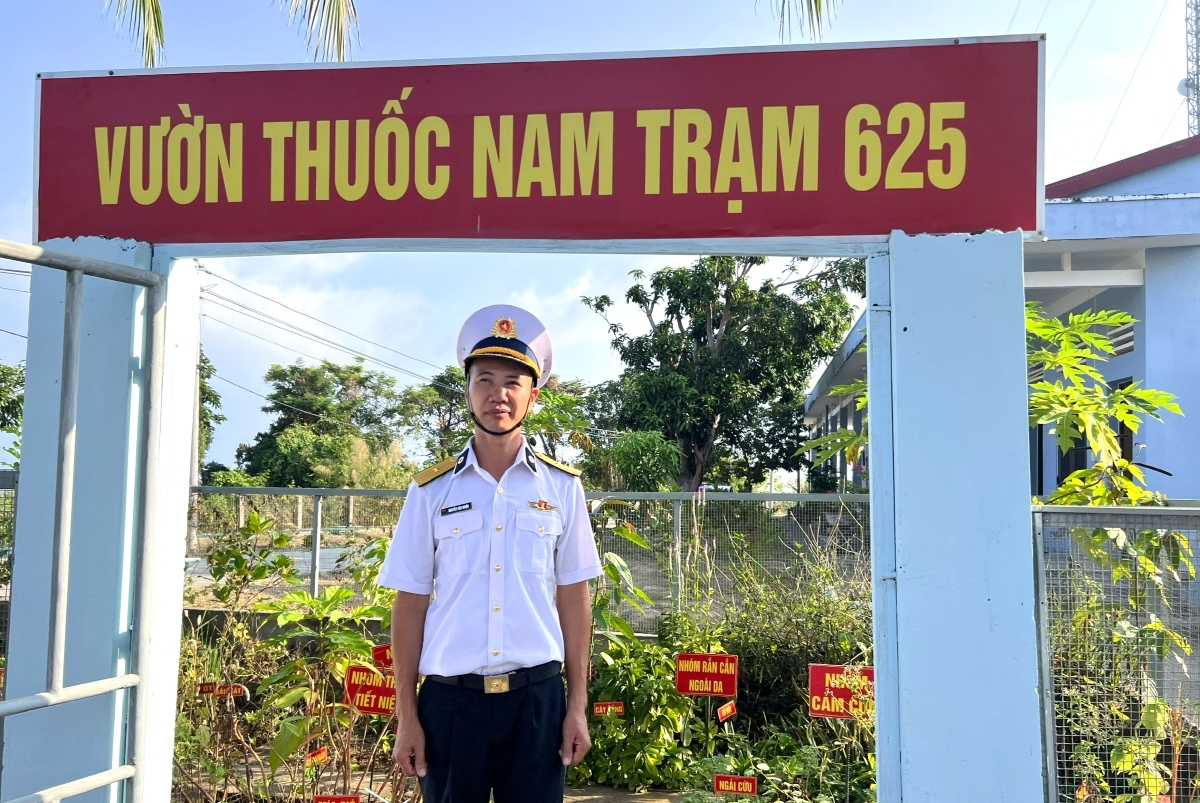
While the vegetable gardens enrich the meals, the medicinal herb beds silently care for the growers’ health. For nearly 20 years working on the island, Major and Medical Officer Nguyen Van Muon has been taking care of the soldiers and locals whenever they are sick, have a fever, or suffer minor accidents. Besides Western medicine, he also utilizes the medicinal herbs he cultivates daily for treatment.
Many young soldiers, arriving on the island for the first time, are unaccustomed to the harsh sun and sea breeze and experience skin problems. Muon uses medicinal herb to treat the affected skin area. This thoughtfulness helps the young soldiers overcome homesickness and deeply feel the camaraderie. Major and Medical Officer Nguyen Van Muon said, “The medicinal herb garden at the 625 Medical Station is a combined military-civilian-medical garden. It is divided into 8 sections for treatment, including snakebite, skin diseases, respiratory, digestive, urinary, sedative, and several others. We grow 55 to 60 medicinal plants to serve the unit and the local people.”
The wind from the sea blows onto the island, carrying the salty air of the vast ocean. The green vegetable and medicinal herb gardens continue to grow, embodying the sweetness of life and the healing properties of medicinal remedies.
