



The Hanoi Innovation Center or HIC has a unique ownership structure as a joint-stock company comprising three parties with the Hanoi People's Committee having a 70% stake and CMC Technology Group and Hanoi University of Science and Technology each having 15%.
In this "tripod" model, the Hanoi People's Committee provides leadership and data, CMC provides management expertise and capital, and the university provides intellectual bedrock and young talent.
Dr. Tran Quang Hung, HIC’s Chairman, said, “All designed models aim to address challenges set by the State, the city, and the business sector and place them in the hands of young creators, scientists, and entrepreneurs, both local and international, to jointly develop effective, tangible solutions for the city and its businesses.”
The model’s structure aims to divide complicated issues into smaller issues that can be individually addressed by startup companies.
In reality, most private firms struggle with market research and the high risk of low product adoption. But the establishment of HIC offers a unique advantage: direct access to the actual needs of public administration agencies.
"As a coordinator for the city's innovation activities, we have built a mechanism to listen to, gather, and standardize problems and their accompanying resources. This allows startup founders, even those who haven't yet established a company, to come to the Centre and propose solutions," Hung added.
To help a tech idea take off, HIC provides a comprehensive ecosystem, including co-working spaces, legal support, and access to shared resources.
Dr. Hung likens the Centre to an airport runway where products are continuously tested and refined based on direct feedback from the problem-posers. Through HIC, developers access legal data and hold demo sessions directly with the end-users to ensure the product meets real-world demands.
"The Centre hopes to act as a companion for young creators in the process of finding problems, identifying target audiences and, step-by-step, creating products that are useful to users," according to Dr. Hung.
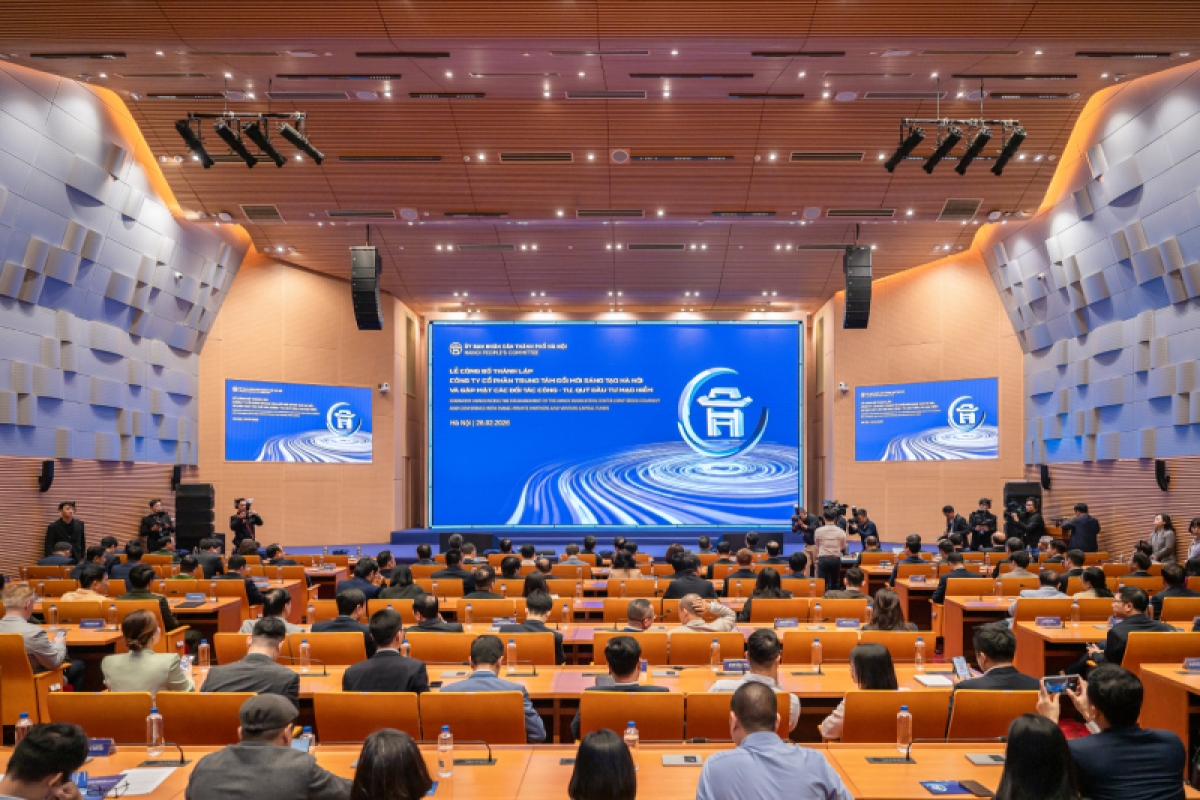
The Center is also a bridge between startup companies and venture capital funds and markets so that, instead of solving a problem for a single entity, the problem solvers create technologies that can be replicated and scaled to serve all of society.
While some fear that 70% state ownership might lead to administrative rigidity, Dr. Hung says the model will foster transparency.
By taking internal government challenges and making them public, the Centre invites the private sector to participate in administrative reform rather than creating inefficient competition.
By showcasing "small wins" in localized pilots before scaling up, HIC ensures that investment is focused on technologies that actually improve citizens' quality of life.
"Hanoi will always be a potential market for us and provide mechanisms to help the technologies of young creators bear fruit, serve the people, and grow within a protected model with the potential to reach larger markets."
With the birth of HIC, Hanoi is positioning itself as a regional "capital of innovation". Sandbox testing zones and specialized mechanisms will be the key to developing a new economy, boosting GRDP, and elevating Vietnamese resourcefulness globally.