(VOVWORLD) - The Resolution of the 14th National Party Congress underscores the requirement of strategic autonomy and self-reliance and resilience as the foundation for deep international integration without dependence, expanding international cooperation while firmly safeguarding independence, sovereignty, and national interests. In the new era, Vietnam aims to advance external relations and international integration commensurate with its historical and cultural stature and international standing, reflecting its renewed confidence, resolve, and aspirations after 40 years of renewal.
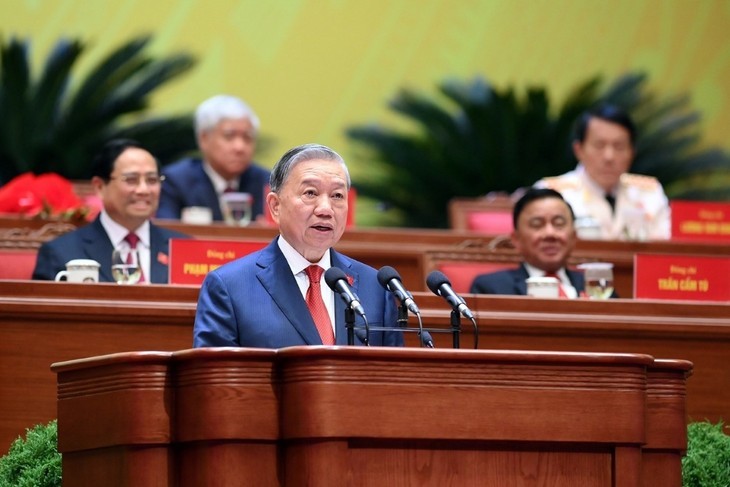 Vietnamese Party General Secretary To Lam (Photo: VNA) Vietnamese Party General Secretary To Lam (Photo: VNA) |
The new strategic orientation set out in the Resolution, particularly in foreign affairs and international integration, is shaped by profound changes globally and Vietnam’s development requirements in the new era.
External relations as a key driver of national development
In an increasingly volatile world and closely intertwined opportunities and challenges, Vietnam is aware that its future depends on its ability to seize opportunities and overcome challenges. Deep and extensive international integration exposes Vietnam to intense competitive pressures, yet it also opens doors to advanced knowledge, technology, and external resources for development.
Economic globalization provides Vietnam with access to vast markets for its goods and services, but it also demands constant enhancement of internal capacity in order to move up the global value chain.
At the same time, global geopolitical fluctuations may affect peace and stability, the essential preconditions for development, making the task of safeguarding national independence, sovereignty, and a peaceful environment ever more critical. The new context requires new thinking and vision, proactive strategy, clear-headed and agile analysis, flexible and creative responses, and steadfast adherence to principles without dogmatism or rigidity.
According to the documents of the 14th National Party Congress, external relations, together with national defense and security, are identified as critical and regular tasks and key drivers of national development in the new era. This is an important new orientation. Vietnam has elevated the role of foreign affairs to a new level, placing it on par with defense and security as a core, ongoing mission. The role of Vietnam’s diplomacy in addressing global issues has been significantly enhanced.
Party General Secretary To Lam said: “We’re elevating Vietnam’s foreign affairs to a new height and are actively integrating and opening up. We believe international integration must be respected and elevated. This is an important driver of development and a leading means to realize the country’s goals and strategies.”
Vietnam will continue to participate in peacekeeping operations, humanitarian assistance, disaster relief, search and rescue missions, and responses to humanitarian crises, while contributing to peacebuilding efforts regionally and globally. It will continue to put forward initiatives and stand ready to join initiatives for peace and development proposed by other countries, on the basis of respect for the legitimate interests of all parties and adherence to international law and the UN Charter, and in line with Vietnam’s conditions and capabilities.
Priorities in international integration
Top priorities include shaping a new growth model based on the knowledge-based, digital, green, and circular economies; promoting science, technology, innovation, and digital transformation; and advancing three strategic breakthroughs: institutional improvement, high-quality human resource development, and the building of a synchronized, modern infrastructure system.
In political, security, and defense integration, Vietnam aims to enhance national capacity while strengthening strategic autonomy, resolving existing issues through peaceful means and dialogue on the basis of international law and the UN Charter. At the same time, scientific and technological integration is essential, with innovation and digital transformation identified as key breakthroughs.
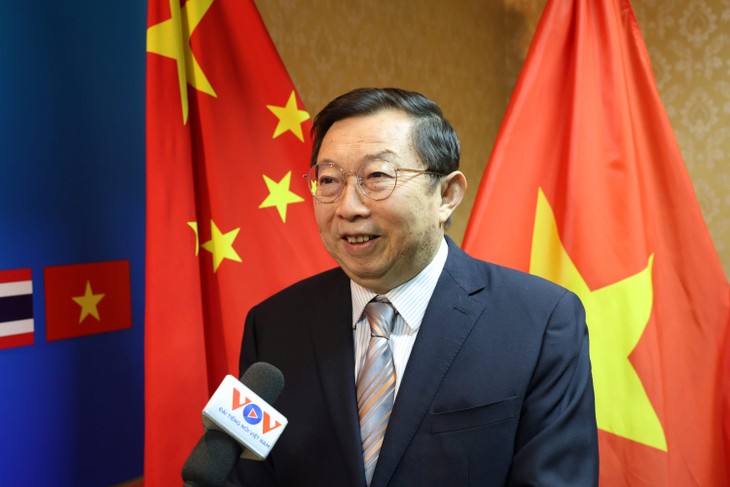 Mr. Xu Ningning, Chairman of the Industry Cooperation Committee of the Regional Comprehensive Economic Partnership (RCEP), in an interview with VOV (Photo: VOV) Mr. Xu Ningning, Chairman of the Industry Cooperation Committee of the Regional Comprehensive Economic Partnership (RCEP), in an interview with VOV (Photo: VOV) |
Mr. Xu Ningning, Chairman of the Industry Cooperation Committee of the Regional Comprehensive Economic Partnership (RCEP), said: “After 40 years of national renewal, Vietnam has made a remarkable leap in its international standing, becoming one of the countries with the most extensive diplomatic networks in Southeast Asia. Vietnam has established strategic partnerships with major powers around the world, ranks among the top 15 countries globally and second in ASEAN in trade volume, and has become an important link in regional supply chains. Vietnam participates in multilateral mechanisms like ASEAN and the Lancang-Mekong Cooperation, demonstrating the vitality of an emerging economy while making significant contributions to regional peace and stability and promoting trade liberalization."
Building on its enhanced national strength and position, Vietnam is set to project the new image of a country ready to make proactive, responsible contributions to the international community and to be a leading participant in addressing global issues, helping to realize the development goals set out by the 14th National Party Congress.