







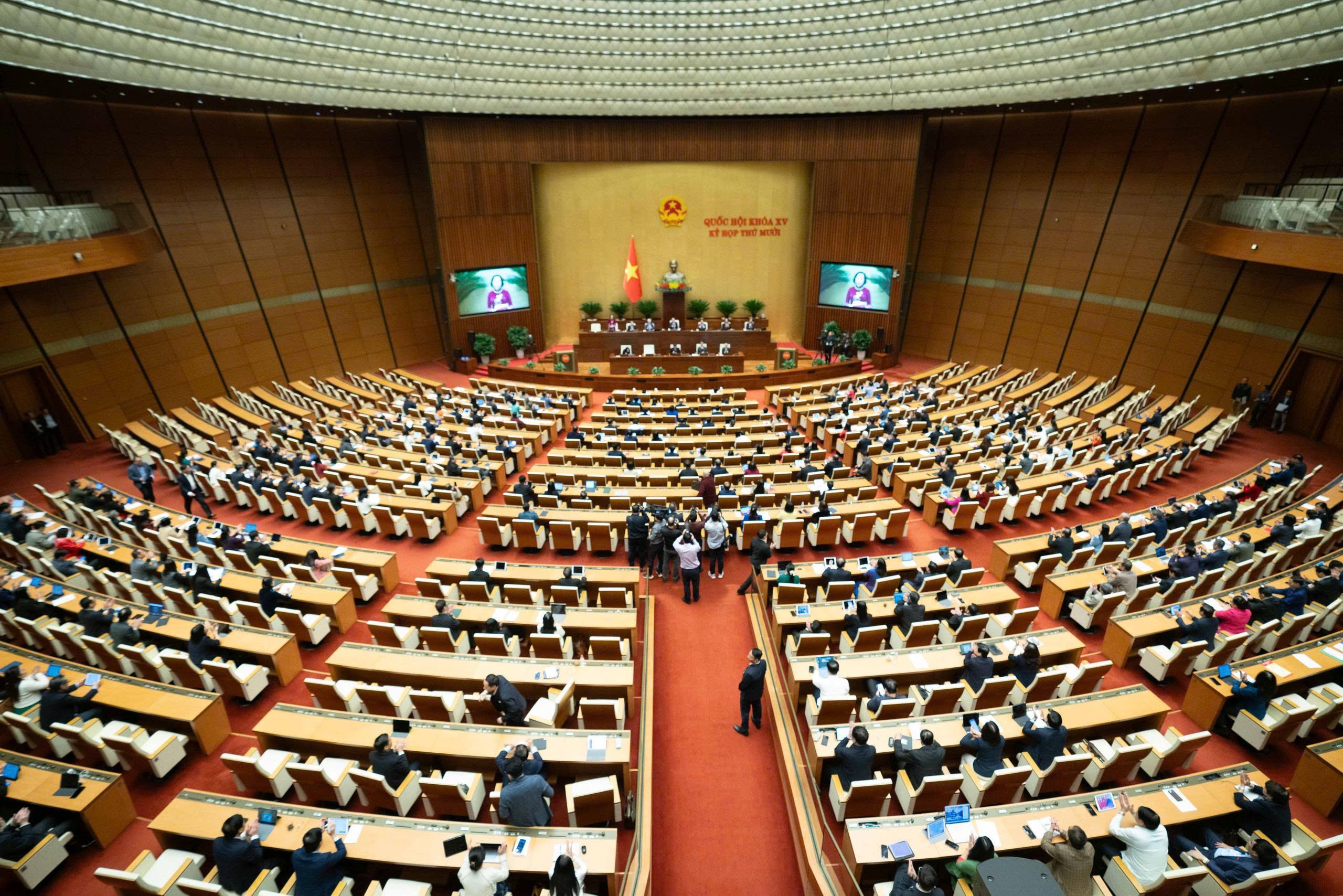
 View of the meeting. Photo: quochoi.vn View of the meeting. Photo: quochoi.vn |
Deputy Pham Trong Nghia of Lang Son delegation argued that the bill does not recognize the intellectual property rights of AI and does not protect works created by AI, which he said could limit the motivation for innovation and technology investment.
Minister of Science and Technology Nguyen Manh Hung explained that the law will clearly define the level of contribution of AI and human creativity in the process of using AI to determine the owners of IP.
“AI is not the subject of intellectual property rights. Products automatically created by AI without human participation are not protected by copyright as human works,” Minister Hung added.
Deputy Hoang Minh Hieu of Nghe An delegation said the related rights of press agencies are rights that have been updated by many countries into the Intellectual Property Law to ensure the development of the press in the face of competition from new forms of media, especially social media.
The current Law on Intellectual Property only regulates related rights of producers of audio and video recordings, related rights of broadcasters and performers, but does not regulate related rights of press agencies. So, this needs to be amended, according to deputy Hoang Minh Hieu.
“For businesses that profit from using press content on digital platforms, they must share revenue with the press agency based on negotiations between the two parties,” he said.
Deputies also suggested that the law clearly define intellectual property as a type of property with legal value and a clear financial mechanism is needed.
