





 Vietnamese
 中文
中文
 日本語
日本語
 한국어
한국어
 Français
 Русский
 Deutsch
 Español
 Bahasa Indonesia
 ไทย
ไทย
 ພາສາລາວ
 ខ្មែរ
ខ្មែរ




A: There’s something very special about this moment each week. No matter where you are, in a bustling city, a quiet village, or perhaps tuning in late at night, you’re also here with us.
B: And this week, that global connection feels stronger than ever. Over the past week, we received more than 400 letters, emails, and phone calls from listeners in 35 countries and territories.
A: More than 400! That’s not just a number, it’s more than 400 stories, more than 400 moments of connection, and more than 400 reminders that radio is still very much alive.
B: And what we love most is the diversity of voices, young listeners just starting their journey, longtime radio enthusiasts, and even people discovering VOV for the very first time.
A: Let’s begin today with a letter that truly touched our hearts. It comes from 11year old Erik in Utebo, Zaragoza, Spain.
B: Eleven! And already an accomplished shortwave listener. He even won third place in a world SWL contest. Erik sent us a very detailed reception report for our broadcast on March 28, 2026, on 11885 kHz. He noted a SINPO rating of 32222, describing it as “challenging but rewarding.”
A: And I love that phrase, “challenging but rewarding.” That’s exactly what shortwave listening can be, especially for young listeners discovering distant voices across the airwaves.
B: Erik also wrote: “My favorite moment is always the beginning of the broadcast when I hear: ‘This is the Voice of Vietnam.’ It is a very exciting moment for me as a young listener here in Spain.”
A: Erik, that line gave us goosebumps. Imagine, those simple words, spoken from Vietnam, traveling thousands of kilometers, reaching a young listener in Spain, and creating that sense of excitement. It reminds us that radio is not just about sound, it’s about imagination. When you hear that signal, you’re not just listening, you’re traveling.
B: Erik, we can feel your excitement through every line of your letter. We appreciate your passion and we’ll certainly do our best to send something meaningful your way.
A: In his correspondence to VOVWORLD this week, Mr. Anand Mohan Bain of India told us that his Listeners’ Club, which started in 1980, has recently organized a contest on Vietnam’s election and 4 prizes were presented. He wrote: “We will continue to hold regular competitions under the VOV radio program and will send you monthly information.”
B: Thank you, Mr. Bain, for spreading VOV’s content to Indian listeners and we look forward to to hearing about your listeners’ club’s activities. Good luck and have fun.
A: This week, we received a letter from Jyrki Hytonen of Finland who reported listening to our program last October and is now following us on our website, saying that “Voice of Vietnam web page offers many interesting news items”.
B: He wrote to us in English, accompanied with Vietnamese translation, along with a beautiful postcard, telling us that he is a forest researcher and interested in nature and forests in Vietnam. Mr. Hytonen told us that he visited Vietnam 4 years ago and witnessed the development of forests in Vietnam.
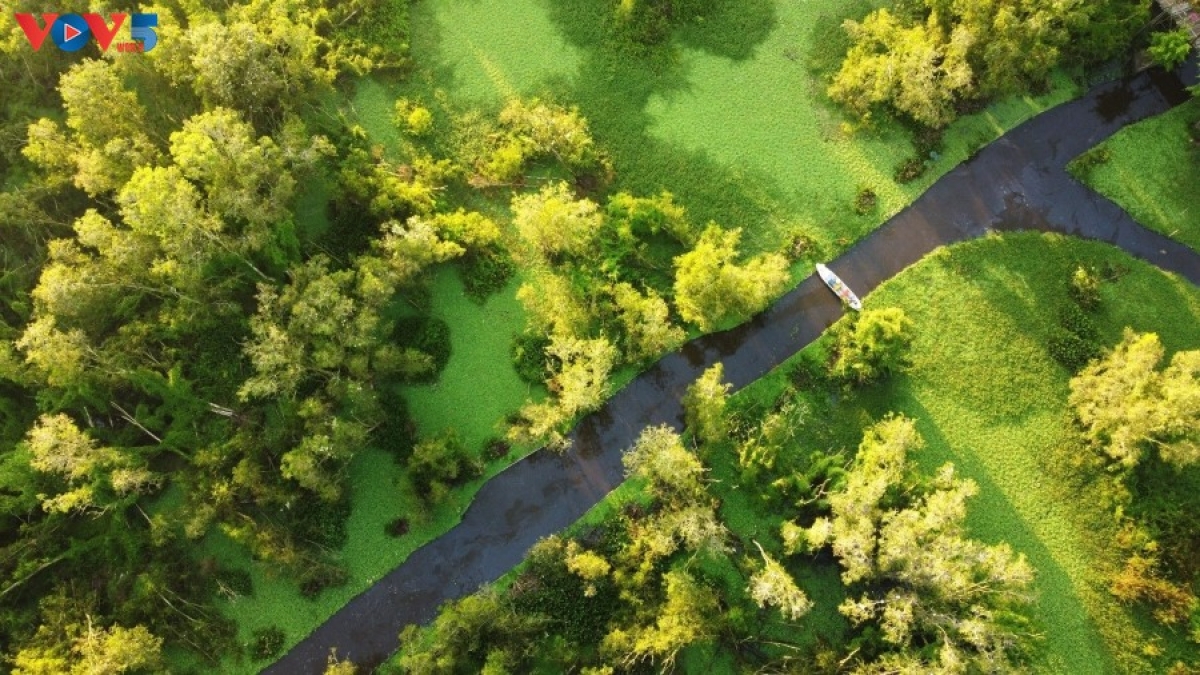
A: Vietnam has recently joined global celebrations of the International Day of Forests, observed annually on March 21. Vietnam is recognised as one of Asia’s leaders in forest restoration and sustainable forest management, maintaining a stable forest coverage rate of over 42%. Forests support agriculture, tourism and energy sectors, while ensuring water security and enhancing climate resilience.
B: According to the Forestry and Forest Protection Department under the Ministry of Agriculture and Environment, forest-based economic activities, including non-timber products, eco-tourism and forest environmental services, are increasingly developed along sustainable lines, creating new income streams for localities. Notably, the wood processing industry has become a key export sector, with forestry exports reaching over 18.3 billion USD in 2025 and generating a trade surplus exceeding 15 billion USD.
B: You’re listening to VOV’s Letter Box. This week, Mogire Machuki from Kenya asks about the history of Vietnam’s national anthem and flag.
A: That’s a wonderful question, Mogire. Let’s take a little journey into history together. Vietnam’s national anthem is called “Tiến Quân Ca,” or “The Marching Song.” It was composed in 1944 by musician Văn Cao during a time when the country was fighting for independence.
B: The song became the national anthem in 1945, when Vietnam declared independence. And to this day, it continues to inspire generations.
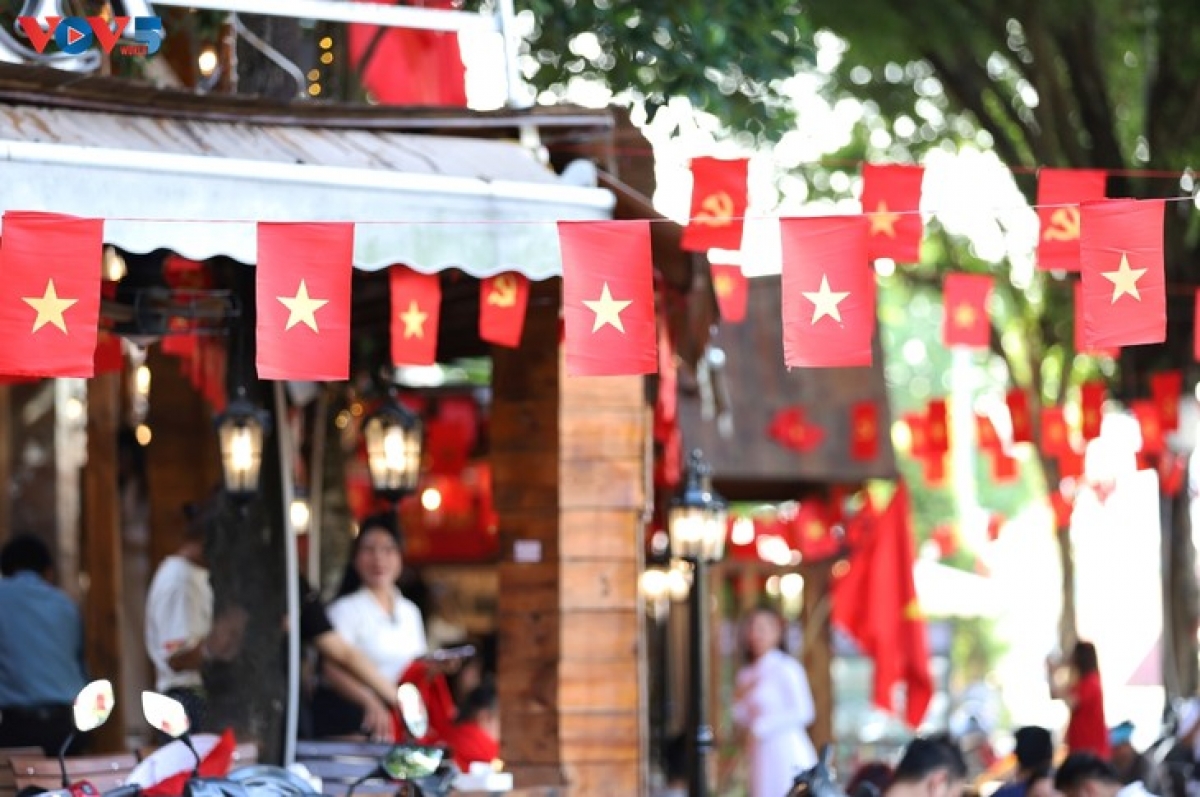
A: As for the national flag, it features a red background and a yellow star. The red represents sacrifice and revolution, while the star symbolizes unity among different social groups.
B: So every time you see the flag or hear the anthem, you’re witnessing symbols shaped by Vietnam’s history, struggle, and hope.
A: Now, Shivendu Paul from India asks about Vietnamese coffee culture—and this is a topic we could talk about all day!
B: Coffee in Vietnam is not just a drink—it’s an experience, a lifestyle, even a rhythm of daily life. Early in the morning, you’ll see people sitting at small street-side cafés, slowly sipping coffee, watching the world go by.
B: One of the most iconic styles is cà phê sữa đá—iced coffee with condensed milk. It’s strong, sweet, and incredibly refreshing. And then there’s egg coffee—yes, coffee with egg! It might sound unusual, but it’s rich, creamy, almost like a dessert. Coffee shops today are also social spaces where people meet friends, work remotely, or simply relax.
A: And to answer your question—yes, coffee is increasingly present at events, especially among younger people and in urban areas.
B: Osamu Mukudai also asked about special Vietnamese coffee varieties.
A: Vietnam is famous for its Robusta beans, strong, bold, and full of character. But what makes Vietnamese coffee unique is the creativity: salt coffee, coconut coffee, egg coffee… each one tells a story. And each cup is more than just a drink—it’s a reflection of local culture and innovation.
B: Now let’s travel to Pakistan, where we heard from a very familiar name, Amir Jameel. He sent us a reception report for March 25, from 16:00 to 16:30 UTC on 7220 kHz, with a strong SINPO rating of 44444. Amir described the signal as “strong and steady” and for any broadcaster, those are wonderful words to hear.
A: Also, from Pakistan, Muhammad Aqeel Bashir shared his comment: “Your news programs are always factual and provide a clear and balanced view of world events.”
B: In his letter to VOVWORLD this week, David Ansell from the UK reported listening to us on the frequency of 11885 khz with excellent signal and SINPO of 55534, saying “Your programs are useful and appreciated.”
B: Thank you all for your regular reception reports and we hope to receive more from you. Next, we head back to India, where Bidhan Chandra Sanyal sent us his reception report. He listened on March 25 at 19:00 UTC on 9730 kHz, with a SINPO of 43434, using a GRUNDIG Yacht Boy 80 receiver with an external antenna.
B: That’s a classic combination! It shows how traditional radio equipment still plays an important role in connecting listeners to the world.
B: Marzio Vizzoni of Italy wrote: “Listening to radio is like traveling. Today, I journeyed through Vietnam via your waves.”
A: That might be one of the most poetic descriptions of radio we’ve ever heard. Thank you, Marzio.
B: And that’s all we have for today’s Letter Box. Thank you for listening, for writing, for sharing your thoughts and your stories.
A: Until next time. Goodbye, and happy listening!
