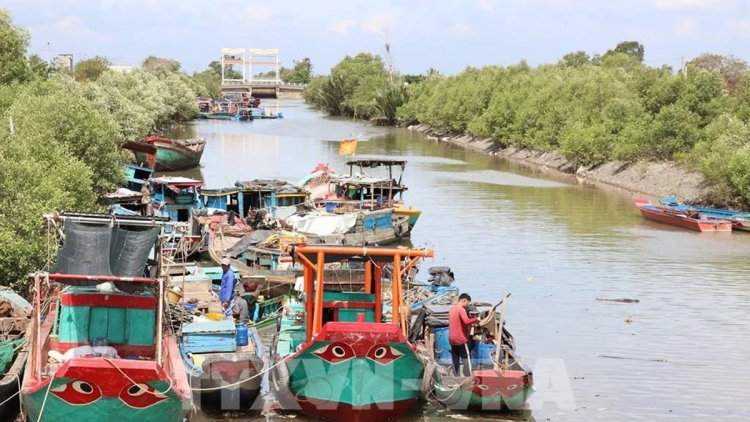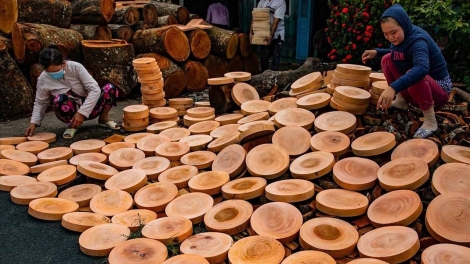




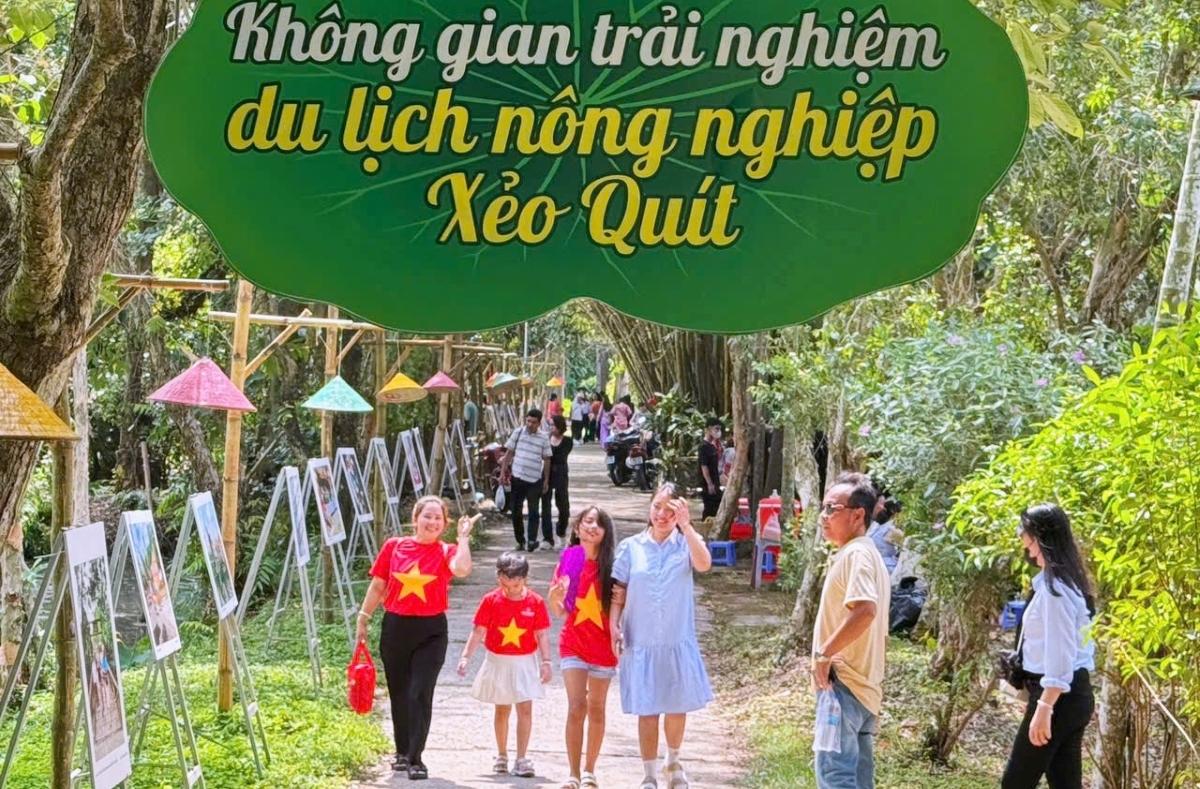
Dong Thap has consistently prioritized the “green” factor in its tourism expansion, making it the cornerstone of its strategy, with a focus on eco-agricultural models. Dong Thap is promoting sustainable, eco-friendly tourism that respects natural landscapes at sites such as Tram Chim National Park, the Xeo Quyt relic area, Sa Dec flower village, Thap Muoi lotus field, garden homestays, and Lai Vung pink mandarin orchards. Solar-powered electric vehicles and reduced plastic use are implemented at tourist destinations.
Models of green circular agriculture and environmentally conscious architecture are aimed at improving visitor experiences while preserving the local ecosystem. These initiatives have helped shift the mindset of businesses and residents from traditional “agricultural production” to a “circular bio-economy,” combining smart agriculture with experiential tourism.
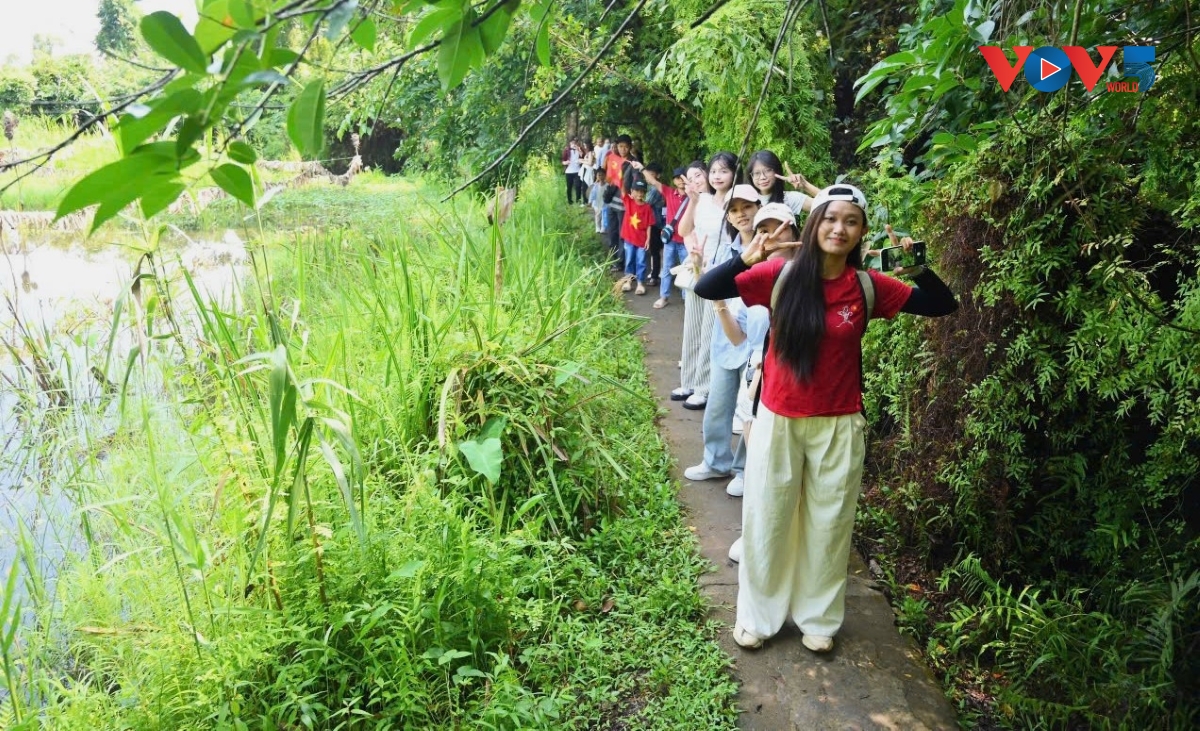
Many places are now offering eco-tours, community-based tourism, and circular tourism models that are both environmentally sustainable and culturally authentic. Truong Van Mai, owner of the Nam Huong Eco-Tourism site in Tan Hong commune, told VOV, "My tourist site spans about two hectares and is unlike any other. It features a wide variety of seedlings, with around 80 types of fruit trees, including many rare Vietnamese varieties and Mekong Delta specialties. The garden follows organic processes, and my star apple orchard is the largest in Vietnam."
Nguyen Thanh Phong, a visitor from Ho Chi Minh City, said, "I traveled from afar after learning about the Nam Huong Eco-Tourism site on social media. This is my first visit, and I came with my family so we could experience it together. The atmosphere here is incredibly fresh and clean."
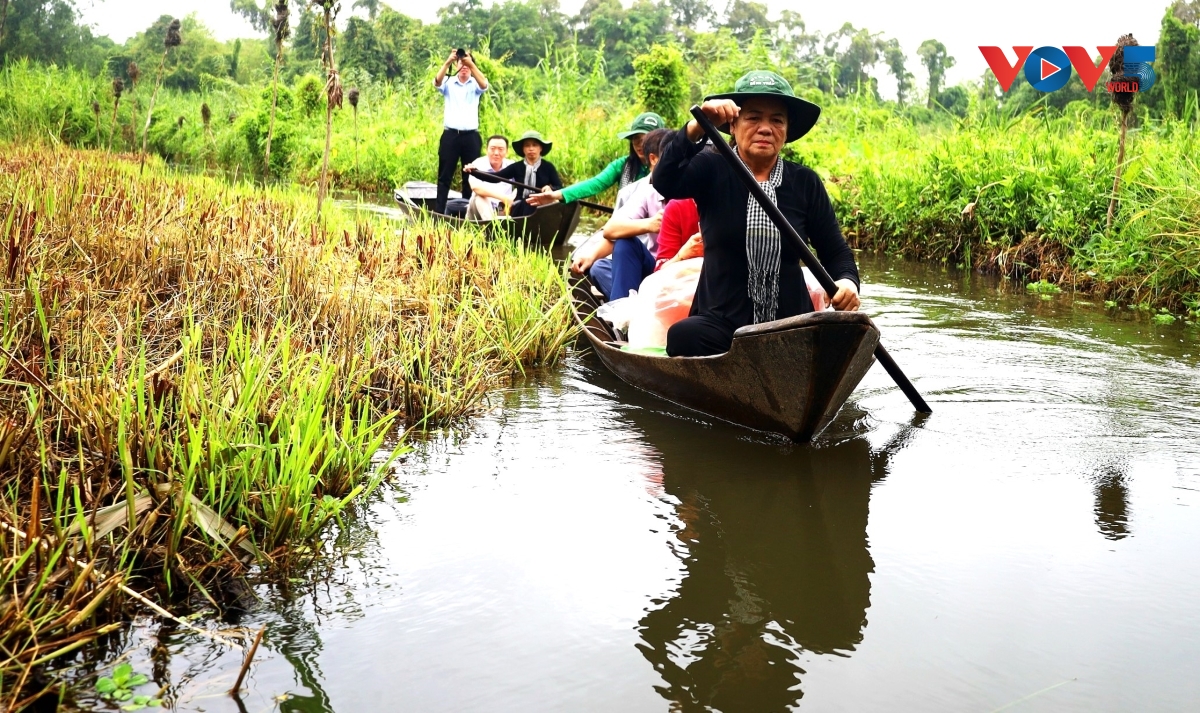
The close integration of green tourism and digital technology is creating smarter travel experiences. Dong Thap has signed several strategic cooperation agreements to modernize digital infrastructure, promote destinations via digital platforms and social media, digitize tourism sites, and use digital maps to give quick access to information.
According to Tran Huu Tai, owner of the Ngoc Lan Ornamental Garden in Sa Dec ward, social media platforms like Facebook, Zalo, and Instagram have helped in promotion and competitiveness improvement. "In the past, my tourism site and Sa Dec were not as widely known as they are today. In recent years, with the rise of smartphones, we have uploaded our tourism products to TikTok and Zalo to promote ourselves. This has helped our products reach more consumers and build our brand. We must adapt to inevitable changes to meet demand. By innovating and evolving, we are creating breakthroughs for our brand development."
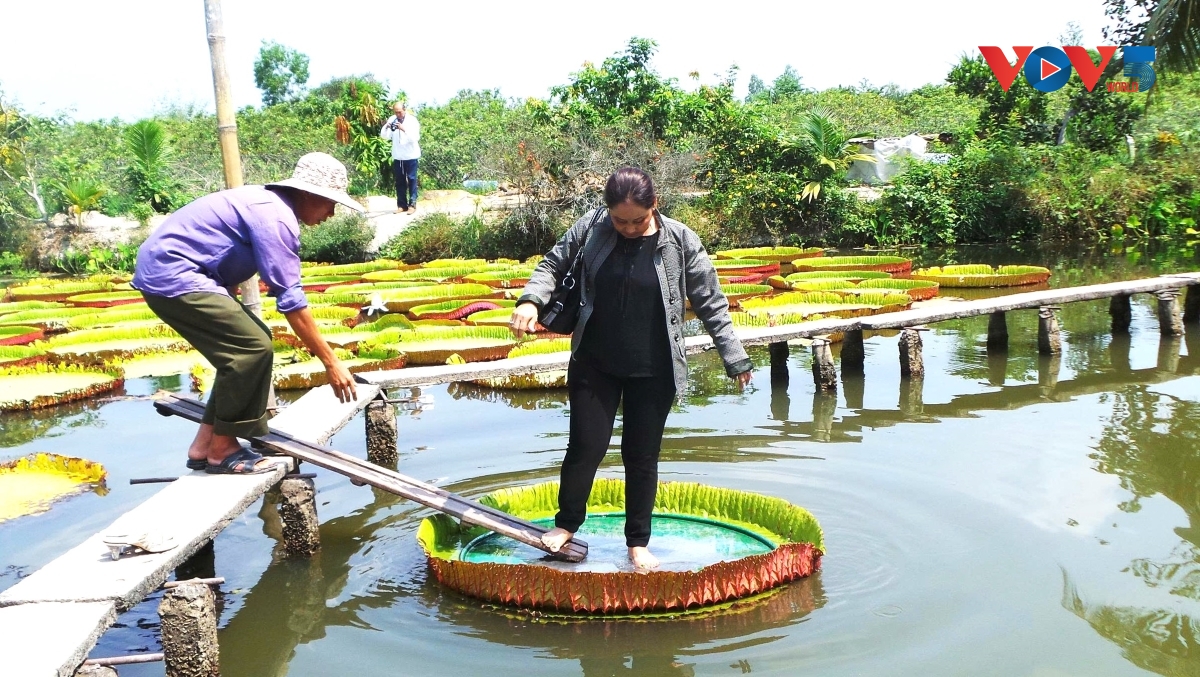
Last year, Dong Thap welcomed 7.3 million visitors. Nguyen Thi Uyen Trang, Director of the provincial Department of Culture, Sports and Tourism, said that from now until 2030, the sector will focus on data digitization, smart tourism, and the use of digital platforms for promotion. Plans include applying Virtual Reality (VR), AI, and a tourism portal to improve visitor experiences, with a target of 8 million visitors this year and 50 million by 2030.
"In the context of a green economy, we identify ‘green development coupled with digital transformation’ as the foundation of sustainable tourism. With a strong drive for innovation, Dong Thap is mobilizing resources and connecting businesses across the value chain to create new products, facilities, and services that are modern, safe, and professional," said Trang.
The combination of “green” and “digital” is a lever and a long-term strategic direction for Dong Thap’s tourism. By making its unique riverine ecosystem the foundation, traditional craft villages the soul, and digital technology the driving force, Dong Thap is steadily advancing toward its goal of becoming a “safe–friendly–quality” destination.