



Currently, Vietnam produces only 70% of its domestic petroleum demand. It relies on imports for the remainder. As domestic crude oil output declines, Vietnam must also import crude for refining.
Le Minh, a member of the Scientific Council of the Vietnam Energy Association, said, “It’s clear that we’re dependent on external sources. Under current regulations, focal enterprises are required to maintain commercial petroleum reserves equivalent to 20 days of supply, while distribution firms hold about five days.”
“That makes it difficult for businesses to remain proactive amid global market fluctuations. What we need is a mixed reserve system—one that includes crude oil for production and storage of finished petroleum products for distribution,” Minh added.
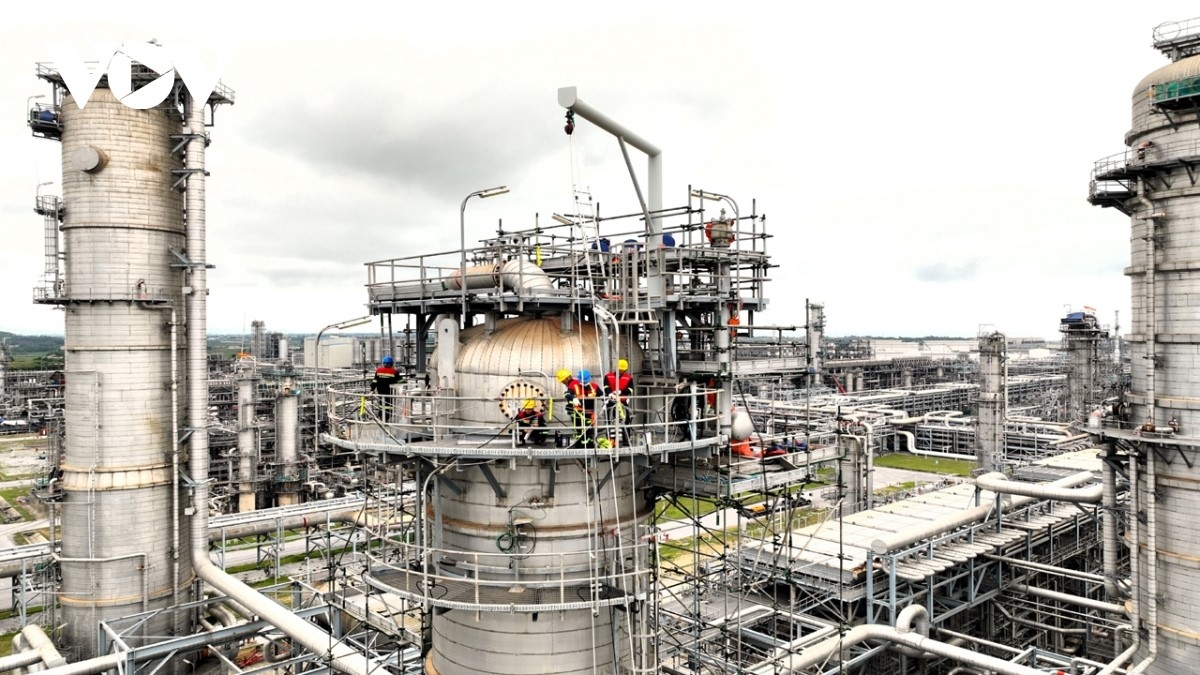
Supply disruptions—such as shortages affecting the Nghi Son Refinery and Petrochemical Plant—could worsen if the conflict in the Middle East escalates further.
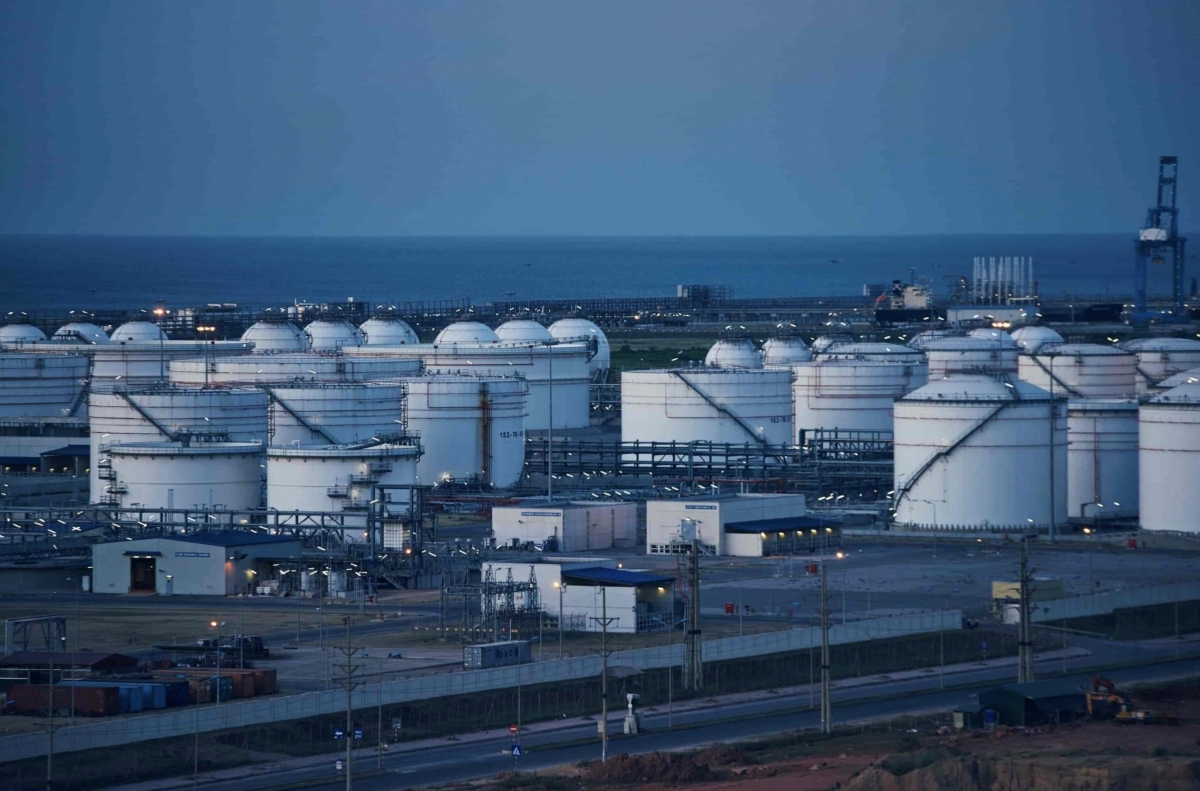
To this end, the development of national petroleum reserves is no longer optional but urgent. Such reserves would serve as a “safety cushion” for the economy, enabling the State to release fuel stocks to stabilize prices, curb inflationary pressures, and mitigate impacts on daily life.
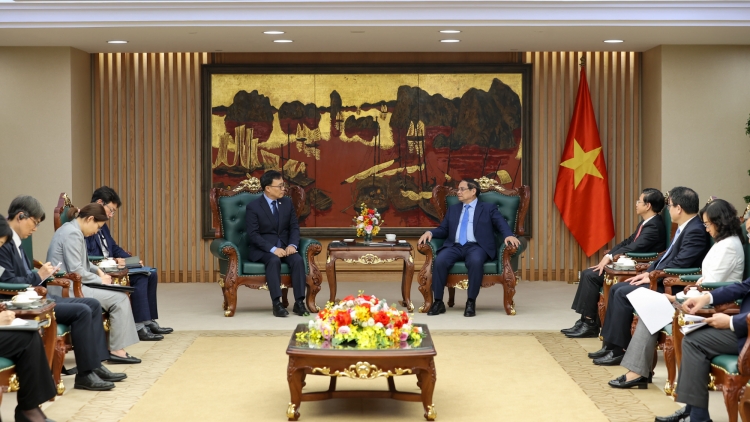
At a recent meeting with businesses and a task force on energy security, Deputy Prime Minister Tran Hong Ha said, “We must ensure reserves are available when disruptions occur, like the recent fluctuations. It’s entirely feasible to establish a dedicated reserve system in which the State plays a regulatory role alongside enterprises.”

On March 29, Prime Minister Pham Minh Chinh inspected the construction site of a strategic petroleum reserve facility in Nghi Son, Thanh Hoa province. He stressed the urgency of accelerating such projects to strengthen national energy infrastructure, ease pressure on distribution systems, and increase market flexibility.
The Prime Minister emphasized that, for the policy to be effective, reserve capacity must align with international standards. Management mechanisms should be transparent and flexible, avoiding situations where reserves exist only “on paper” and can’t be mobilized when needed. Diversifying supply sources and integrating State reserves with commercial stockpiles will be key to optimizing resources.
In the long term, petroleum reserves must be developed in tandem with Vietnam’s broader energy transition strategy. As it accelerates the shift toward renewable energy and reduces reliance on fossil fuels, the role of petroleum reserves may evolve—but will remain vital during the transition period.
Vietnam’s move to roll out E10 biofuel nationwide as early as this April signals that the energy transition is no longer theoretical but well underway.
Deputy Minister of Industry and Trade Nguyen Sinh Nhat Tan said that the use of biofuels is an inevitable trend in the global energy transition. “For Vietnam, it helps reduce greenhouse gas emissions, honor international climate commitments, and improve energy security by diversifying fuel sources, while also promoting a green and circular economy,” said Tan.
Investing in national petroleum reserves is a forward-looking decision that will underpin a more resilient and sustainable energy system. Strengthening reserve capacity means reinforcing economic autonomy and adaptability. In an increasingly uncertain world, countries capable of ensuring energy security will have a decisive advantage in maintaining stability and attracting investment.