Despite the failure of the talks, a US official said there is continued engagement with Iran, and Pakistani Prime Minister Shehbaz Sharif said efforts are still under way to resolve the conflict.
Trump said that, while Iran wants a deal, he will not accept any agreement that allows Tehran to have a nuclear weapon.
UN chief António Guterres urged the US and Iran to return to the negotiation table and restore freedom of navigation in the Strait of Hormuz. He said there is no military solution to the current conflict.
Qatar Foreign Minister Mohammed Al Thani, in a phone call with Iranian Foreign Minister Abbas Araghci, urged the US and Iran to respond to the ongoing mediation efforts, and said maritime passages should not be used as a bargaining chip.
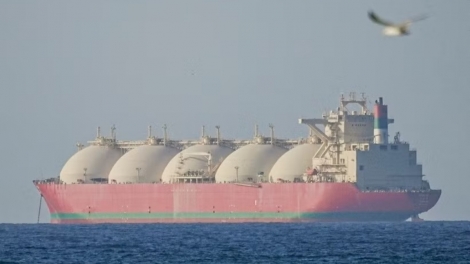
Arsenio Dominguez, Secretary-General of the International Maritime Organization (IMO), said that under international law, no country has the right to blockade international straits.
In a separate effort to de-escalate tensions, French President Emmanuel Macron said France and the UK are coordinating a strictly defensive, multinational naval mission to secure the Strait of Hormuz. Independent of the US-led blockade and separate from warring parties, the initiative seeks to restore navigation as soon as conditions permit.
British Prime Minister Keir Starmer said Monday that the UK will not participate in the naval blockade initiated by the US.
Turkish Foreign Minister Hakan Fidan said the shipping lane through the Strait of Hormuz must be reopened as soon as possible.
Mohammad Fathali, Iranian Ambassador to India, said in New Delhi on Monday that Tehran is not imposing any fees on Indian oil and gas tankers passing through the Strait of Hormuz.