“I surveyed the entire Chuon village, and almost nothing remained. All the woodblocks used by the old painters had been lost. There were no sets left, except for a single scroll kept behind the altar of the Doan family chapel, which was over 20 years old.”
Ngo Quy Duc, founder of a project to revive Chuon village’s woodblock calligraphic scrolls, recalled the immense challenge of rediscovering a heritage that had nearly vanished.
“It was an almost irreplaceable cultural trait of Hue. In the last 20 to 30 years, modern houses replaced the old 'ruong' or ancient wooden houses in Hue, and these scrolls gradually disappeared. That was a major factor leading to the nearloss of this art form,” Duc said.
The scarcity of physical evidence forced Duc and his team to become digital detectives and use digital technology to restore small details in blurred images found on the internet and in rare local documents. But this hurdle was just one stage of a long journey that began on the outskirts of Hanoi.
A fateful encounter in the ancient capital
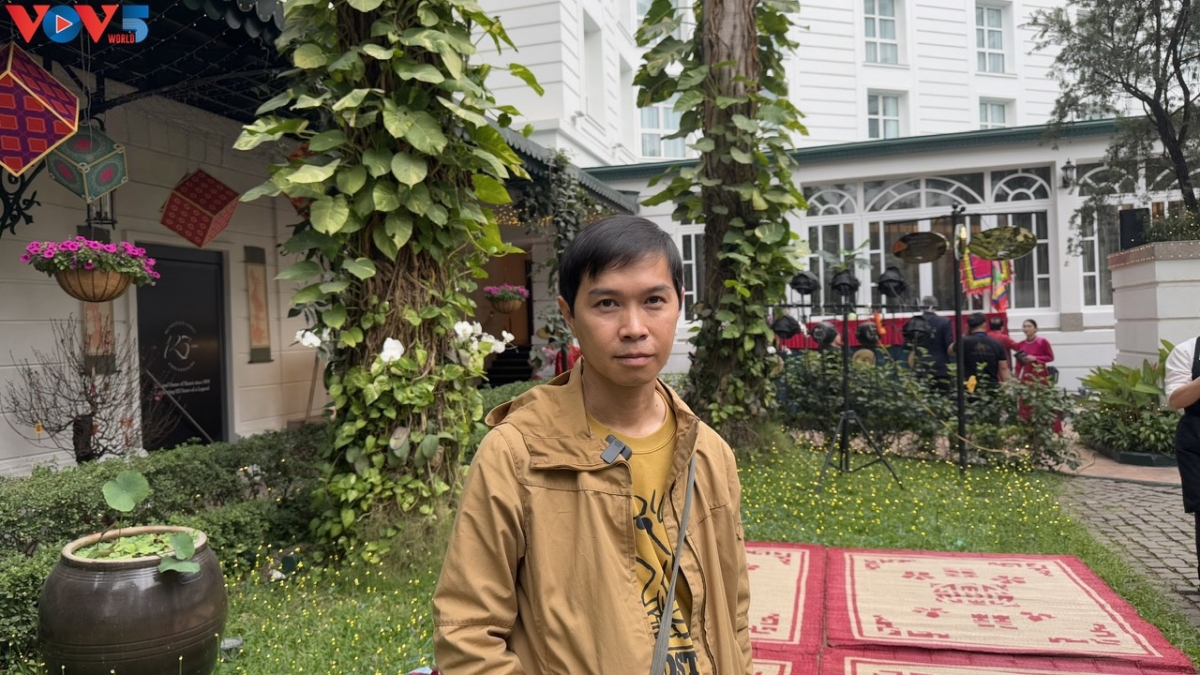
“I’ve been involved with craft villages throughout Vietnam for nearly 20 years. While I was in Hue last year to set up such a cultural and historical space called Ngu Ha Vien, I came into contact with other researchers and young culture enthusiasts, who shared stories about a local lost art form – the woodblock calligraphic scrolls of Chuon village,” Duc told VOV.
The tragedy of the art's disappearance struck a chord with him.
“I realized this is a very beautiful and meaningful art form. If it faded away, it would truly be a pity for Hue and for one of Vietnam's woodblock folk painting traditions. So I decided to stay in Hue and work with my colleagues to revive it.”
The calligraphic identity: "Paintings within characters"
To understand why this revival matters, one must distinguish Chuồn village scrolls from other famous Vietnamese folk arts. Dong Ho paintings in northern Bac Ninh province feature symbols of good luck, historical figures, folk allegories, popular stories and social commentary. Hang Trong paintings commonly depict spiritual and cultural symbols. Kim Hoang paintings from former Ha Tay province, now part of Hanoi, portray everyday life, animals and spiritual motifs. Sinh village paintings in Hue are mainly used for ritual purposes. But Chuon village calligraphic scrolls are a completely different entity.
“The decorative scroll is specifically a calligraphic art form originated from a village famous for its educational heritage and Confucian learning. The scholarly tradition was transformed into a distinct style of calligraphic painting that is unmistakable,” said Duc.
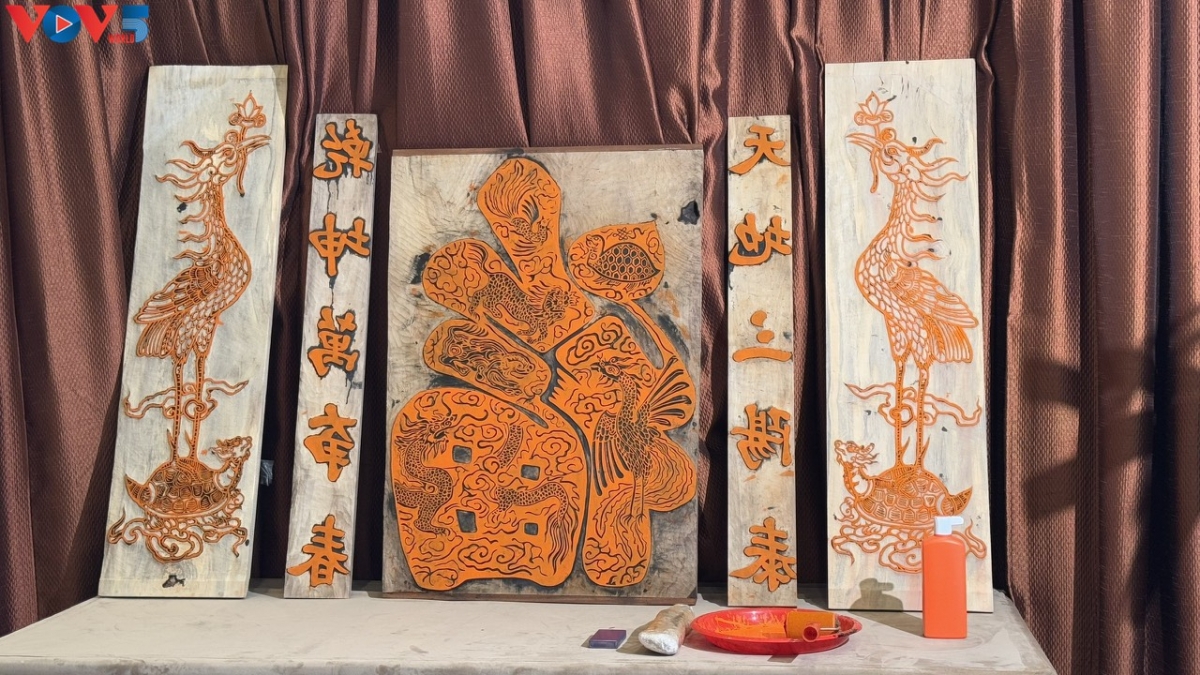
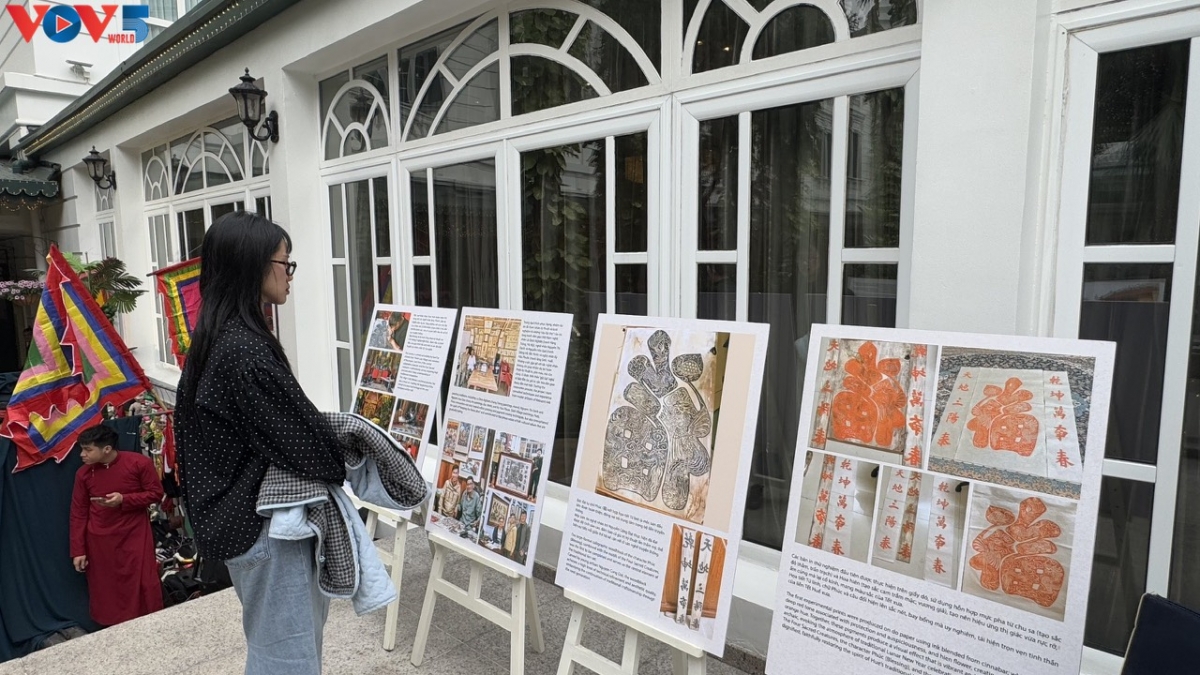
Chuon village’s paintings are created on red ceremonial paper, featuring a large central calligraphic character such as Phuc (Blessing), Loc (Fortune) or Tho (Longevity), framed by paired couplets and auspicious motifs like the Four Sacred Creatures - the Dragon, the Unicorn, the Tortoise and the Phoenix.
Young artisan and project member Pham Cong Dat explained the layers of meaning, “The defining characteristic of Chuon village scrolls is their connection to literature and philosophy. The character ‘Fortune,’ for example, incorporates the four sacred animals, symbolizing wishes for fullness, good luck and virtue.”
“Other hidden motifs within the character include the four seasonal plants: pine, chrysanthemum, bamboo and apricot. Surrounding the central character are two pairs of couplets and accompanying paintings. The couplets read, ‘Heaven and Earth in harmony and peace - The Universe flourishes in eternal Spring,’ while the paintings feature cranes,” said Dat.
The technical wall: from digital to wood
Once the designs were completed, the team faced a technical wall for the production. The choice of material was paramount.
For the woodblocks, they chose gold apple wood, the same resilient timber used for the woodblocks of the Nguyen Dynasty (1802-1945), which became Vietnam’s first entry in the international register of UNESCO's Memory of the World Program.
This wood is prized for its fine grain and resistance to warping, ensuring that the carved details remain sharp for hundreds of years. Other elements require equal care.
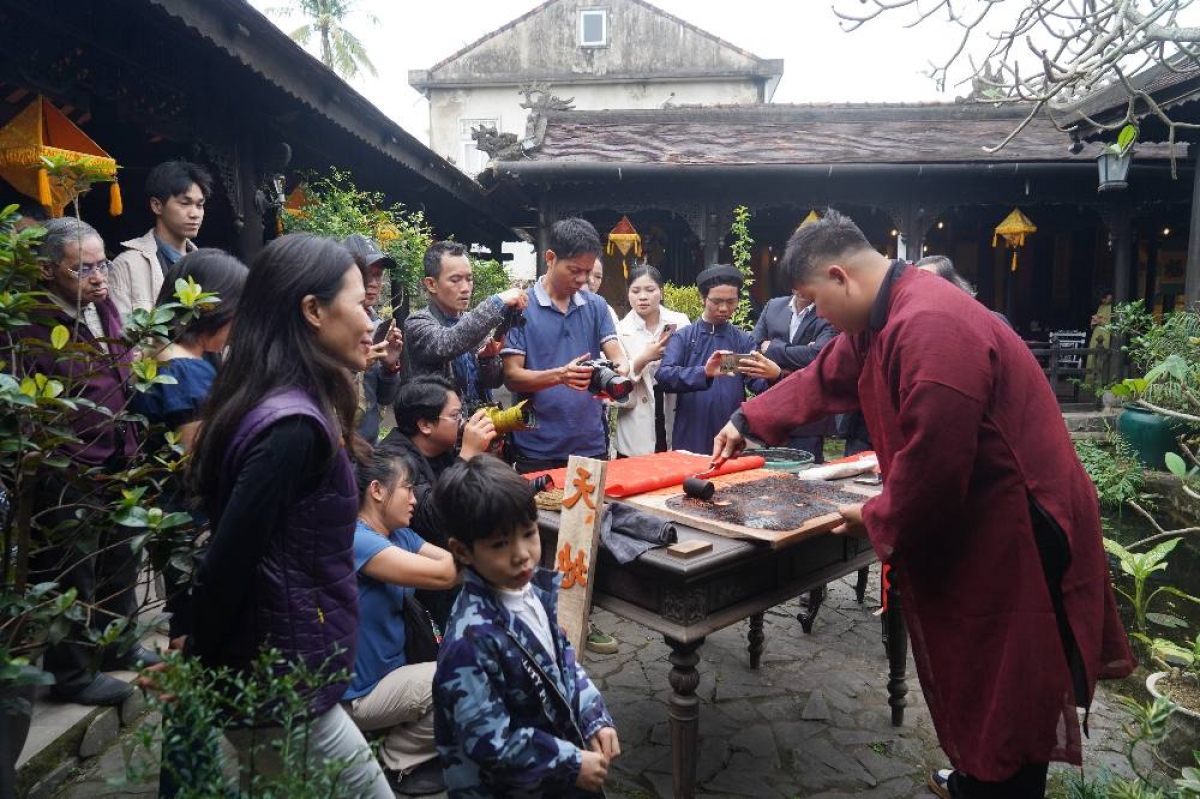
“Restoring a set of woodblocks involves many difficulties: printing techniques, how to make the paper, how to apply the colors,” Duc said, adding, “It’s important to roll the ink evenly so the print is beautiful. To carve, the knife must be held horizontally.”
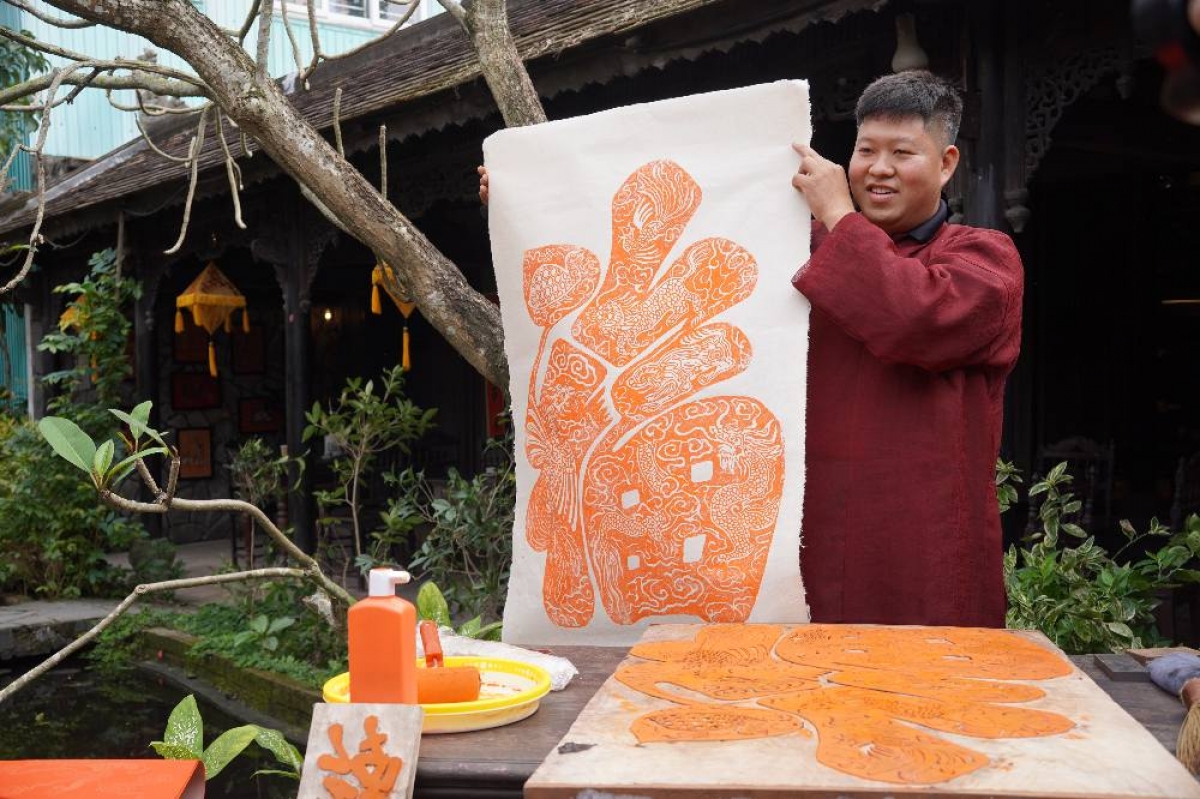
Before carving, the artisans perform a delicate technique called “ink transfer”. The wood surface is smoothed and coated with a thin layer of paste. Then, the calligraphic draft of the character 'Blessing', for example, is applied face-down and pressed flat.
By moistening the paper and rubbing it away by hand, only the inked outlines of the character and the Four Sacred Creatures remain on the wood as a guide for the master’s blade.
The carving is then done entirely by hand using the horizontal knife technique which Duc says requires great hand strength. Unlike a vertical chisel, artisans slide a rigid blade horizontally into the tough gold apple wood to create V-shaped grooves. This specific geometry prevents ink from settling in the depths; when pressed, the paper only catches the crisp, raised edges, ensuring every dragon scale remains sharp and smudge-free.
The final step is the printing, which uses a specific blend of traditional pigments to recreate the atmosphere of an ancient Lunar New Year. The team uses a mixture of cinnabar, to create a deep, protective red, and day-lily flower for a regal, subdued orange. When pressed onto traditional do (poonah) paper, these colors create a visual effect that’s vibrant, warm, and distinctly archaic.
The emotional resonance
After months of arduous work, the first paper sheet was peeled off the newly carved blocks. It was the character "Prosperity", faced by a pair of cranes.
The result was a brilliance that moved all the project’s members and Chuon villagers to tears.
Historical and cultural researcher Nguyen Phuoc Vinh Khanh of Hue couldn’t hide his joy at the launch of the scroll set. “It’s been neglected for 15 years. Almost no one had an opportunity to admire it anymore. It’s truly wonderful, beyond all expectations.”
For Duc, the payoff was deeper than aesthetics. He said he felt proud to have done something truly meaningful, not just for himself, but for the entire Chuon village and for those who are passionate about Vietnamese folk paintings. “I hope in the near future we can pass this craft back to the people of Chuon village so they can practice it again.”
In 2026, the group plans to collaborate with young artists in Hue to create scrolls with a more modern touch. New motifs will be integrated so that the scrolls will appeal more to younger people and be appropriate to display in modern spaces, not just ancient houses. Duc says they will also restore Tay Ho paintings, another Hue art form that has been lost for 80 years.
“We’ll continue to revive woodblock calligraphic scrolls and other lost painting traditions. We aim to preserve and promote folk art so it can exist in the living spaces of today.”
Ngo Quy Duc’s journey proves that culture only "sleeps". With the right "push" even a lost woodblock can find its voice again, bringing faith in the resilient spirit of Vietnamese heritage.