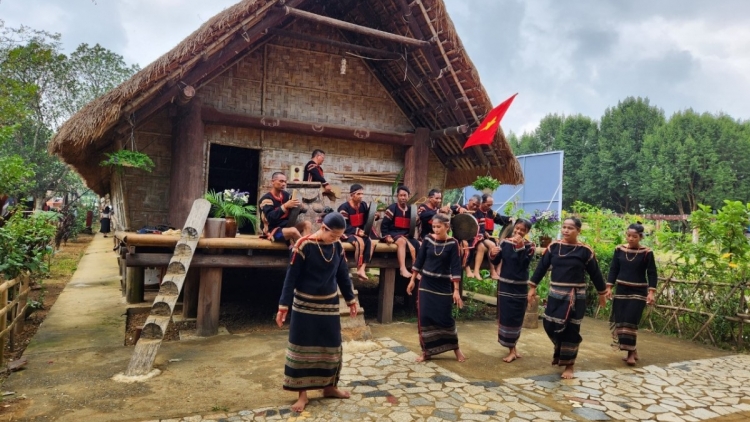




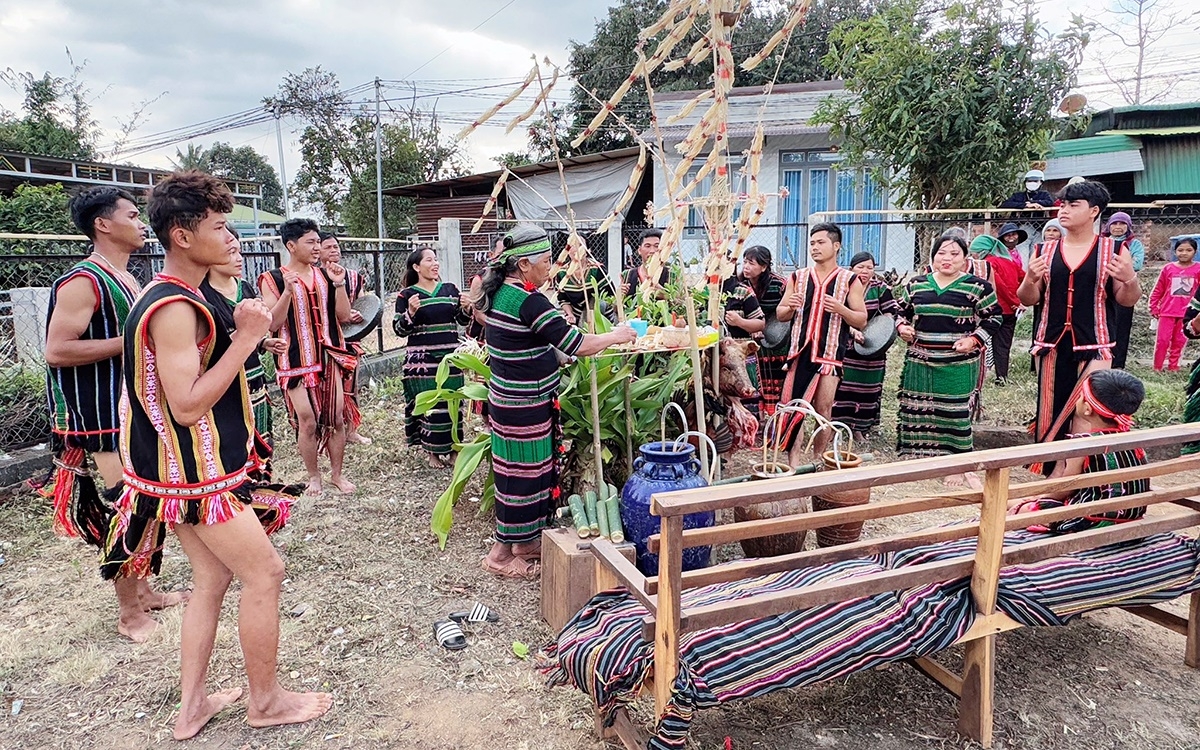
Before the ritual day, the village elders and respected people gather residents to agree on the date of the ceremony and the place to plant Blang trees. Each household is given specific tasks. Young men go into the forest to select a fine bamboo tree for the Neu ceremonial pole, while women prepare fermented rice liquor, cook meals, and rehearse songs and dances. On the ceremonial day, the rituals are conducted with great solemnity.
Amid the lively sounds of gongs, the villagers dressed in traditional brocade costumes joyfully dance to the “Welcoming Guests” melody. Y’ Bang, a young M’nong man, said: “We have preserved our traditions from generation to generation. This cultural identity cannot be lost.”
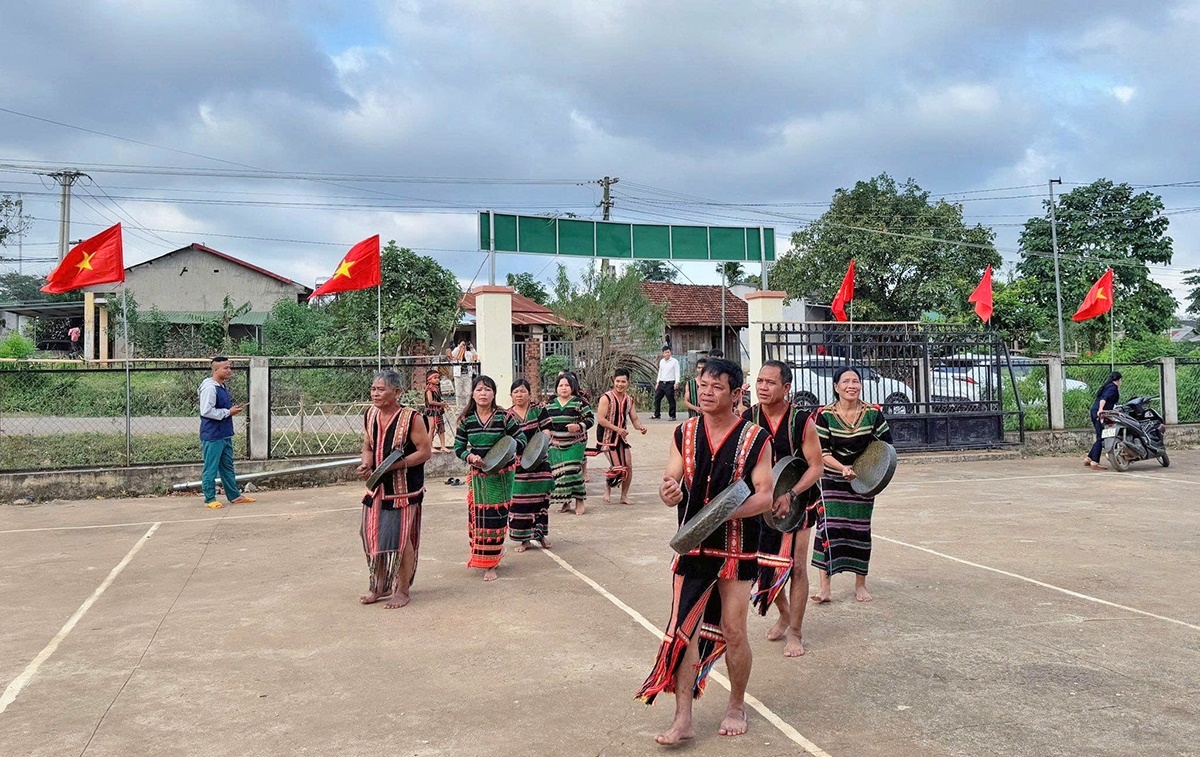
As the Blang tree-planting ceremony is an important ritual, all procedures are carried out strictly according to tradition.
“During the ceremony, I represent the villagers in offering prayers to the deities, asking for forgiveness for any wrongdoings and for blessings of peace and happiness,” said shaman H’Dem, who presides over this year’s ceremony.
Offerings to the deities are carefully prepared by the villagers, including three jars of rice liquor, a pig’s head, beeswax candles, charcoal wrapped in cotton, a bundle of white thread smeared with chicken blood, agricultural produce, traditional M’nong dishes, and effigies of livestock such as buffalo, cattle, goats and chickens. The essential item is the Blang tree for planting.
In the sacred space, the shaman recites the prayer, “Oh deities of the mountains, waters, and forests… today, at this place, the villagers invite you to witness the tree-planting ceremony. We ask you to nurture the tree so it may grow well and bless the villagers with good health and be free from illness. We respectfully invite the deities to join us in drinking rice liquor and sharing food with the villagers.”
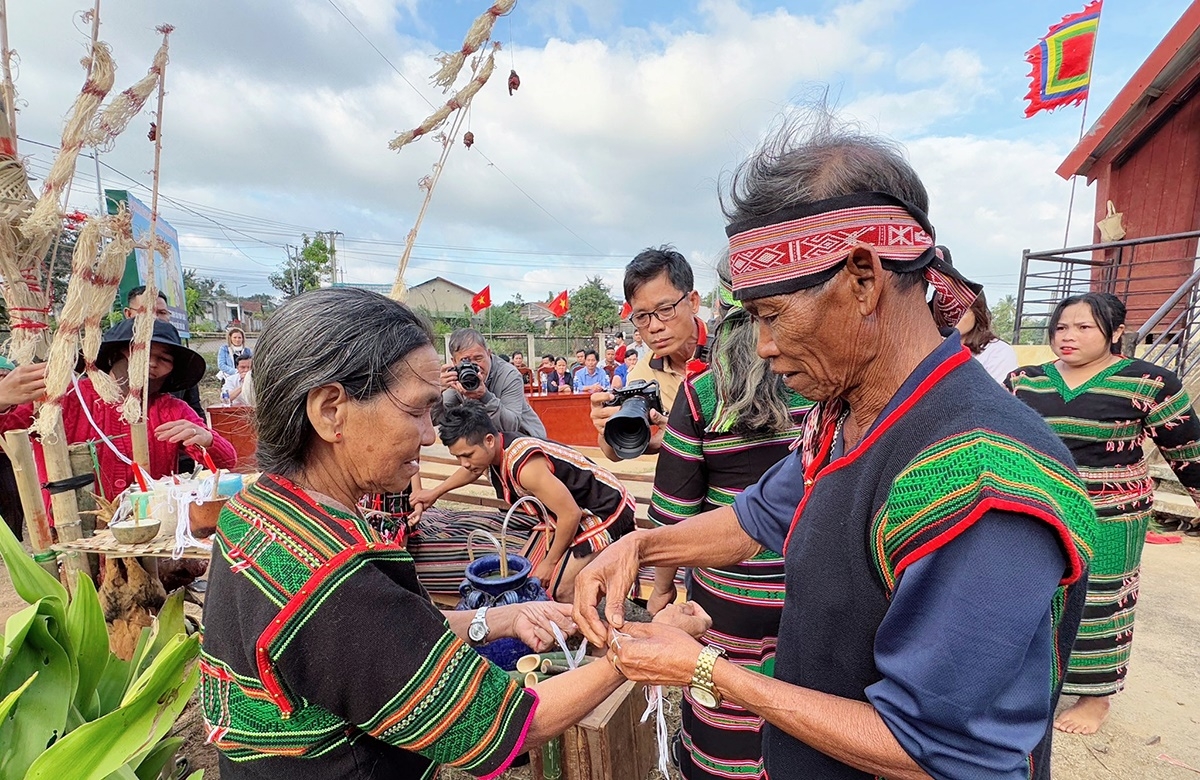
After the prayer, the shaman invites a village elder to sip the rice liquor, declaring the festival open. The gong ensemble and xoang dance group then form a circle for cultural performance pieces.
Meritorious artisan Y Xuyen said that this long-standing ritual of the M’nong has been recognized by the Ministry of Culture, Sports and Tourism as a National Intangible Cultural Heritage. “The main meaning of the ceremony is to protect the village from bad people and ill intention, and to wish for all people to remain healthy and happy. People also wish that farming will not be disrupted by wild animals or harmful forces.”
After the ceremony, the village chief invites villagers and guests to enjoy the feast. Around the campfire, men and women, young and old, gather to sing and dance, strengthening community bonds.