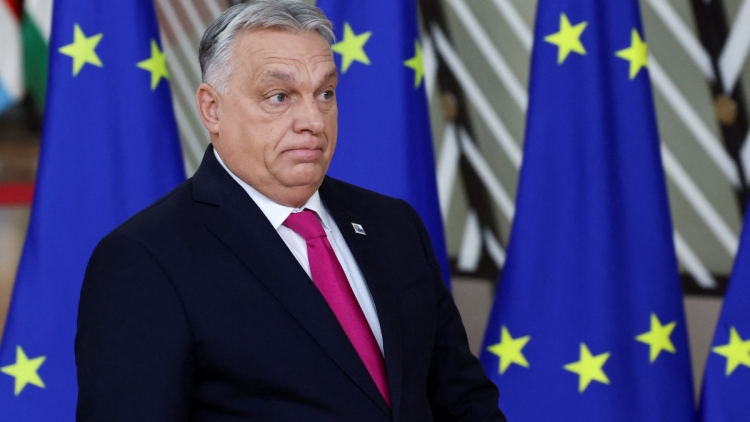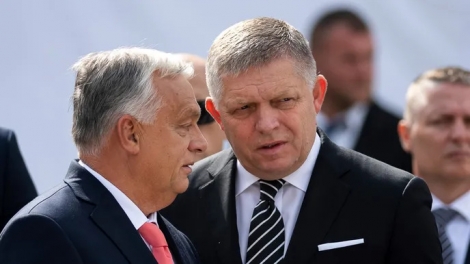



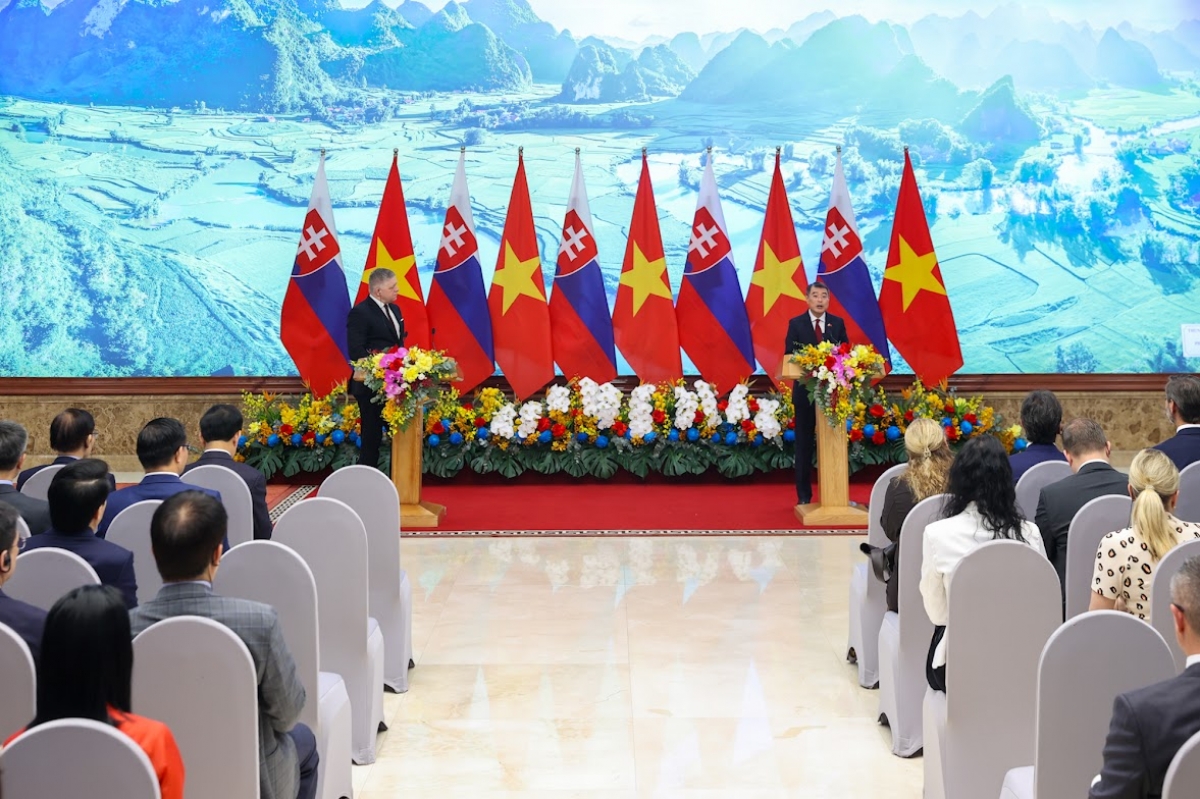
Prime Minister Fico, who is on an official visit to Vietnam, attended the official welcoming ceremony and held talks with Prime Minister Hung on Monday in Hanoi. After the talks, both leaders witnessed the signing ceremony of cooperation documents between the two countries. At the press conference afterwards, they said the talks were very successful and reached a high level of agreement on many aspects.
The two Prime Ministers agreed to direct the Ministries of Foreign Affairs of both countries to soon develop an Action Plan to implement the Vietnam-Slovakia Strategic Partnership framework, aiming to create a qualitative leap in bilateral cooperation and truly bring practical benefits to the people and businesses of both countries.
“As Vietnam enters a new stage of development, it will continue to attach importance to and promote its relationship with Slovakia, one of Vietnam’s leading priority partners in Central and Eastern Europe. I hope that both sides will engage in frank and substantive discussions on the global and regional situation, as well as measures to create new, more tangible progress in bilateral relations; further concretizing and deepening the strategic partnership we have just established”, Prime Minister Le Minh Hung said.
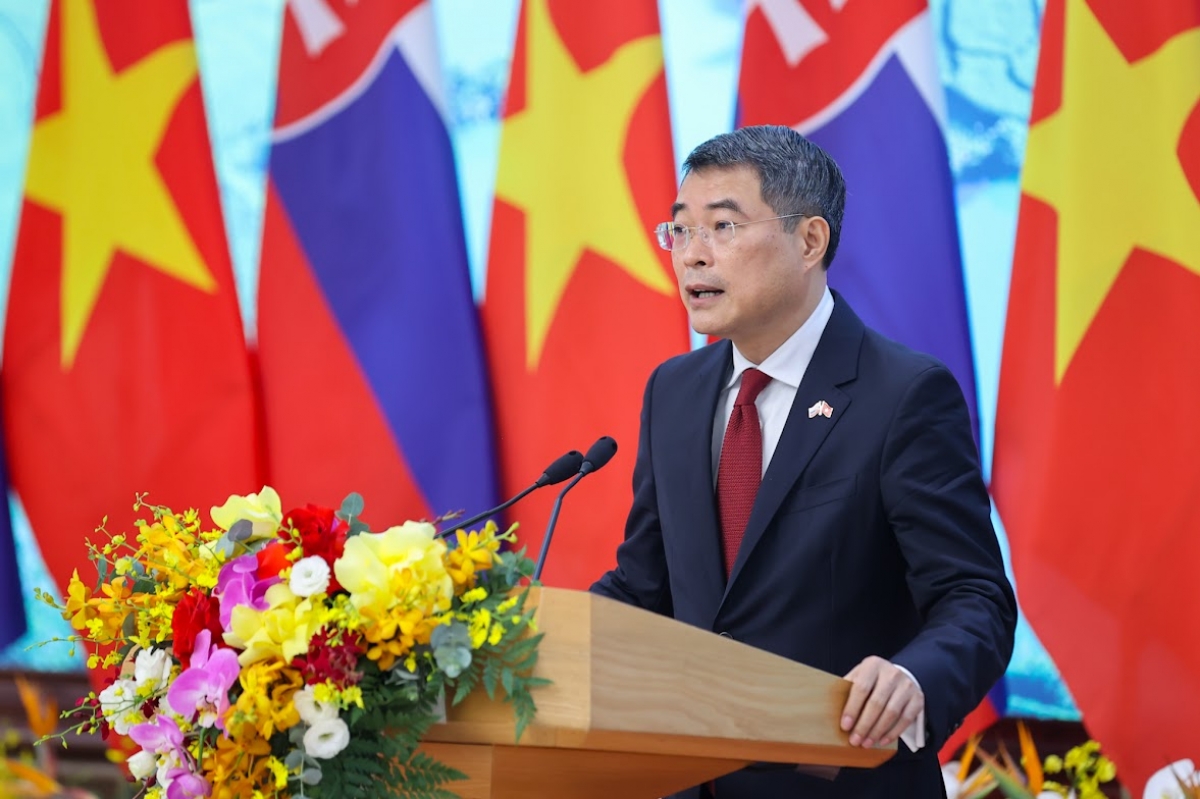
During the visit, ministries, sectors, localities, and businesses of the two sides signed and exchanged 16 cooperation documents covering key areas of politics-diplomacy, national defense, culture, nuclear energy, standards and metrology, local-level cooperation, security, healthcare, tourism, and shipbuilding.
The two Prime Ministers reached strong consensus on advancing a set of measures, including strengthening political trust and supporting each other in enhancing their international roles and positions. They stressed the need to make substantive progress in economic, trade, and investment cooperation; bolster defense and security ties commensurate with the high political trust; boost cooperation in science and technology, innovation, and digital transformation; and expand partnership in education-training, labor, culture, and tourism and people-to-people exchanges.