







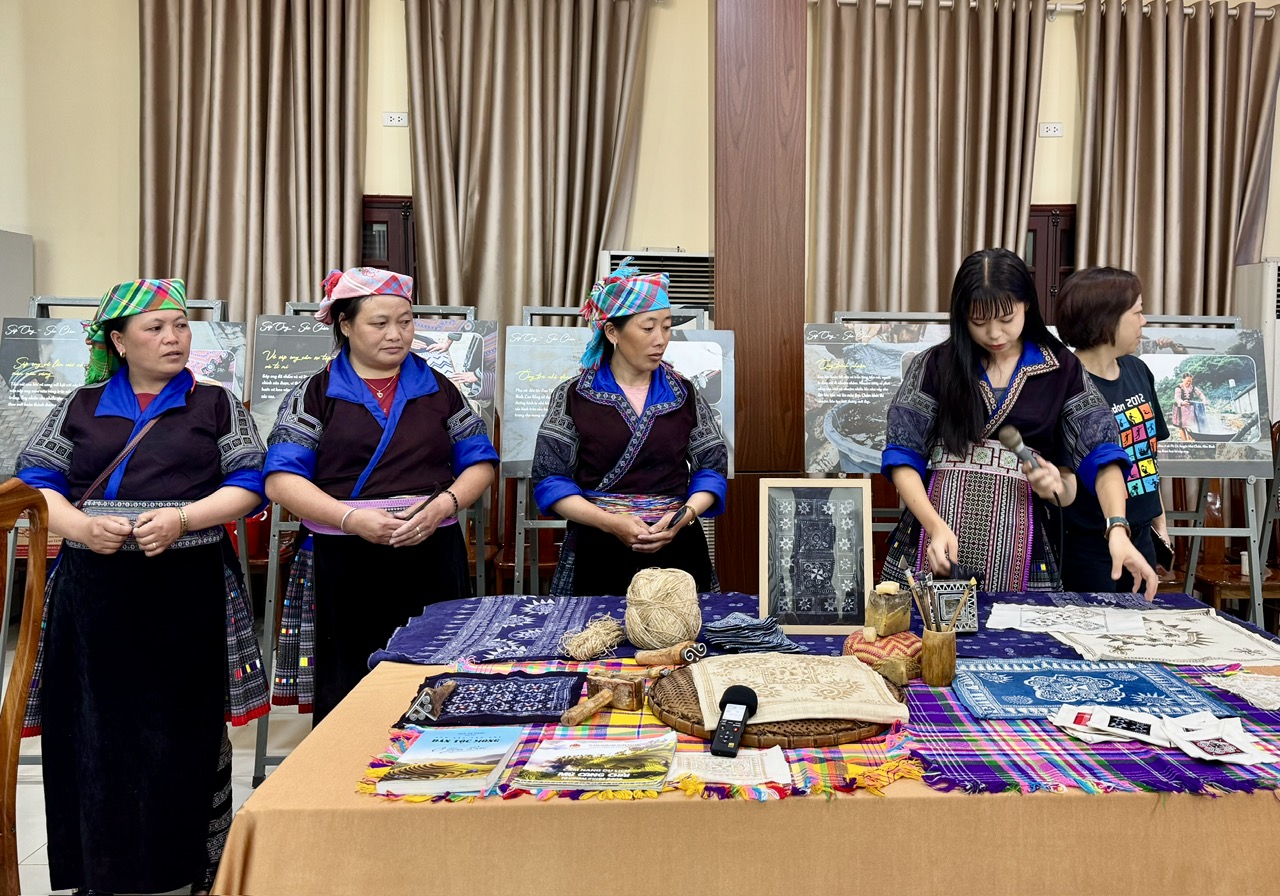
 Artisans from De Thang hamlet, Che Cu Nha commune, Mu Cang Chai district, Yen Bai province guide people to the Mong beeswax batik art. (photo: Cam Thi) Artisans from De Thang hamlet, Che Cu Nha commune, Mu Cang Chai district, Yen Bai province guide people to the Mong beeswax batik art. (photo: Cam Thi) |
The workshop was a collaboration between the Vietnam Women’s Museum and the Japan International Cooperation Agency’s voluntary program to support the development of tourism in Vietnam.
Participants had hands-on experience with the intricate process of creating beeswax patterns on fabric, a uniqueness of the Mong women’s craftsmanship.
One of the artisans coming from De Thang hamlet, Che Cu Nha commune, Mu Cang Chai district, Yen Bai province, Ly Thi Ninh said: “By joining the workshop to introduce the traditional crafts of the Mong people to foreigners, I realized that they are truly interested in our culture. When they return home, they tell their friends about us, and more visitors come. Many Mong people in our hamlet struggle to make a living, but with more tourists, they have a chance to sell their handmade products. We are very happy.”
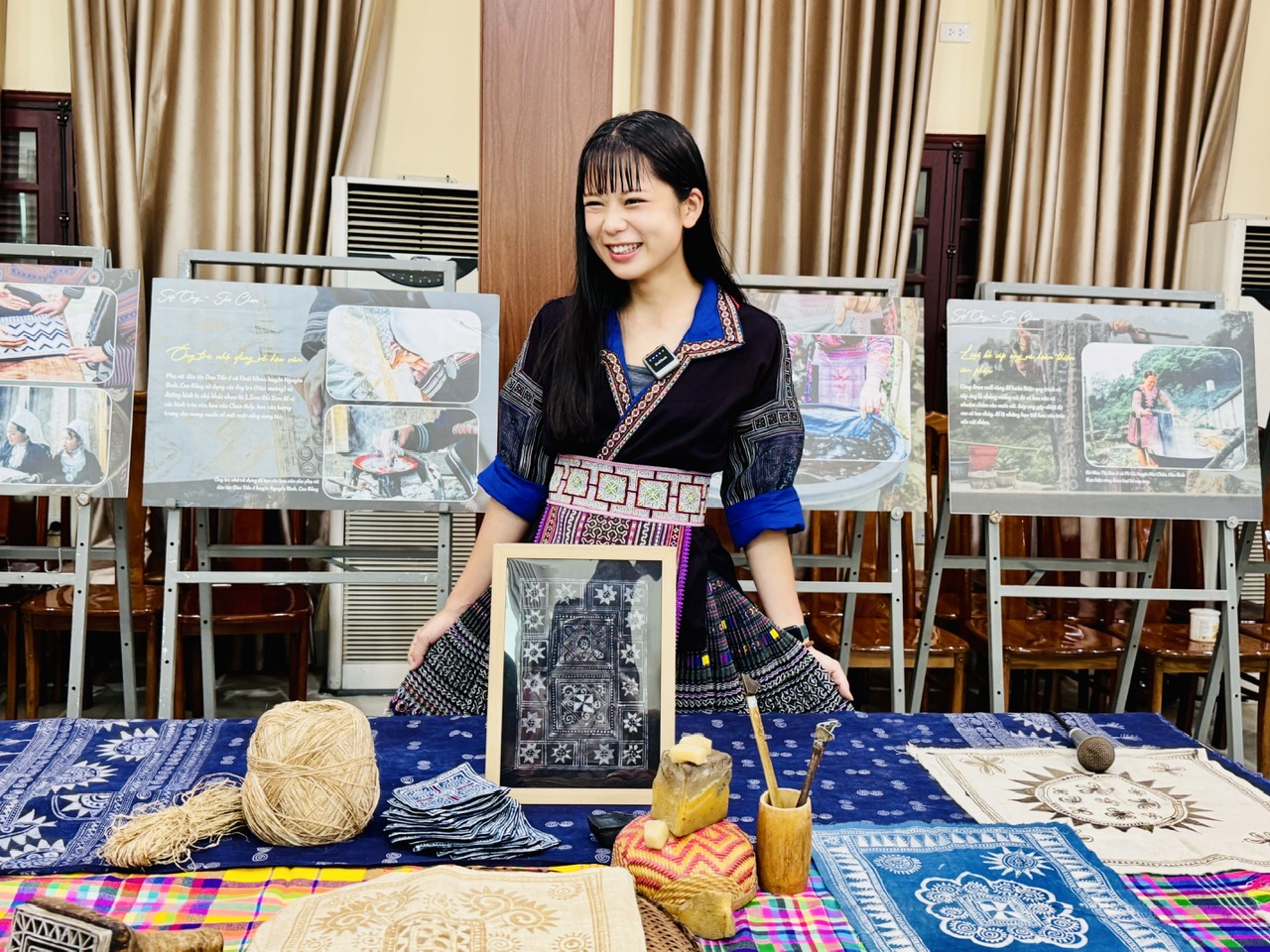 Yuka Takada, a volunteer with the JICA voluntary program (photo: Cam Thi) Yuka Takada, a volunteer with the JICA voluntary program (photo: Cam Thi) |
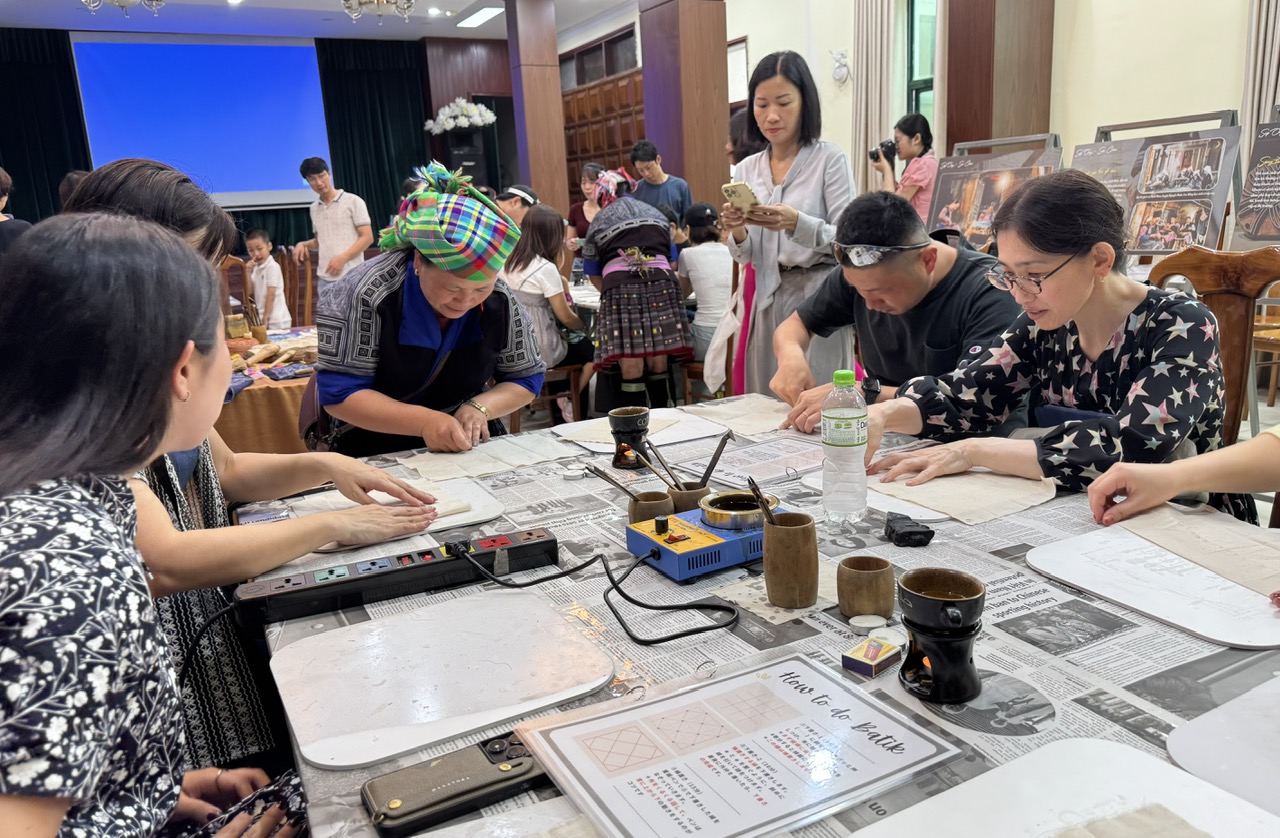 Japan International Cooperation Agency’s voluntary program to support the development of tourism in Vietnam brings a group of Japanese people to the workshop. (photo: Cam Thi) Japan International Cooperation Agency’s voluntary program to support the development of tourism in Vietnam brings a group of Japanese people to the workshop. (photo: Cam Thi) |
In recent years, the Vietnam Women’s Museum has diversified its activities, highlighting its commitment to preserving and promoting Vietnam's rich cultural heritage, while providing a platform for artisans to share their knowledge and for participants to engage directly with traditional crafts.
Head of the Museum’s Media and External Relations, Le Cam Nhung, said: “Ethnic communities possess a wealth of intangible assets, such as traditional crafts and culinary values, which are still preserved locally. If we are not conscious about preserving and promoting them to the wider public, much of this heritage could be lost over time."
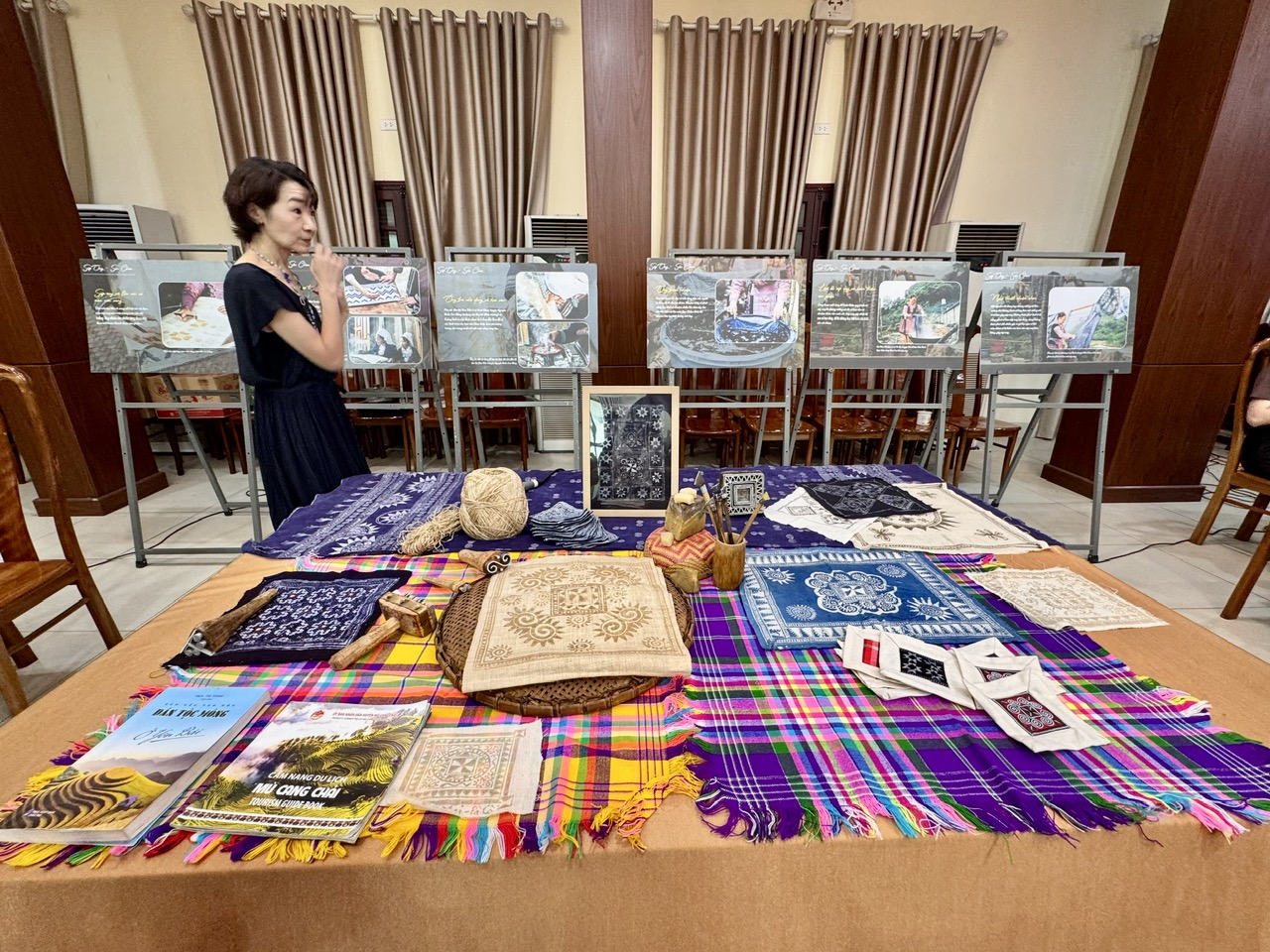 The Vietnam Women's Museum supports ethnic women by providing them with a platform to sell their handcrafted products. (photo: Cam Thi) The Vietnam Women's Museum supports ethnic women by providing them with a platform to sell their handcrafted products. (photo: Cam Thi) |
By working alongside local people in the journey to safeguard their cultural stories and values, the Vietnam Women's Museum aims to contribute to sustainable development. "This effort not only helps preserve and highlight cultural values but also creates livelihoods, generates income, and enables them to share their stories with tourists and introduce their culturally rich products to wider audiences. I believe that through culture, we can also promote sustainable livelihoods," said Mr. Nhung.
During the workshop, visitors explored the Vietnam Women’s Museum’s broader exhibits, gaining insights into the diverse roles of women in Vietnam's history and culture.
