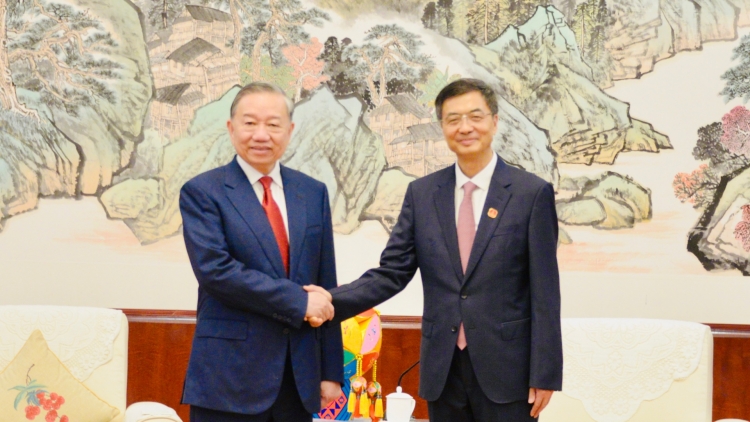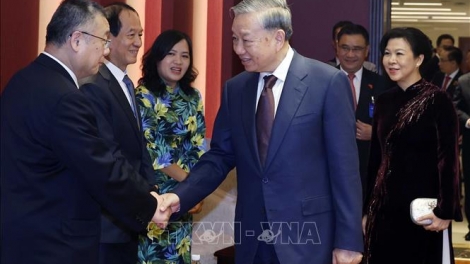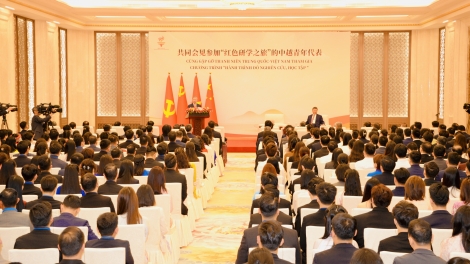




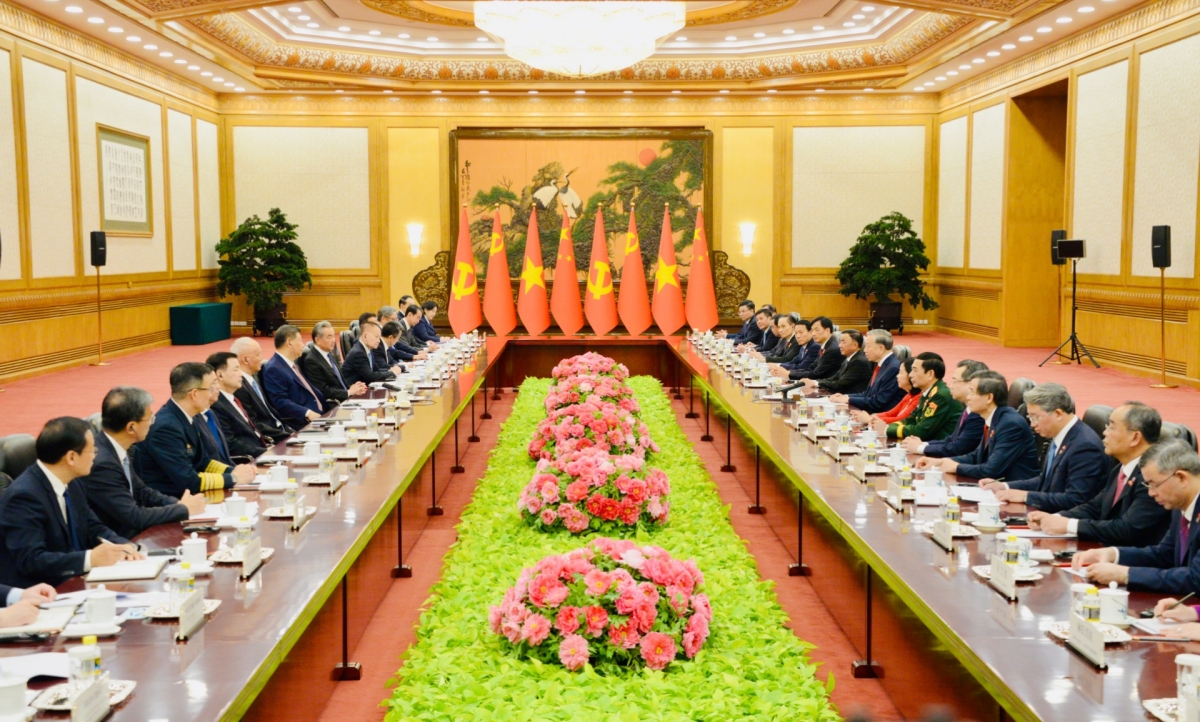
Both sides agreed to uphold the leadership of their Communist Party and to continue pursuing a socialist-oriented development path suited to their conditions, while promoting high-quality socio-economic development. China reaffirmed its consistent policy of friendship toward Vietnam, always viewing Vietnam as a priority of its neighborhood diplomacy. Vietnam said relations with China are always an objective requirement, a strategic choice, and a top priority of its independent, self-reliant, multilateralized and diversified foreign policy.
The two sides agreed to step up cooperation between their armed forces and security and law enforcement agencies, as well as in the legal and judicial fields. They also pledged to strengthen development connectivity, including aligning China’s “Belt and Road Initiative” with Vietnam’s “Two Corridors, One Belt” framework.
Both countries agreed to link trade more closely with infrastructure, logistics,and market connectivity, while accelerating the development of cross-border economic corridors, logistics hubs, and industrial clusters in border areas. They also committed to boosting multimodal transportation links and enhancing rail connectivity between the two countries, with onward links to Central Asia and Europe to increase freight volumes. Railway cooperation was identified as a new focus of bilateral strategic ties.
The statement also highlighted the need to expand people-to-people exchanges, cooperation between local authorities, and collaboration in education, training and tourism.
Vietnam and China agreed to deepen cooperation in minerals, electricity, clean and renewable energy, nuclear safety, and civil aviation, and pledged to expand cooperation in emerging areas such as the digital economy, green development, artificial intelligence, quantum technology, semiconductors, and high-speed rail, while supporting deeper collaboration in digital infrastructure, including 5G and big data.
On maritime issues, both sides said they would follow the shared perception by senior leaders and seek long-term solutions in line with international law, including the 1982 United Nations Convention on the Law of the Sea. They agreed to avoid actions that could complicate the situation, and to maintain stability at sea.
Both sides reaffirmed their commitment to push for full and effective implementation of the Declaration on the Conduct of Parties in the East Sea (DOC), and the completion of a Code of Conduct (COC).
They also reiterated their commitment to upholding international fairness and justice, promoting solidarity and cooperation, and supporting a more balanced multipolar world and inclusive economic globalisation, alongside efforts to build a more equitable system of global governance.